
The world is undergoing its sixth mass extinction event, with conservationists estimating up to 30,000 of its 100 million species are being wiped out every year.
There’s currently no solution to resurrect extinct species like the dodo, Tasmanian tiger, or even the little-known Christmas Island shrew which has become extinct. Scientists at Colossal Biosciences predict it will be possible, albeit incredibly costly.
This week, the Texas-based company, which has significant assets in Australia, has announced it has acquired Viagen Pets and Equine, the business that made global headlines in 1996 for cloning Dolly the sheep. Since then, it’s gone on to specialise in cloning America’s beloved cats and dogs, advertising “Saying goodbye doesn’t have to mean letting go forever”, as well as livestock reproduction.
As a sideline, Viagen has also been saving the genetics of wild animals through a process called biobanking, which involves collecting and storing genetic material. This means if an animal becomes extinct, it could be much easier to resurrect it, or if its numbers are low, scientists could undertake an intensive breeding program to boost populations and improve genetic diversity.
Viagen has 40 species biobanked, 22 of them threatened with extinction, including the white rhino, black rhino, Florida bonneted bat, Perdido beach mouse, and Indiana bat. And it has cloned 15 wild species, most notably the critically endangered Przewalski’s horse, using tissue preserved in 1980. Colossal has a further 53 threatened species biobanked in its labs, taking the total to 93.
Related: Tasmanian tiger resurrection team announces bold new plan for Australia
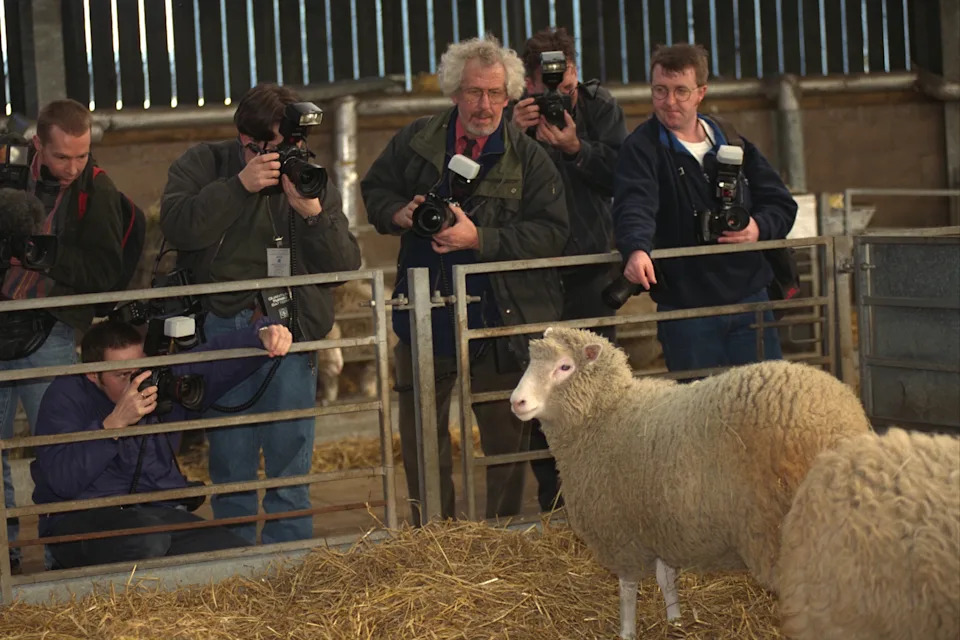
In the 1990s, Dolly the sheep became a worldwide sensation. Source: Getty
Plan to ensure our grandkids can still see koalas
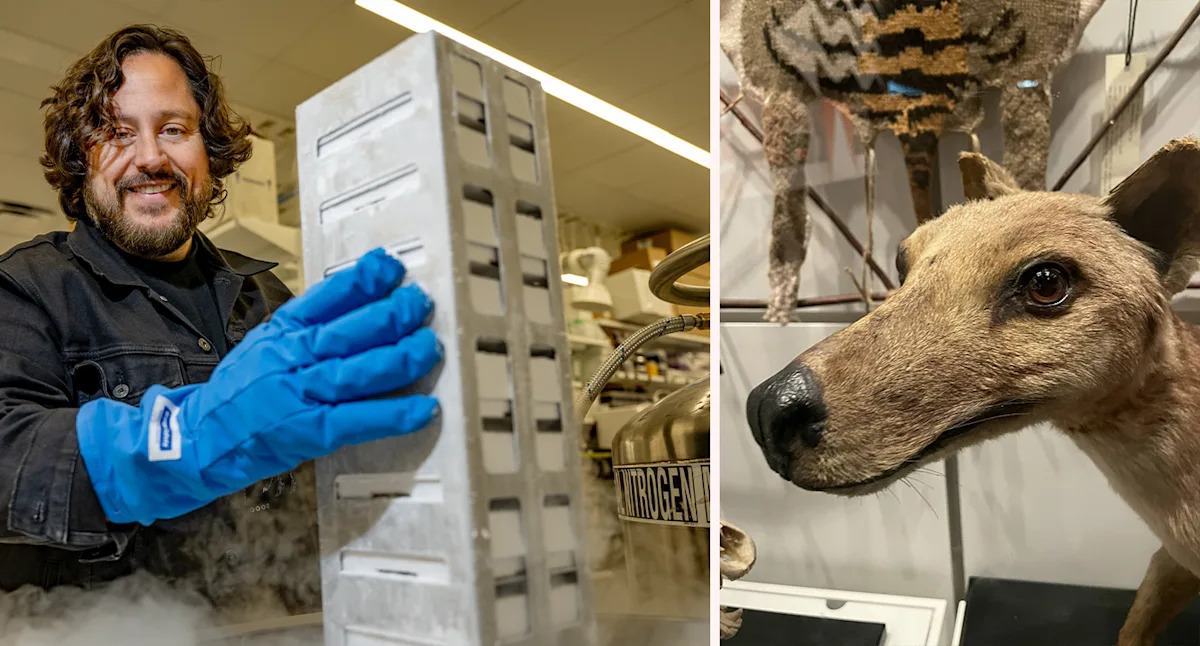
Colossal’s newly appointed chief biology officer, the University of Melbourne’s Professor Andrew Pask told Yahoo News that Australia is also working to biobank species, with one already set up by Museums Victoria.
“Once you’ve got that living cell frozen, then you don’t have to do de-extinction science anymore. You don’t have to re-engineer that animal back into existence… and they’ll survive in that liquid nitrogen forever,” he said.
“Maybe we won’t need to use our biobank, maybe our children won’t, but maybe it’s our grandkids and great grandkids [who will].
“At some point down the track, [if] we’ve lost all koalas or something like that, then you’ve got those living cells, and you’ve got companies like Viagen who know how to turn them into whole living animals.”
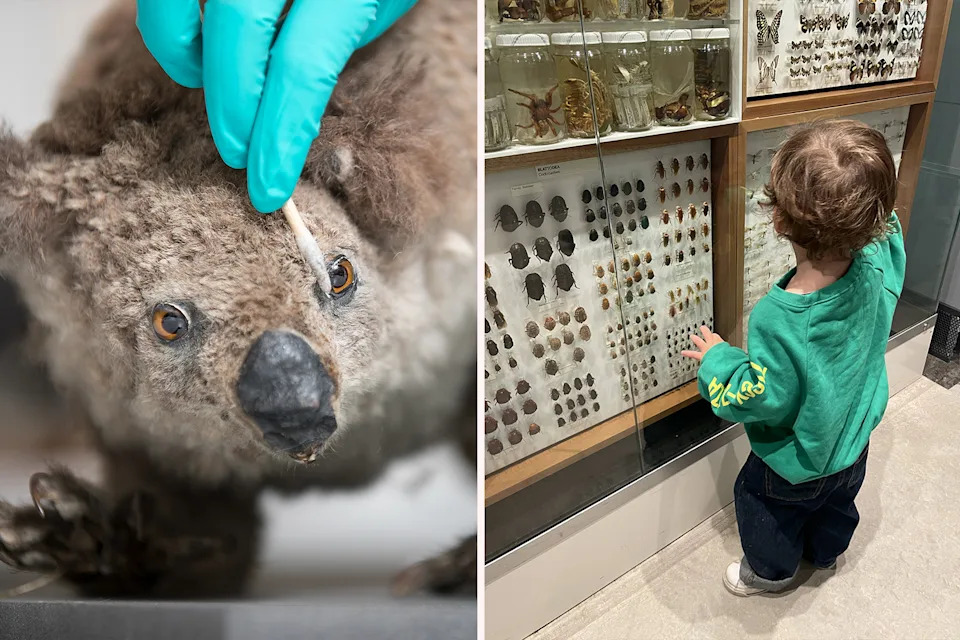
Some conservationists fear that future generations may only be able to see koalas in museums and zoos. Source: Getty/Michael Dahlstrom
Why Biobank is not like Noah’s ark
Professor Pask said Colossal is focused on trying to biobank as many species as possible, which he says will be “an incredible permanent safeguard” against more diversity loss.
When species are lost, it can affect the entire ecosystem. On Australia’s mainland, small marsupials like bilbies have been wiped out from 80 per cent of their range, devastating the landscape because their foraging is integral to germinating seeds and irrigating soil.
When populations are pushed to near extinction, their genetic diversity suffers, as they’re forced to mate with close relatives. So for biobanking to be successful, a wide range of genetic material needs to be collected.
“It’s not just about biobanking… two of every species, like in Noah’s Ark. It’s about biobanking as many individuals from as many species as possible,” Professor Pask said.
Colossal’s plan is to biobank as many species as possible, initially focusing on those that are critically endangered. Cells can’t be taken from old museum specimens, but they can be extracted from an animal up to two weeks after its death.
“These biobanks should be huge. But they will be our safe for everything we have in nature, and ensure we don’t lose any more biodiversity,” Professor Pask said.
Love Australia’s weird and wonderful environment? 🐊🦘😳 Get our new newsletter showcasing the week’s best stories.
