
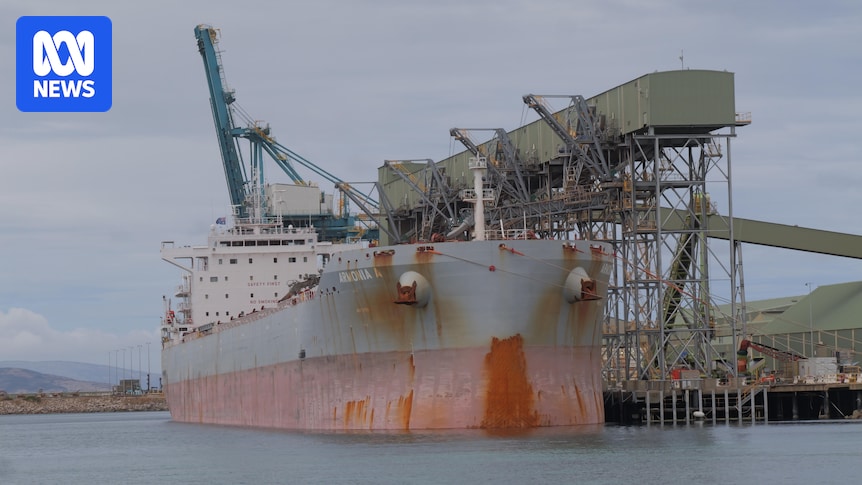
After a five-year ban, the first shipment of Australian canola to China is expected to sail from a regional West Australian port this weekend.
Analysts say the 65,000-tonne trial shipment is a sign Australia’s $4-billion canola export industry could reinstate trade with what was once one of its most valuable customers.
Australian canola was locked out of China in 2020 due to disease concerns, but a spat between China and the world’s largest exporter of the product, Canada, could reopen the door for Australian farmers.

Australian exports of canola are expected to be worth more than $4 billion this season. (Supplied: Paul Goh)
CBH Esperance Port zone general manager Paul Channon said the Armonia A docked on Wednesday and was expected to be loaded and to sail to Qingdao, in north-east China’s Shandong province, on Saturday.
“We’re lucky to be part of that shipment within our zone, and it’s a welcome sight sitting out in the bay at the moment,” he said.
According to the federal Department of Agriculture, Fisheries and Forestry’s Manual of Importing Country Requirements, Chinese state-run trading firm COFCO is the approved importer for canola at Qingdao.
CBH’s stem website lists the owner of the canola as CBH Grain, the trading arm of the grower-owned cooperative.
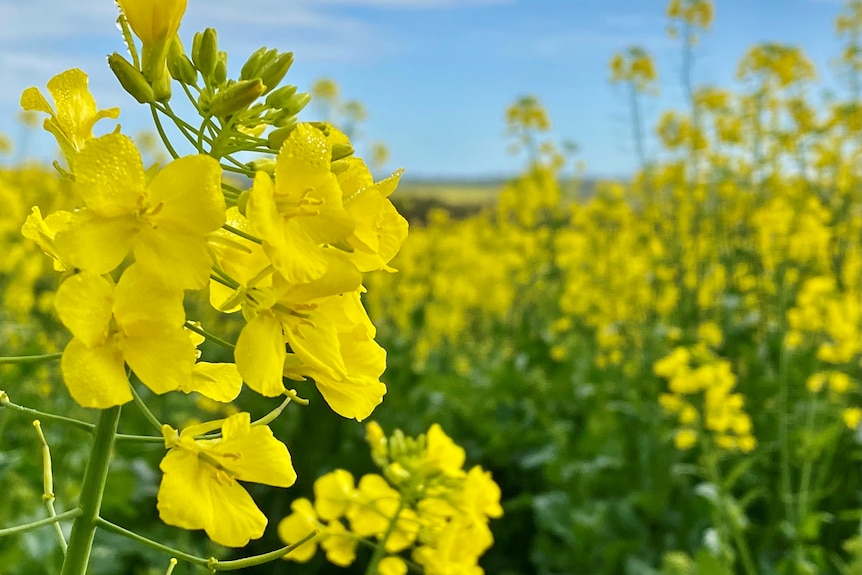
Canola is a significant crop for Australian grain growers. (ABC Goldfields: Joanna Prendergast)
Five-year lockout
Five years ago Chinese authorities said the fungal disease blackleg was detected in a shipment of Australian canola and closed the trade.
Since then, China, which is a significant canola producer in its own right, has relied significantly on imports of canola from Canada to top up its needs.
But earlier this year it blocked Canadian canola seed imports by imposing a massive tariff in a move thought to be related to a stoush over Canadian tariffs on electric vehicles.
In September, Australian government forecasting agency ABARES suggested the completion of a phytosanitary framework addressing China’s concerns could pave the way for five trial shipments of Australian canola.
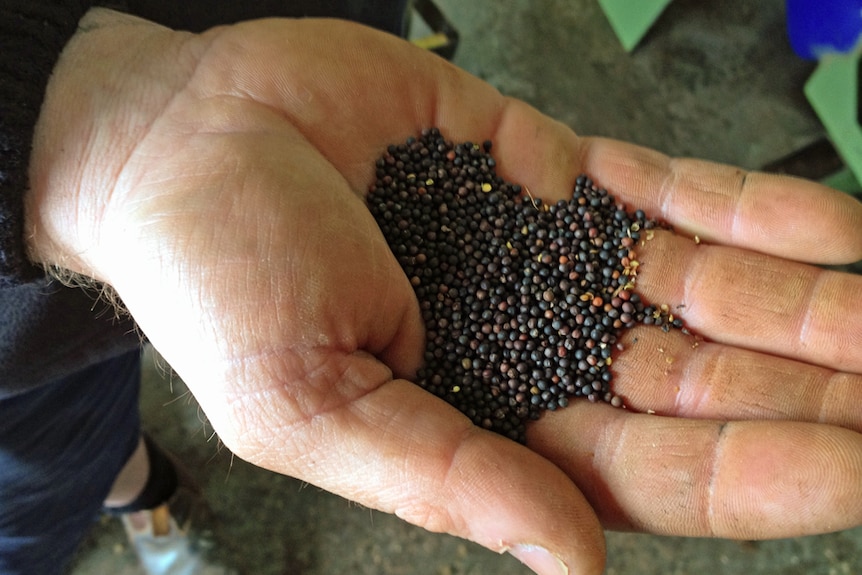
Oil-rich canola seed will be sent to China as part of the trial. (ABC Rural: Rose Grant)
Future potential
Australia is the world’s second-largest exporter of canola and this year’s 5.2-million tonne crop is expected to be worth $4.2 billion.
The majority of the canola exported comes from Western Australia.
Grain Trade Australia chief executive Pat O’Shannassy said given that China was the world’s largest buyer of canola, the reopening of trade could offer significant opportunities for Australian producers.
“The negotiation process around biosecurity and quarantine, it doesn’t move as fast as, say, technology — once you lose access it is very difficult to get it back,” he said.
Mr O’Shannassy said once the trial was complete it would be essential that government continued to negotiate for fully restored market access.
“Having more demand in the market is a good thing for growers … the China market for Australia, particularity for grains, is very important and long-standing,” he said.
“If we can get that trade flowing again it will be significant for both Australia and China.”
A Department of Agriculture Fisheries and Forestry spokesperson said there was “an active and ongoing government-government discussion” and that details were yet to be finalised.
Good news for prices
In its September market update ABARES predicted a moderate increase in canola prices for the coming harvest.

Dennis Voznesenski says China re-entering the Australia canola market would support prices. (ABC News: John Gunn)
Commonwealth Bank agricultural economist Dennis Voznesenski said a formal resumption of Australian canola trade with China would be a significant boon for Australian farmers.
“It would definitely be supportive [of prices]” he said.
“Fingers crossed that that shipment sails smoothly and we then have further shipments.
“Its incredibly important this year because our largest typical buyer, Europe, they had a much larger crop this year … so Europe wont need as much locally.
“So we’re really in a place where where we need another buyer and if that buyer is China then that’s really good news.”
Mr Voznesenski said markets were volatile when driven by politics.
“With these shipments, you’ve got to keep in mind that, even if they are large purchases, even if it’s from us or the US in the past, there are times that those shipments have been cancelled and that’s what we’ve got to keep an eye on.”