Astronomers in South Korea say the universe may no longer be expanding faster and could have already begun slowing down. The findings, published in Monthly Notices of the Royal Astronomical Society, challenge the long-standing belief that a mysterious force known as dark energy drives increasingly rapid expansion.
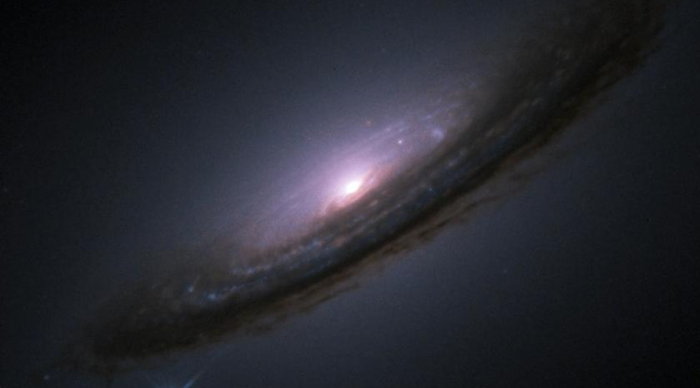
The study comes from a research team at Yonsei University in Seoul. The team examined type Ia supernovae, which scientists have used for decades as “standard candles” to measure cosmic distances. These supernovae helped establish in 1998 that the universe’s expansion began accelerating about nine billion years after the Big Bang.
The discovery earned the 2011 Nobel Prize in Physics and led scientists to introduce the concept of dark energy as a repulsive force that makes up roughly 70% of the universe.
The new study argues that the supernova measurements include a significant bias. The team found that the brightness of type Ia supernovae depends heavily on the age of the stars that create them. Supernovae from younger star populations appear systematically fainter than those from older ones, even after standard calibration.
The researchers analyzed a large sample of 300 host galaxies and confirmed this effect at very high statistical confidence. When they corrected the data to account for the age bias, the results no longer supported the standard cosmological model, known as ΛCDM, which assumes dark energy is constant. Instead, the corrected data matched a model where dark energy changes over time.
Lead researcher Professor Young-Wook Lee said, “Our study shows that the universe has already entered a phase of decelerated expansion at the present epoch and that dark energy evolves with time much more rapidly than previously thought. If these results are confirmed, it would be a major paradigm shift in cosmology since the discovery of dark energy 27 years ago.”
The results align with recent measurements from the Dark Energy Spectroscopic Instrument project, which studies the large-scale structure of the universe using baryonic acoustic oscillations and cosmic microwave background data. When researchers combined their corrected supernova results with these measurements, they found overwhelming evidence that the universe is no longer accelerating.
The finding could help resolve the “Hubble tension,” a major scientific debate over mismatched measurements of the universe’s expansion rate from different methods.
The team is currently conducting follow-up tests using only supernovae from young, similar host galaxies to avoid any evolutionary effects. Early results support the conclusion that expansion has already slowed.
Research professor Chul Chung said that the nearly complete Vera C. Rubin Observatory will play a key role. The facility in Chile will discover tens of thousands of supernova host galaxies within the next five years, allowing scientists to measure galaxy ages more precisely and test supernova cosmology with far greater certainty.