
Normal text sizeLarger text sizeVery large text size
Some artists see talking to journalists as a necessary evil. Aida Tomescu is not one of them. Tomescu could talk about her work and life under wet paint – and perhaps that’s what she’ll do, if ever the two-metre-high paintings stacked against the walls in her studio topple onto her tiny frame (perish the thought).
“It’s because I did not speak for 23 years in that country,” she says matter-of-factly when I mention her loquaciousness. “That country” was Romania, the then-Communist stronghold she left in 1979, aged 23. After a year in Greece, where she taught herself English via a dictionary and novels, Tomescu came to Australia, building a new life in free, sunny Sydney thanks to the nomination of a kind stranger, a fellow Romanian residing in Liverpool.
It’s not just the quantum of talking, though. It’s that Tomescu speaks so eloquently, using such precise language – paintings are not finished, they resolve themselves; she does not have inspiration, rather, sources – and referencing the likes of Chopin and Messiaen, Flaubert and Dostoevsky, Cézanne and Titian, that you could sit and listen to her in her mellifluous Eastern European accent for hours. (Maria Stoljar did. The Talking with Painters podcaster turned up for a one-hour interview with Tomescu back in 2017. Eight hours and some parking ticket jitters later, she was still there.)
This is a significant time to be speaking with Tomescu. Last month, she turned 70, and five months earlier, in May, she marked 45 years in Sydney. “I used to always celebrate the anniversary of my arrival in Australia,” she says, surrounded by paintings in her Rosebery studio. “Wherever I was in the world I would sit and have a glass of wine, or a Campari, to Australia.” This year, however, she forgot. “I was here,” she says, waving her hands around. “I realised a day or two later. So I guess I celebrated differently, by working.”
That busy period was the lead-up to her first Sydney exhibition in three years, to open next Friday at Fox Jensen Gallery in Alexandria. It will feature more than a dozen paintings, including three towering triptychs, at least two diptychs of similar scale, and five smaller works. It’s only the second solo show since the gallery reopened in new, expanded premises a few months ago, and the first in the new space for an Australian artist, at a gallery largely dedicated to international ones.
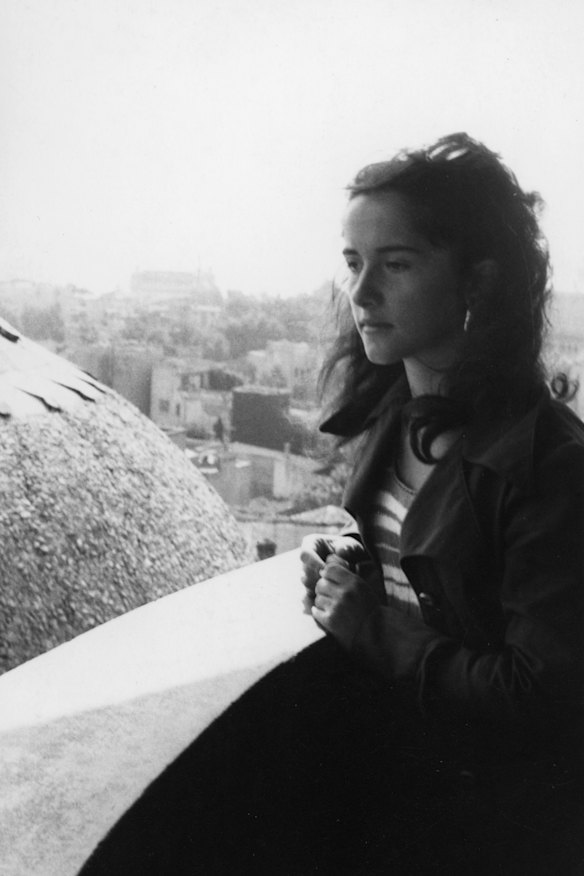
Aida Tomescu aged 18, during her student years in Romania. She says the rigour and discipline of her training in Bucharest is the bedrock of her practice.Credit: Courtesy of the artist
While you’d expect co-owner Andrew Jensen to talk up his artist, he nevertheless nails something about Tomescu as he does so. “Her work transcends the vitiating forces of fashion and dispenses with the current allure for political science 101 that grips so much of what is made today,” he says. Jensen says this not to “entirely” denigrate the popular political narrative, but “to say that great painting, as is the case for music and poetry, leaves the manoeuvring to others. What Aida chooses to leverage is a deep knowledge and consequential feeling for poetry, literature and music – and art.”
With more than 40 solo exhibitions to her name, Tomescu’s work features in most major public and many private collections nationwide. She’s also shown offshore, most recently through Flowers Gallery, which took her to the print fair at New York’s Armory in March and has also shown her in London and Hong Kong. It’s a sign of her standing that the big canvases in her upcoming show will sell for $100,000 to $300,000 a pop.
I go from show to show, cycle of painting to cycle of painting. I don’t think much of the future, nor of the past.
Is she one of Australia’s most revered abstract painters? Living painters? Female painters? Probably all three. Surprising, then, that Aida Tomescu is not a household name. While she’s won a suite of Art Gallery of NSW prizes – the Sulman, the Wynne and the Dobell – that was back in the late 1990s and early 2000s. She’s also yet to publish a monograph, unlike even the most emerging of young artists. And while she’s had terrific solo shows at Orange Regional Gallery and the Drill Hall in Canberra, she’s yet to be given one by a top state or national institution.
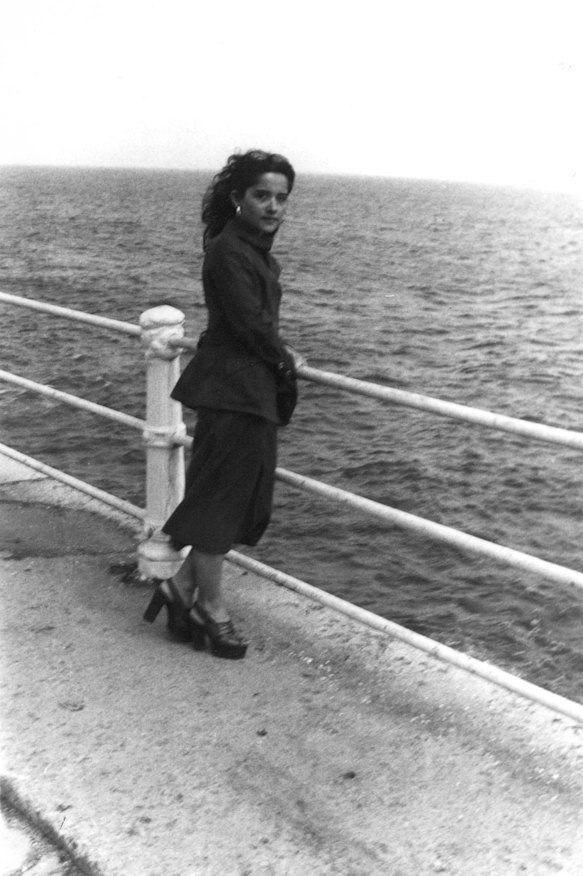
Aida Tomescu at Constanta on the Black Sea, in 1970. Between the ages of four and seven she spent a lot of time there with her grandmother.Credit: Courtesy of the artist
Perhaps it reflects the lot of older artists in a culture ever thrusting towards the new, and the relative rarity of solo public shows for living Australian artists anyway. Particularly abstract artists, who are still not as popular here as figurative ones. And painters, at a time when art is often anything but things you hang on a wall. It may reflect, too, that Tomescu is of here but also, very much, of elsewhere. She’s neither overtly seeking to depict this country, nor using any of its regular tropes.
“I’m a Romanian-born artist who turned into an Australian painter,” is how she puts it.
To arrive at Tomescu’s studio is to be overwhelmed by the senses. The smell is glorious – if you like aroma de wet paint (I know, I shouldn’t) – but it’s the sight that really hits you. Everywhere you look are massive canvases covered in thick red and white paint, some yellow and other shades in there, too. Drips, splotches, accidents, and areas with no or very little paint at all. The works are both similar and different.
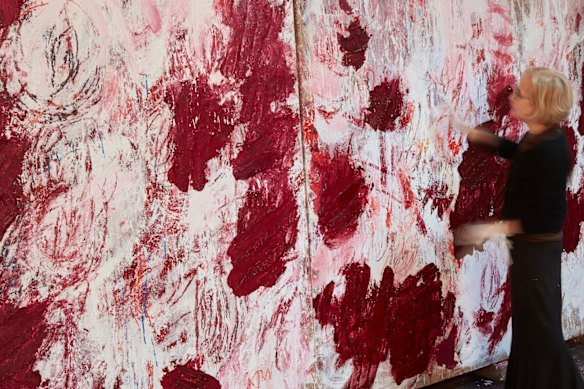
Aida Tomescu in her studio in 2019. She builds her paintings up over many years, through a process that involves painting and scraping back.Credit: Jenni Carter
Almost everything about Tomescu’s practice defies easy assumptions. Her works might suggest velocity but she builds them up painstakingly over many years via a process that involves painting, scraping off, painting some more. She works on a few at once and constantly looks for links between them. The paintings tell her when they’re finished. They may look like an emotional outpouring but they’re anything but – such a state would make her lose the clarity essential to her work. “People relate to red as a colour of anger or passion, they see many things in red but it will never be that for me,” she says. “It’s similar to music. Music is not about emotions but it amplifies the emotion in us.” As to sources – Messiaen was one for this show – she says the whole point of art is to “travel the distance away from the artist, from their private life, to become something of its own, with its own, new identity. If there’s a source it will have been transformed in the process until it becomes irrelevant.”
She used to be in the studio until all hours but has made a concerted effort more recently to protect her health. “I used to paint through the night, without a mask or gloves or barrier cream, and on top of it, chain-smoke,” she says. Ill health forced her to adopt all three, and open the windows more. While she’s still learning to take days off – “this does not come naturally for a painter” – she recovers after a big show by travelling to Europe to revisit her favourite works in the Louvre, at London’s National Gallery and in Venice, home to some of her favourite Titians.
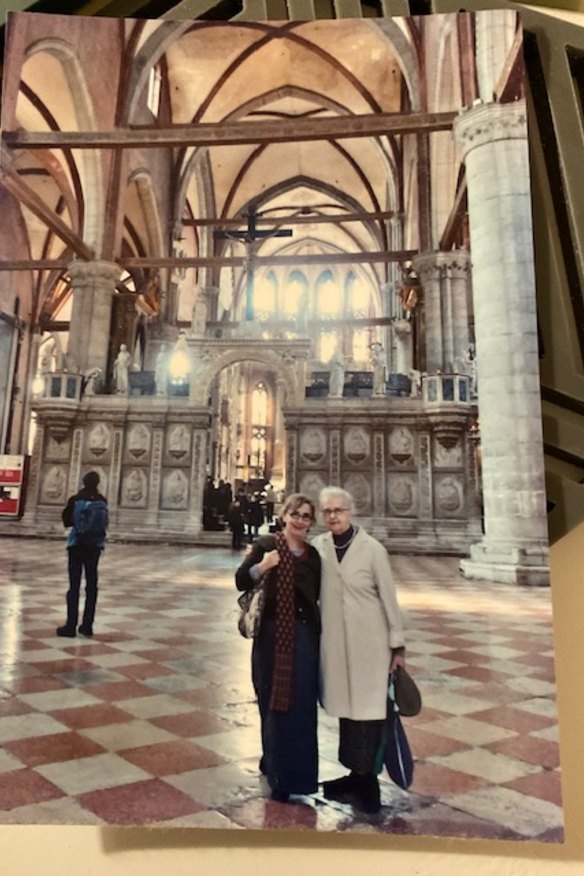
Aida Tomescu with her mother Ecaterina at the Frari in Venice. Ecaterina came to visit Tomescu in Sydney in 1987, and never left.Credit: Courtesy of the artist
Tomescu bought this studio in 2018, partly because of its four-metre-high ceilings. But a curious thing happened when she moved in. “I thought I’d need a number of months to set up but I found myself sitting on the floor with the boxes all around me, and starting to paint smaller works.” It was more than six months later that she started ordering larger canvases. To Jensen, her growing scale reflects not just the bigger studio but also her adopted home country. “I can’t imagine if she was still in Romania that she’d be painting six-metre triptychs,” says Jensen. “The tone and chromatic intensity is probably something that’s been quietly infected by being in Australia, too.”
We leave the studio and head to Potts Point, the inner-city area Tomescu has lived for her entire Australian life. This is where we first met, when we lived in the same Elizabeth Bay apartment block. She cut then, as she does now, an ethereal figure, all alabaster skin and red lipstick, dressed more often than not in a long skirt, buttoned up shirt and cardigan. Her mother, Ecaterina, lived with her then, having arrived for a six-month visit in 1987 and never left. Like her daughter, she was beautiful, and like her daughter, impeccably dressed. She lived with Tomescu until her death in 2010 of a heart attack, just shy of her 83rd birthday. “She created all the circumstances for me to be a painter without knowing it,” Tomescu says.
Ecaterina was inclined to bouts of melancholy when Tomescu was growing up, which she presumes was because of her father, who drank too much and womanised too much and dearly wanted to escape Communism (Ecaterina eventually left him when Tomescu was 16. He died a couple of years after Tomescu left Romania; her sister, about whom she doesn’t want to talk, is also no longer alive). Ecaterina was a pharmacist whose job took her around the country, so young Aida was regularly sent to stay with her grandmother in Constanta on the Black Sea. With no toys nor other children to play with, Tomescu was given sketching tasks by her grandmother, also a distant woman. Back in Bucharest, her mother took her occasionally to visit an uncle, who painted reproductions of works he’d bought. “I couldn’t work out why the originals were so alive, and his copies carried nothing of that,” Tomescu says. “I would discuss this with my mother on the way home.”
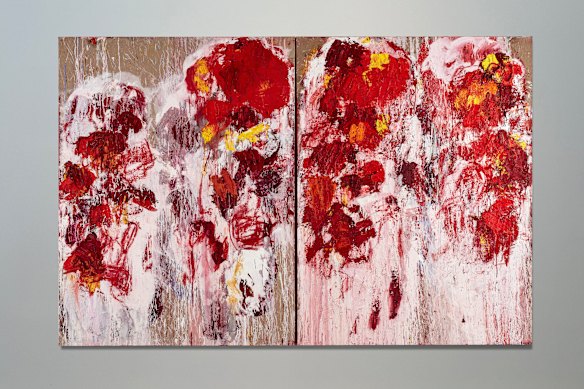
Aida Tomescu’s Messiaen III, which will feature in her first Sydney exhibition in three years, opening this month.Credit: Jenni Carter
At age 10 she started going to art school on top of regular school, and by 1977 had a diploma of art from Bucharest’s Institute of Fine Arts, where she learnt to paint using plaster casts and life models. “I will be forever grateful for the Romanian education system of that time, for being so rigorous and disciplined,” she says. “It’s still the foundation of my work.”
When she came to Australia she undertook a postgraduate diploma of art while working for the Department of Immigration and later taught at the National Art School. She was painting and exhibiting at the same time and, six years in, managed to save enough to buy her first apartment. Not that it was driven by financial concerns; she knew that unlike in Europe, renting here would leave her open to being kicked out, which would disrupt her time in the studio.
It was successful exhibitions in the late 1980s at Coventry Gallery in Paddington that elevated her status. Surprisingly, this left her depressed. “Everything changed around me. People thought I would change, but I didn’t.” She began questioning what it was that made people buy her work. Success, she concluded, is better for the family and friends of artists than for the artists themselves.
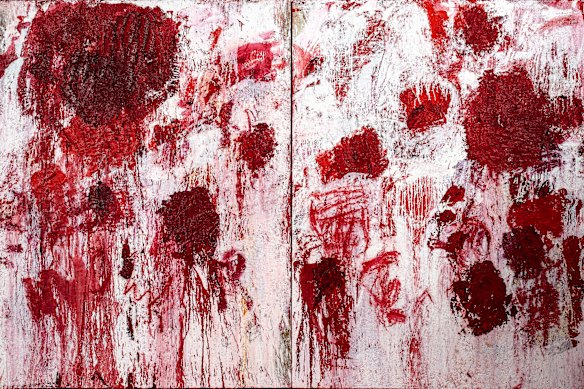
Aida Tomescu’s Double Violetta. Her paintings often feature red but she says she is not a colourist, and that her use of red hues does not signify passion or fury.Credit: Jenni Carter
That said, money does help, and she’s successfully lived off her art for more than two decades. She’s known to be demanding on her dealers – some might say that’s an understatement – which has led to some cases of falling-out, about which she is iron willed. “Relationships end when they dispense with dialogue, when a gallery excludes the artist’s views, when they no longer share the same values,” she says. “The problem for most artists is not that they are ‘too difficult’, it’s that they are too trusting.”
Tomescu did much of the cooking in her household when growing up but her mother took over domestic duties when she moved in with her. “The studio was my domain, and the house became hers. When I came home, I’d ring the doorbell.” When her mother died, she couldn’t get her head around her not existing any more. “My days and travels stayed exactly the same, except for the heartbreaking reality that she was no longer there.” She’s had relationships over the years but says she never wanted to marry any of the men she had them with, and that while she’s fondly observant of children, she would not want to have to mind one.
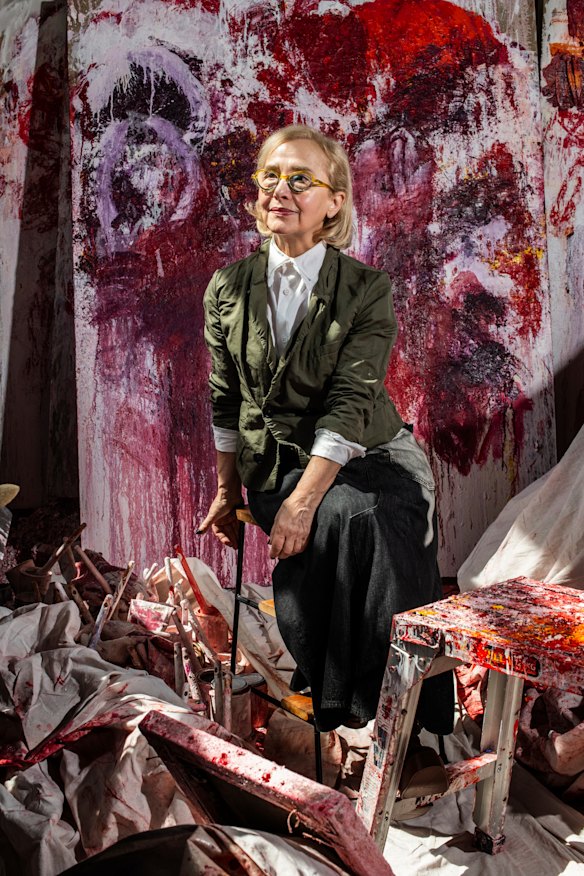
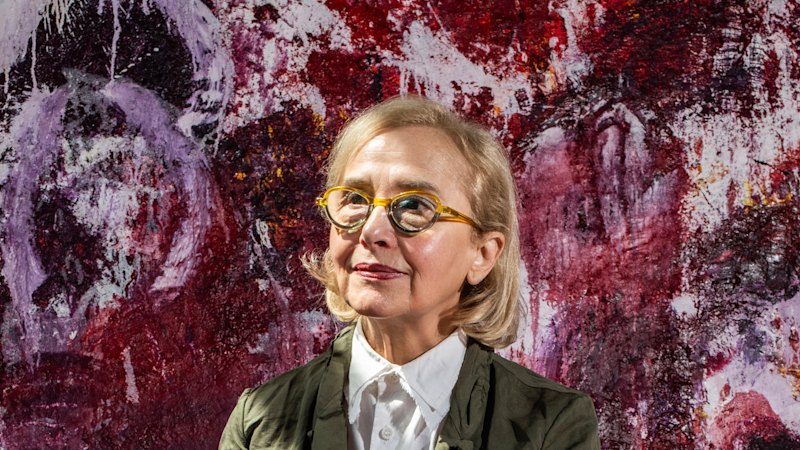
Aida Tomescu in her Rosebery studio. She turned 70 this year, and celebrated 45 years in Sydney.Credit: Steven Siewert
Loading
For Tomescu, life is, and always has been, about the art. “I go from show to show, cycle of painting to cycle of painting,” she says. “I don’t think much of the future, nor of the past.” In this respect, growing up in Romania was useful. “It wasn’t a place of high expectations, and that’s good for a painter. You don’t work for the exhibition, you don’t work for the success, you certainly don’t work for the financial rewards. You work for the painting, and the only expectations you have are for the work.”
Messiaen runs from November 15 to December 20 at Fox Jensen Gallery in Alexandria.