

Australian Nursing and Midwifery Federation state secretary Maddy Harradence.Credit: Chris Hopkins
Australian Medical Association Victorian president Dr Simon Judkins blamed the increase in violence on overcrowding, long waits in hospitals and inadequate access to health services in the broader community.
“When people can’t get the care they need in the community, they end up in the emergency department,” said Judkins, who works as an emergency physician.
“Combine that with mental health needs, drug and alcohol issues, long waits for care and the high stress of being in an emergency department – no wonder they get angry and upset.”
He has received reports that patients and families are smuggling an increasing number of weapons, such as knives and syringes, into emergency departments.
In a bid to stem the violence – which can range from verbal threats to physical assaults – hospitals are installing lockdown security doors and 24/7 response teams.
One mental health nurse, who did not want to be identified because she was not authorised to speak publicly, said a patient recently threw her onto a wall, while another had chased her into the staffroom and tried to kick down the door while she was trembling inside.
“I was running for my life,” she said.
The nurse said that the drug methamphetamine, or ice, had made patients more violent.
She said staff experienced violence daily, but rarely reported these incidents unless they resulted in physical injuries.
“There’s constant verbal abuse,” she said. “At times, staff get spat on. The patients often chase me around corridors.”
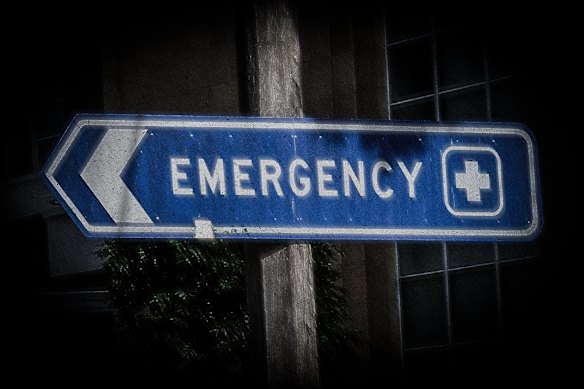
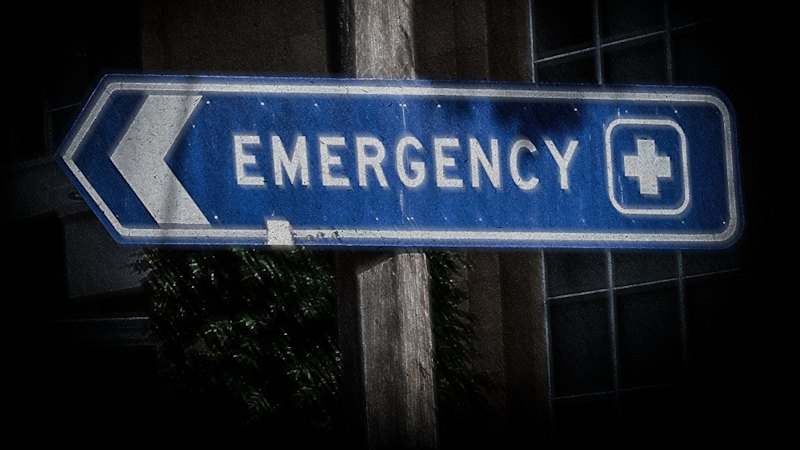
Victorian healthcare workers want legislative changes amid a rise in violent incidents at hospitals.Credit: Marija Ercegvoac
The Health and Community Services Union and the Australian Nursing and Midwifery Federation are calling for health to be made a regulated industry under the Occupational Health and Safety Act – like the male-dominated industries of construction and mining – so that hospitals can be prosecuted for not doing enough to protect staff.
Rebecca Sprekos, assistant state secretary of the Health and Community Services Union, said it was demoralising for staff to report violent incidents and then not see any meaningful change come about as a result.
“Trauma after trauma really takes a toll on staff,” she said.
Fewer than half of mental health emergency department presentations were assigned a mental health bed within eight hours, according to Department of Health’s last annual report.
Northern Health, which provides healthcare to Melbourne’s northern suburbs, reported the highest number of violent incidents in Victoria, with 4275 cases, up from 3649 the previous year. This equates to 69 violent incidents per 100 full-time employees.
In the 2022-23 financial year, there were 643 incidents.
“Every staff member has the right to feel safe at work, and we take this issue extremely seriously,” a Northern Health spokesperson said.
Loading
The spokesperson said the increase in reported cases of workplace violence was due to staff being encouraged to report incidents. The health service had invested heavily in staff training, de-escalation techniques and support services, the spokesperson said.
Latrobe Regional Health was the healthcare service with the second-highest number of violent incidents, with 1842, up from 543 the previous year.
Monash Health, which covers Melbourne’s south-eastern suburbs, recorded the third-highest figure with 1439 cases, which was a decrease on the previous year’s 1576. However, the vast majority of health services reported a spike in violence.
Opposition health spokeswoman Georgie Crozier said the situation was another example of Victoria’s crime crisis.
“Just as crime is out of control in Victoria, violence against our doctors, nurses and paramedics is only getting worse,” she said.
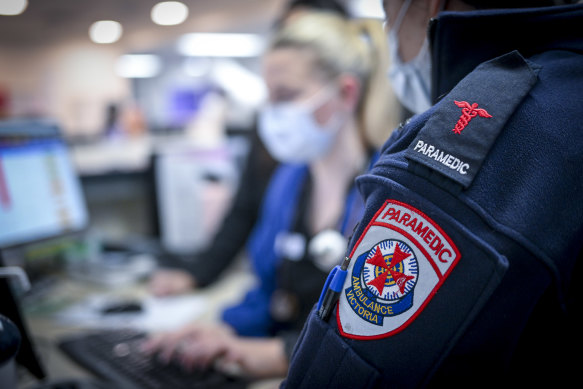
There was a rise in violent incidents against both hospital staff and paramedics in 2024-25.Credit: Eddie Jim
Despite the record figures, violence in emergency departments is actually under-reported, according to the Australasian College for Emergency Medicine (ACEM).
Pain, grief, psychosis, dementia, alcohol and other drugs are said to play a role, with long wait times and overcrowding also contributing factors.
At Alfred Health, there was previously one dedicated code grey response team for the entire hospital. Now, there are multiple code grey teams embedded within parts of the hospital for 24/7 coverage. A code grey is called when a patient or visitor exhibits aggressive or threatening behaviour.
Loading
ACEM president Dr Stephen Gourley called on governments and hospitals to fund and hire appropriately trained security officers at all health services.
“We are seeing more people with weapons coming through emergency departments,” Gourley said.
“If we want frontline services, we’re going to need to start protecting them a little more. A good security guard can work out and sense who is escalating and step in proactively to manage a situation.”
Violence against paramedics has also increased year-on-year. Ambulance Victoria reported 1045 occupational violence incidents in 2024-25, up from 903 the previous year.
A government spokeswoman said health workers deserved to work in a safe environment.
She said health services and their boards had a legal responsibility for maintaining a safe workplace.
“We have invested significant funding for a range of initiatives to keep staff, patients and visitors safe at our hospitals, including de-escalation training and the Safewards program,” she said.
Safewards is running in more than 50 public mental health units across Australia and creates a therapeutic environment for patients.
The Victorian government has made injuring an emergency worker – such as a paramedic – a category 1 offence, which carries a mandatory minimum six-month jail sentence.
One of the biggest reductions in hospital violence year-on-year was at Inglewood and Districts Health Service, north-west of Bendigo. There were 27 incidents in 2023-24 but just two in 2024-25.
Start the day with a summary of the day’s most important and interesting stories, analysis and insights. Sign up for our Morning Edition newsletter.