
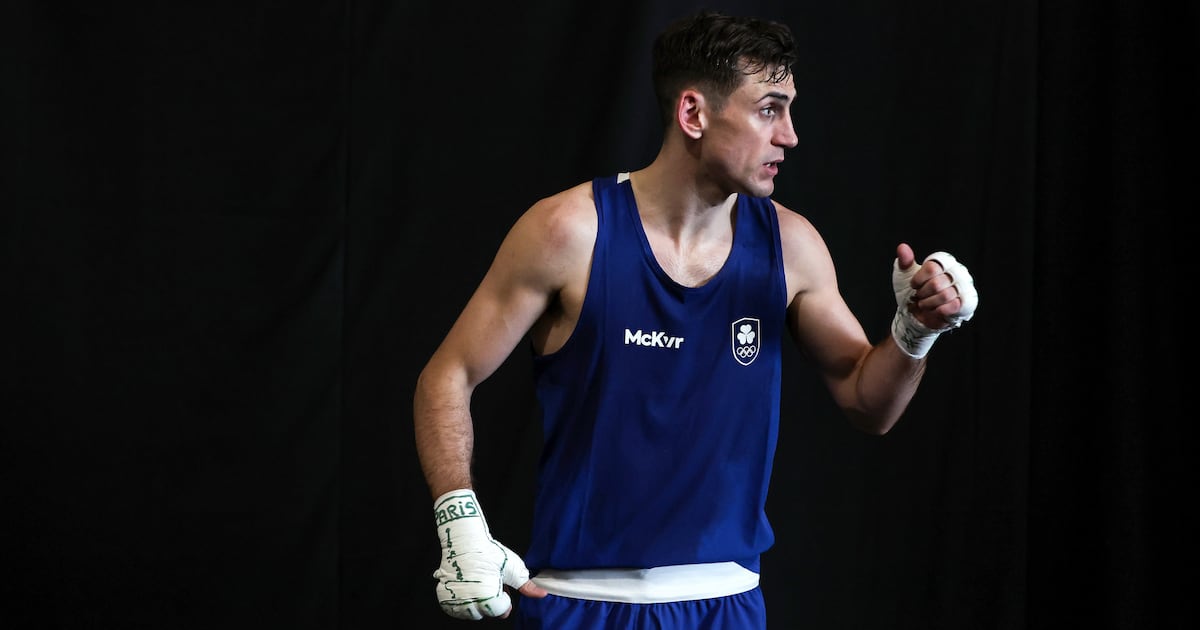
At one point during his startling admission of relief and solace in announcing his retirement, Aidan Walsh is asked if he ever enjoyed his boxing career and the Olympic and Commonwealth Games medals that came with it.
“No, no, I didn’t,” says Walsh. “Looking back on my career, I neglected education, I neglected friendships, neglected a lot of things in life due to getting those medals. I didn’t enjoy it, that’s hard to say, but I’ll be open and honest.”
At 28, Walsh is still in his boxing prime. Still, this decision has been coming for an age. He’d already returned from a length lay-off to qualify for his second Olympics in Paris last year and the mental and physical scars run deep. He’s nothing more to give.
“I wish I’d have done it a number of years ago, so I always knew it was coming. It hasn’t been a difficult one at all. Even looking back on Paris, the emotional pain, the stress, the pressure, the anxiety. I was going through all that.
“It’s public knowledge I’ve struggled over the last while, found the sport quite difficult. I’m just happy that it’s over now, on to the next stage of my life.”
If Walsh is an increasingly familiar tale of the conflicting pressures and anxieties that often make up the elite athlete, he is also thankful for a lot. From humble beginnings with the St Agnes Club in Andersonstown in west Belfast, he followed his older sister Michaela to the famed Holy Family Club, promptly blossoming on the international scene.
He won a Commonwealth Youth Games medal in 2015, then at the delayed Tokyo Olympics in 2021, won the welterweight bronze medal – a somewhat bittersweet experience as he was unable to contest his semi-final bout due to an ankle injury sustained when celebrating his quarter-final win.
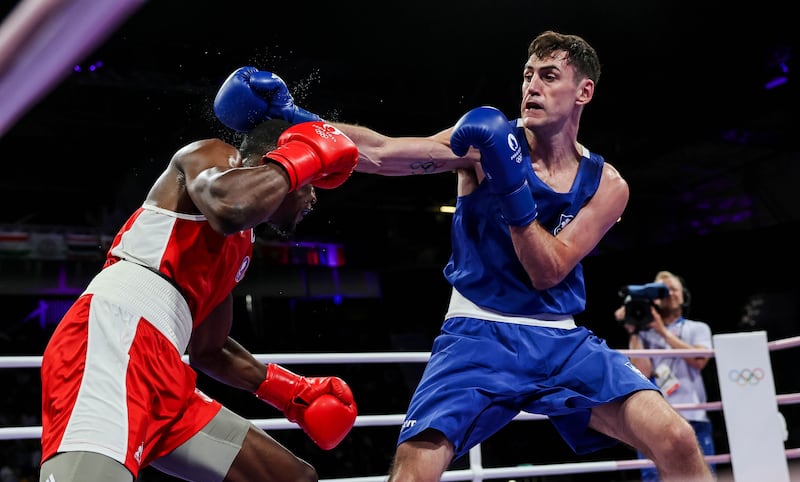 Paris 2024 Olympic Games: Ireland’s Aidan Walsh with Makan Traore of France. Photograph: Ryan Byrne/Inpho
His sister joined him in Tokyo and again in Paris in 2004, their careers aligning when they both won gold medals at the 2022 Commonwealth Games in Birmingham.
Walsh last fought in a club tournament in the US this time last year, and despite the prospect of making a third Olympics there will be no regrets. Nothing Michaela said was going to change his mind either.
“Everyone knows elite sport is hard, it comes with high-performance, but pressure can do funny things, and I was just under so much pressure. Before every tournament, Michaela will tell you, people close to me will tell you, I kept saying ‘this is the last one’.
“I was still performing okay, but mentally and psychologically, I knew it was time to sign out, enjoy life. Michaela didn’t even want me coming back for Paris. She had to pick me off the floor a number of times before competitions, walk me off the gyms with towels over my head to make sure no one sees me breaking down. I’m just glad I’ve put it to bed for her as well.
“And I wish I could give my medal to Michaela, she deserves that Olympic medal far more. I’ve been lucky, I genuinely mean that. Whether it be good draws, good decisions, but if anyone deserves a medal, it’s Michaela. But as I say, you’re better to be born lucky than born rich.”
Walsh lost his opening bout in Paris, and despite retaining €18,000 in Sport Ireland funding for this year, he’d no desire to get between the ropes. He’s doing an MA in sports psychology, hoping to pursue a PhD around the pressures placed on young boxers within the high-performance environment.
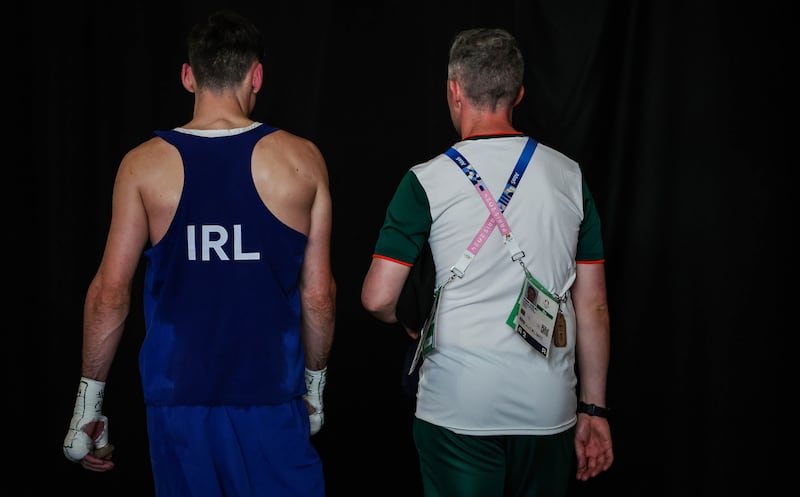 Paris 2024 Olympic Games:
Ireland’s Aidan Walsh makes his way to the athlete exit. Photograph: Ryan Byrne/Inpho
He’s also grateful all the support he got from Dr Paul Gaffney, high-performance psychologist at Sport Ireland, and the Olympic Federation of Ireland (OFI).
“The pressures that athletes are under, it’s just so, so hard. And without the support I wouldn’t have been able to do it. There’s nothing more daunting or terrifying to know you have to walk a path alone, and my goal is to help athletes to make sure there’s someone in that environment to help them, walk along with them. And just feel physically safe, and a sense of belonging. It’s so, so crucial.
“I’ve been helped by some amazing people, Dr Paul Gaffney in particular, within Sport Ireland. I’m in a position now I want to help the next level of Irish boxers coming through, contribute it that way, help it remain the most successful Olympic sport in Ireland.
“Boxing for me was something everyone done, I just jumped into it, happened to be okay at it. My sister happened to be very, very good at it. But whenever you start winning those medals, there’s a lot of stress and anxiety and burn out that comes with it.
“I’ve so many injuries from sport, both physical and psychological, I have to live with for the next two-thirds of my life. You don’t see that when you’re in sport. You’re so driven by medals and performance.”
Despite his own dark experiences, Walsh is no less a fan of the sport.
“Sometimes I think across all high-performance sports we can get so bogged down on this need to achieve medals, but in the process, how can you help athletes feel safe and secure, open to sharing their struggles? Because I think a lot of athletes are struggling, afraid to open up.
“It was a passion for me, at a young age, and I’ve also learned boxing can be used as a vehicle for change, that’s something I want to emphasise. All my role models from a young age were Olympic medallists, but regardless of medals or achievement, it’s the relationships I’ve made that mean the most.”