
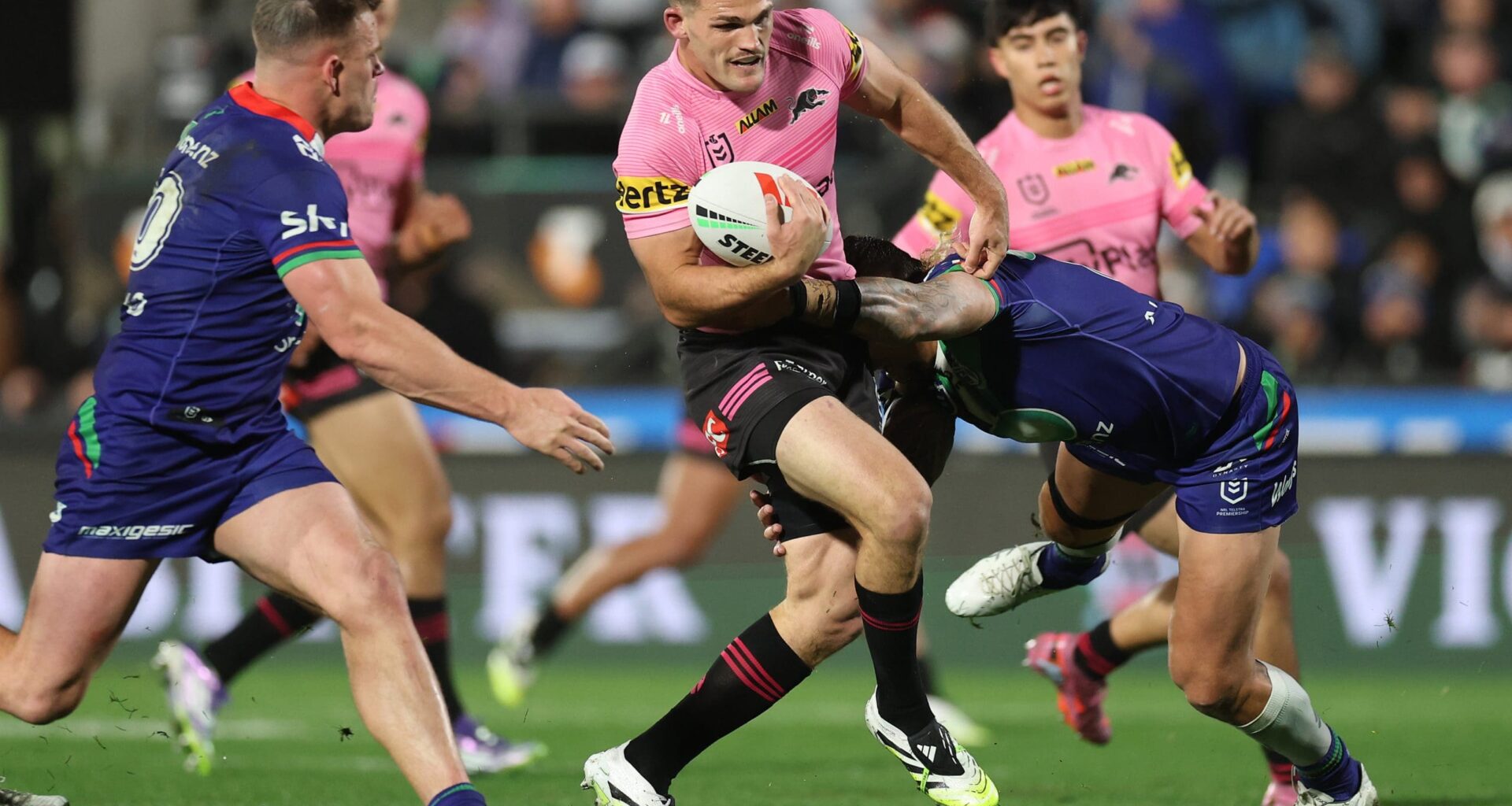
Only in Australia can the national rugby league side win 30 to 8, complete a 3–0 Ashes series whitewash on opposition soil, and still have the headlines focused on tearing down the team’s halfback.
Nathan Cleary, one of the game’s most disciplined and accomplished players, was rated a five out of ten for his performance against England. This says far more about some sections of the media and the fan sentiment created from this approach than it does about the performance of the players.
Some sections of the media have long thrived on the hero and villain cycle. They build players up until they reach untouchable heights, and then they tear them down to drive outrage and clicks. This is the business model that tabloid media have used for decades now, and people need to understand that this isn’t always sports analysis. It’s how these companies make their money.
Nathan Cleary has led Penrith to four straight premierships and five consecutive grand finals. He has redefined what control and precision look like in the modern game.
He is not a flashy player. He is a general. His strength lies in his ability to dictate field position, tempo, and structure through a calculated kicking and passing game.
Penrith’s system is built around discipline and momentum. They grind teams into submission through relentless ruck speed, quick play-the-balls, and sustained pressure. Cleary is the architect of that. He does not need to dominate highlight reels to dominate matches. However, when the need arises, he has proven time and time again he is the man who will pull the game out of the fire.
In the Ashes series, where play-the-balls were up to a second slower than NRL pace, Cleary adjusted. His control of territory and shape created room for his teammates to execute. He was the one taking the hits, absorbing pressure, and setting the platform.
Much of the criticism around Cleary centres on his representative record. The same people who praise his club success are quick to say he hasn’t dominated Origin or international football without his Penrith teammates. That argument completely ignores context. Cleary has played Origin series where he was injured and unavailable.
He has played others while carrying significant injuries that clearly affected his kicking game, even missing conversions he would normally never miss. In this year’s series his leg was heavily restricted, yet he still shouldered the responsibility of leading New South Wales around the park with limited movement.
When he missed matches, Mitchell Moses stepped in and performed well. But the suggestion that Cleary should lose his place because of those circumstances is absurd. It’s not that Moses is a better player. It’s simply that having two elite kickers on the field at the same time, both fit, helps any side. The difference is Cleary’s consistency and command, which are unmatched.
The strangest part about the Cleary criticism is that it comes after dominant wins. The team performed. The scoreboard showed it. The series was never in doubt. England’s attack was disjointed, their ruck control messy, and even on shortened fields with inconsistent ten metres, Australia never looked threatened. International football at season’s end is rarely perfect.
Players are tired, carrying injuries, and running on fumes after long NRL campaigns. Yet Australia still produced a clean sweep in foreign conditions. Cleary’s leadership through structure and game management was central to that. The players themselves know his value. It is only some in the media who seem blind to it.
The problem isn’t just criticism. It’s the entire mechanism of how some sections of the media create sentiment. They overhype individuals in a team sport to drive interest. They make certain players, like Cleary, Latrell Mitchell, and Reece Walsh, the face of everything. When those players succeed, the media crowns them heroes. When they fail or get injured, the same outlets make them the villains.
For Cleary, the insanity of this is that his team didn’t even fail. The Kangaroos dominated every game, yet the focus was on whether their halfback was dominant enough. It’s as if the media are addicted to controversy, even when none exists.
Nathan Cleary is overhyped. He’s overhyped by the media, not by himself. But that doesn’t mean he isn’t a great player. He’s worth every cent that the Penrith Panthers have paid him. Because while he is the architect and the consistent general, there have been so many times in big moments when Cleary has been the one to step up. The 2023 Grand Final is a perfect example.
That performance was historic, but it also showed the other side of the narrative. Yes, Cleary was the match winner and deserved the praise he received. But the coverage made it sound like he won the game on his own.
In reality, there were four or five other match-winning moments that made that comeback possible. Moses Leota’s barnstorming run for the first try shifted the momentum. Stephen Crichton produced three or four individual plays that completely changed the course of the game. If those contributions don’t exist, Penrith don’t win.
Yet Cleary was the only one who really received the hype. That imbalance fuels the cycle. It creates unrealistic expectations and resentment among fans who believe that the player himself is the one being over-promoted, when in truth it’s the media doing it.
This is Australia’s tall poppy syndrome at its finest, and it’s being deliberately manufactured. Nathan Cleary is one of the most professional, humble, and consistent players in the game.
He doesn’t chase headlines, he doesn’t court drama, and he rarely speaks about himself. Yet he’s made to answer for the hype created by others. He’s 27 years old. He’s already won four premierships, two Clive Churchill Medals, multiple Origin Man of the Match awards, and has captained his club at the highest level. He’s done all of this while handling the burden of expectation that few players in history have faced.
The media need to remember that players are human. The constant cycle of overhype and takedown might sell papers, but it erodes the spirit of the game. It’s time they think about how they build people up, and the damage that can be caused when they tear them back down.
Cleary doesn’t need to be the face of every headline or the scapegoat for every loss. He just needs to be recognised for what he is, a complete professional who delivers for his team, time and time again, without ever needing the spotlight.