
Multibillion-dollar infrastructure projects across Australia are fuelling a huge demand for construction workers, but the nation is heading for a shortfall of 300,000 tradies, a new report says.
The skills shortage is forecast to hit the staggering number by mid 2027, according to research released today by Infrastructure Australia.
Currently, the construction industry is battling a gap of 141,000 jobs, but that will blow out in less than two years when the building of housing, transport and energy projects gathers pace.
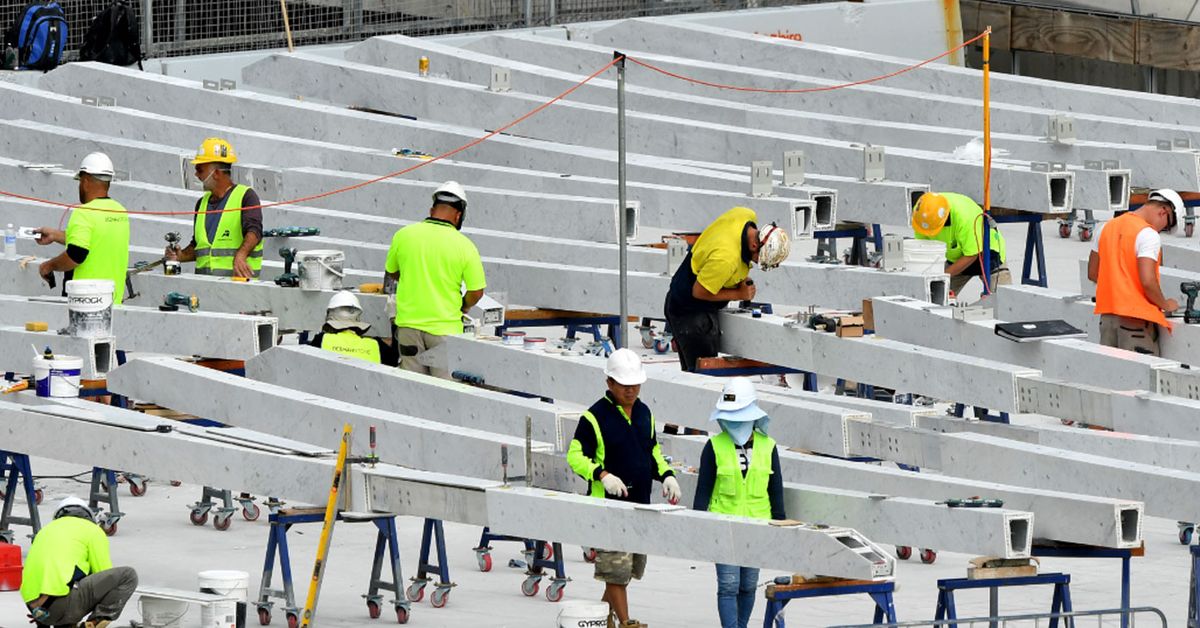
 The Australian construction industry is facing a shortage of 300,000 workers within two years, a new report says. (AAP)
The independent agency’s report tracked national demand to build more than $1 trillion of government and private investment against the economy’s ability to provide the workers and materials required.
Infrastructure Australia chief executive Adam Copp said the construction sector faced “doing more with less” in terms of skilled workers.
“The pipeline shows governments are doubling down on energy transmission and housing projects in a bid to meet their targets, while continuing to deliver the major transport projects we need to enable Australia’s productivity and liveability for decades to come,” he said.
“This added demand will not come without challenges for the market— productivity growth remains sluggish, while worker shortages present a significant risk to the delivery of projects.”
The shortages could impact regional Australia, with 10 areas across NSW, Tasmania and Queensland forecast to experience at least a 200 per cent rise in public infrastructure investment.
 Infrastructure projects worth billions of dollars are being rolled out across Australia. (Nine)
Over the next five years, $163 billion will be splashed on building transmission lines, along with solar, wind, and pumped hydro projects.
“With community buy-in, this mammoth investment presents a once-in-a-generation opportunity for these regions, but to unlock it effectively and ensure we have the people power to do the job, we need to turn the page on three decades of stagnating productivity in construction,” Copp said.
“We need to do more with less.”