
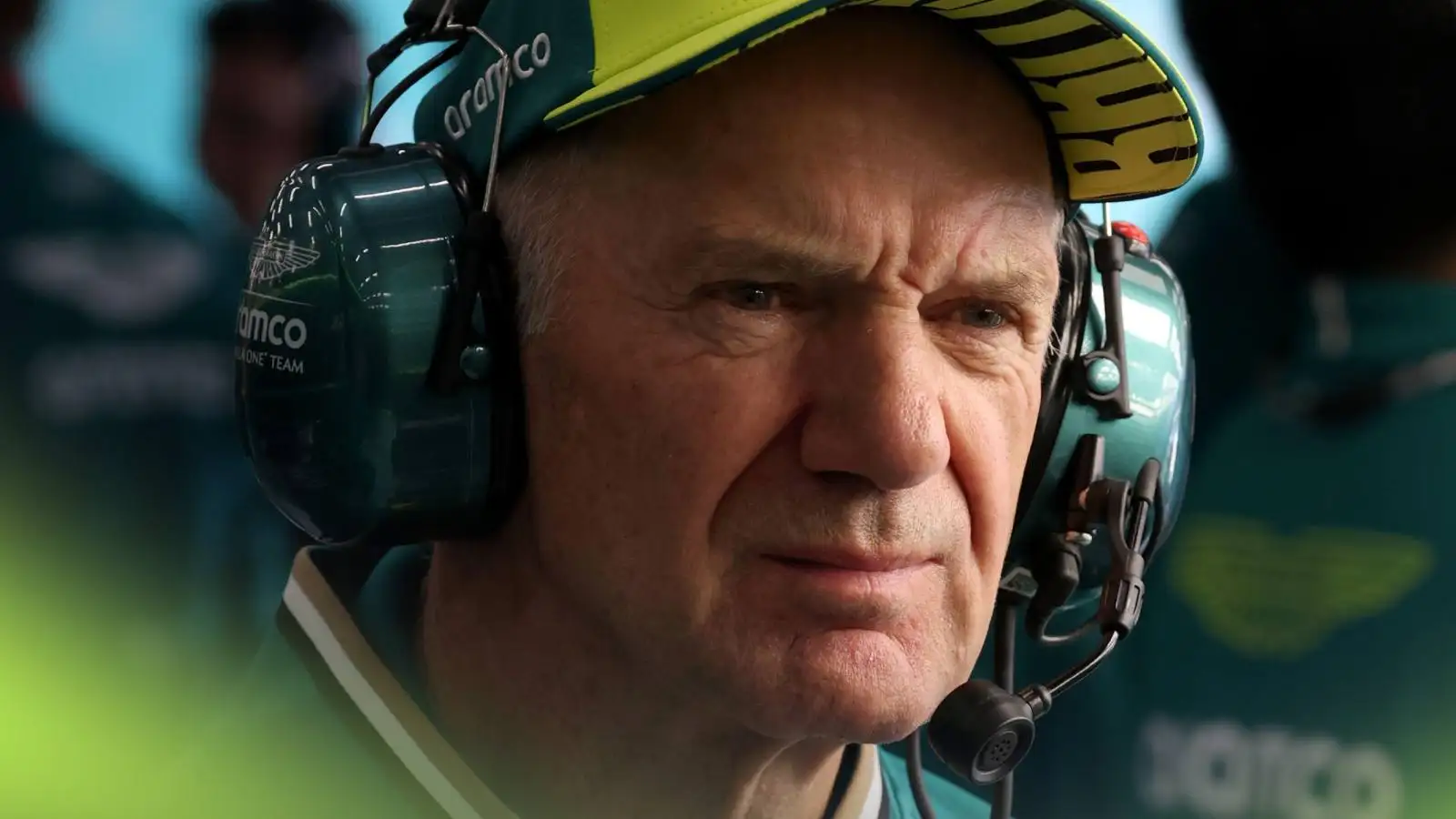
In the modern, ultra-high tech world of Formula 1, a common debate revolves around how significantly driver input counts for success. Adrian Newey offered an insight.
A legend of Formula 1 car design, Newey believes that a common pitfall across the sport is that too much focus is placed on the data, and not enough on listening to the drivers for feedback. Newey spoke of how drivers are reactive to the car, often adapting to issues without realising, so dragging the feedback out of them is key for improvement.
Adrian Newey suggests F1 drivers more important than ever
Newey has contributed to a total of 26 world championship wins across his legendary F1 career. Having designed title-winning cars for Williams, McLaren and Red Bull, Newey will look to add Aston Martin to that collection, having arrived in March as managing technical partner and a team shareholder.
Newey started his F1 career with the March squad in the late 1980s, and since then, Formula 1 has evolved into a data-driven sport. But, despite all that, Newey continues to insist that what hasn’t changed, is that the racing driver strapped into the car remains the best tool for improvement.
“People in the industry, I think, spend too long looking at the data, not long enough listening to what the driver is saying,” said Newey on the James Allen on F1 podcast.
“Because the driver is the most sensitive sensor in the car. And one of the problems, certainly with the sensors on the car is that very often, it will tell you what the car’s doing, but not why it’s doing it.
“The driver is the biggest clue, because drivers are very intuitive beasts. They will automatically adjust how they use the car to suit its limitations, and very often don’t even know they’ve done that. So they can’t report how they change their driving style. You have to effectively interrogate them to try and drag that out of them.”
Newey doubled down on that stance as part of an in-house Aston Martin interview.
More on Adrian Newey and F1 technology
👉 Fresh Adrian Newey boost as Aston Martin hires Schumacher-era Ferrari engineer as consultant
👉 Rise of the machines as driverless AI racing cars return to Yas Marina for climactic showdown
At a time where people debate how much of an influence the driver truly has now in Formula 1, Newey argues that a driver has perhaps never been more influential than at present.
“When I started, there were no onboard data recorders, no telemetry,” he said. “The input of the driver was absolutely critical, because the only clue the race engineer had about how the car was behaving is really from what the driver told him.
“As we’ve moved into the data age, where we have literally 1000s of sensors on the car, transmitting in real time, of course, we can tell a great deal about what the car is doing. Ultimately, the reason it’s doing that very often is down to the driver. It’s down to the driver’s input. The driver still has an absolutely vital role.
“An example of that is all the Formula 1 teams now have what we call driver-in-the-loop simulators.
“These are very much engineering tools. They’re not for driver development. Primarily, they’re for engineering tools, so that we can evaluate different setups, springs, roll bars, wing settings and so forth before we go to the next race, or indeed, fundamental research, suspension geometry, aerodynamic map shapes, those sorts of things that we can’t normally change at a race meeting, but we want to know for future development direction.
“Why do we need the driver-in-the-loop, rather than just doing it as a pure offline simulation? The reason is that none of us have managed to create a good enough driver model that can effectively then articulate what that model, that synthetic model, is feeling. So we need the human to feel it and then to tell us what he feels.
“The driver role is as important as it’s ever been. You could argue in some ways it’s even more important, because we now have the ability to combine that directly with the data to understand exactly what the car is doing, and what we need to do to make it faster.”
Newey is hard at work crafting the F1 2026 Aston Martin machine, as the sport prepares to embrace overhauled chassis and power unit regulations from next year.
Read next: Adrian Newey in ‘design trance’ as F1 2026 prospects raised