
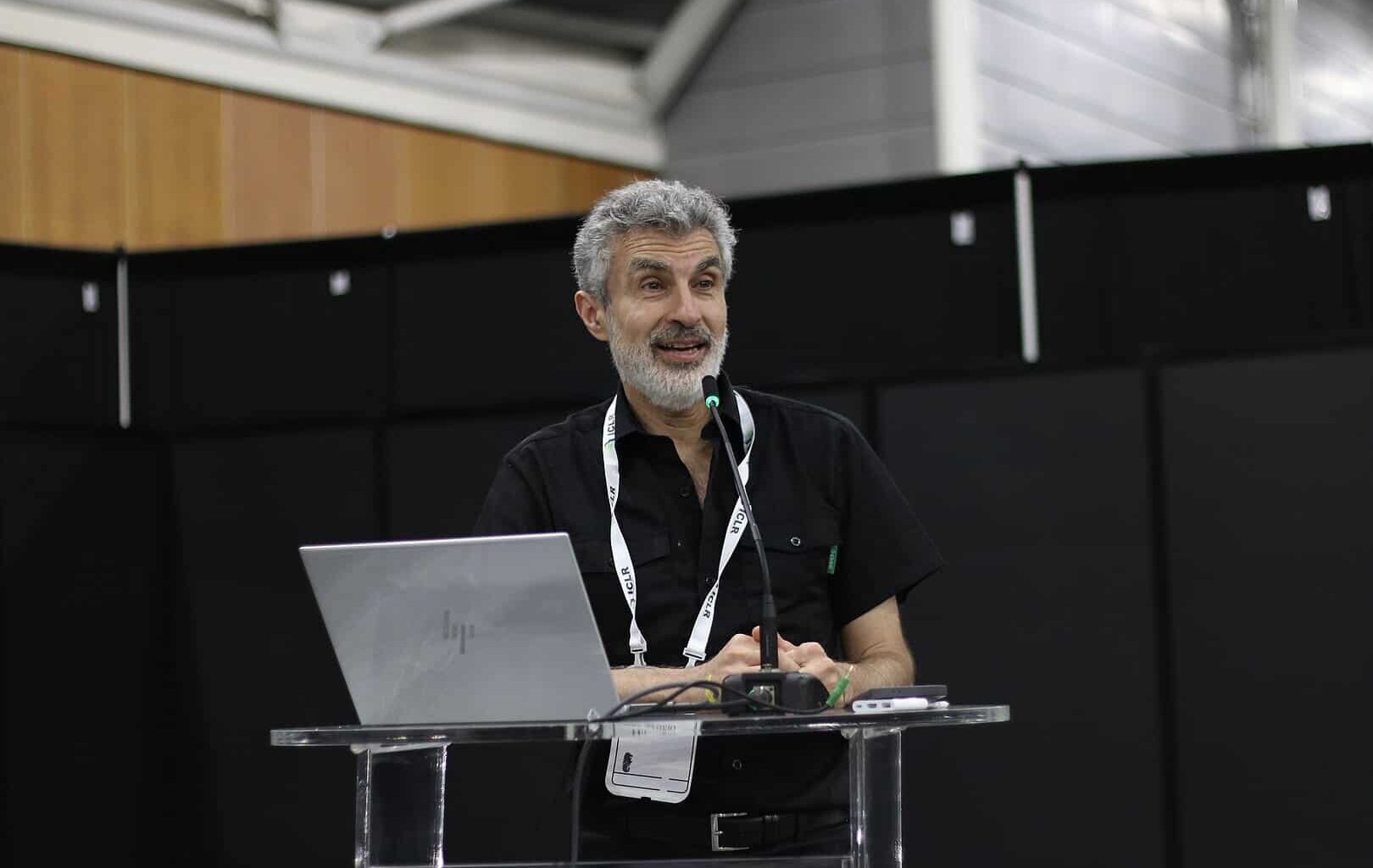
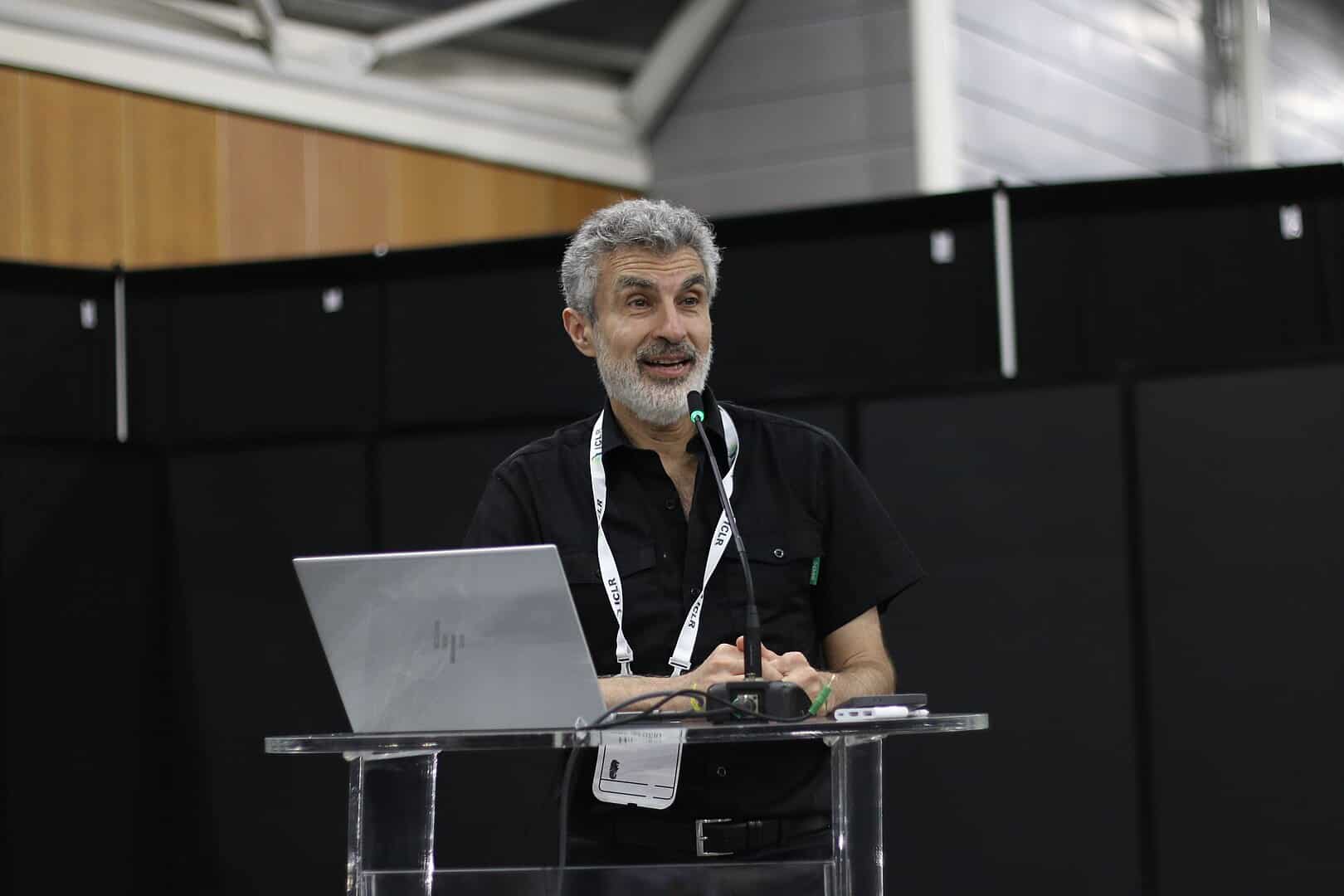
Yoshua Bengio, also known as ‘Godfather of AI’. Credit: Xuthoria / Wikimedia Commons / CC BY-SA 4.0
Dubbed as “The Godfather of AI,” Yoshua Bengio, a computer scientist at the University of Montreal, has become the first academic to surpass one million citations on Google Scholar, according to data from the platform. The milestone further cements his status as a leading figure in artificial intelligence, often referred to as one of the godfathers of AI.
Bengio, alongside Geoffrey Hinton of the University of Toronto and Yann LeCun of Meta, received the A.M. Turing Award in 2019 for foundational work on neural networks. Their contributions helped shape the field of machine learning, driving advances that are now central to everyday technology.
Among Bengio’s most cited publications is the 2014 paper Generative Adversarial Nets, co-authored with Ian Goodfellow and others, which has been cited more than 105,000 times. He also collaborated with Hinton and LeCun on a widely referenced Nature review.
Several of his key papers introduced concepts like attention mechanisms, a method that allows machines to better interpret language. This technique played a pivotal role in the development of advanced chatbots, including ChatGPT, which launched in 2022.
Machine learning papers dominate citation rankings
Computer scientist Kaiming He of the Massachusetts Institute of Technology described Bengio’s citation record as a reflection of the fast-growing influence of machine learning.
He pointed to recent findings showing that eight of the ten most cited scientific papers since 2000 are in this field. He himself co-authored what is currently considered the most cited scientific paper of the 21st century.
Congratulations @Yoshua_Bengio!! Possibly the first scientist with one million citations in the world. Crazy how fast the field has grown 🤯 pic.twitter.com/A3QTNBSyPb
— Danijar Hafner (@danijarh) October 25, 2025
While Bengio’s impact is widely acknowledged, experts have raised questions about the limitations of citation metrics. Alberto Martín Martín, an information scientist at the University of Granada in Spain, said that although Bengio’s scholarly output is exceptional, raw citation counts can be misleading.
He warned that some researchers attempt to manipulate these numbers and advised against using such rankings for institutional promotion.
The ‘Godfather of AI’ reflects on impact beyond metrics
Citation counts also vary depending on the database. Platforms like Web of Science, Scopus and OpenAlex tend to report lower figures than Google Scholar, which includes references from books, preprints and other online sources in addition to peer-reviewed journals.
Bengio said he frequently uses Google Scholar and believes it has transformed scientific research by making academic information more accessible.
However, he noted that he pays little attention to his own citation numbers, emphasizing that researchers should focus on producing quality work rather than chasing metrics.
He added that prioritizing citation counts could shift focus away from meaningful science and the pursuit of truth.