
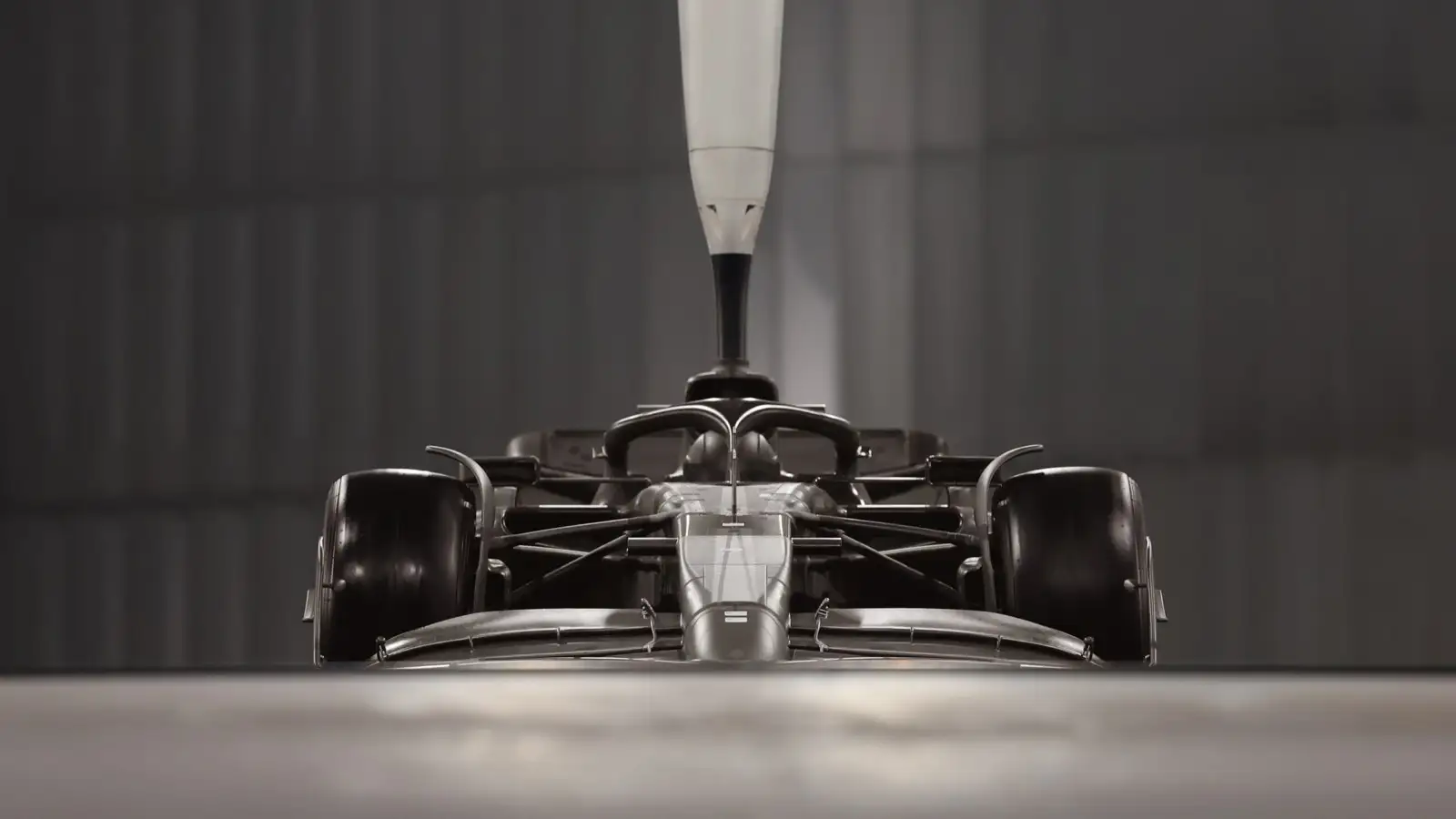
Despite an ever-growing move toward simulation, wind tunnel remains a crucial tool in the design and development of Formula 1 machinery.
Over the years, we’ve seen teams refurbish or even abandon their own facilities in search of more accurate correlation. As we enter a new regulatory era, let’s take a look at where every F1 team stands.
Tunnel Vision
The wind tunnel facility is an expensive but critical tool, with teams having found advantages down the years through advancements in how the tunnel performs.
The FIA has, over time, reduced the teams’ reliance on their wind tunnel facilities, with the days of multiple tunnels being run 24/7 now a distant memory.
That line was drawn in the sand in 2009, with the introduction of the 60 per cent scale model still in place today. Things have moved on considerably more since then, with teams now restricted to a set number of runs based on their position in the Constructors’ Championship.
This sliding scale approach, which also covers the teams’ CFD usage, provides those at the bottom of the table and new entrants with the most runs, in an attempt to reduce field spread.
Constructors’ Championship Position
Wind Tunnel Entitlement (%)
1
70
2
75
3
80
4
85
5
90
6
95
7
100
8
105
9
110
10
115
The cyclic nature of Formula 1 had, for a time, seen many teams abandon their in-house facilities in favour of the Toyota wind tunnel, based in Cologne.
Their state of the art facilities had become available due to the car manufacturer’s withdrawal from the sport but, with it having invested heavily in two on-site tunnels and having capacity to spare, Toyota opted to lease the environment to recoup some of its costs.
Toyota’s introduction of technologies such as Particle Imaging Velocimetry and Continuous Motion systems offered teams a more efficient means to test their solutions, which they have since improved upon and incorporated within their own facilities.
Where are they now?..
As time has gone by there’s been somewhat of an exodus from the Toyota facility, with the likes of Ferrari, McLaren, Williams and Aston Martin (as Force India) having all spent time there at one time or another.
Cadillac, which is entering the sport in 2026, has opted to use the Toyota facilities, as it’s a great way for them to compete without having to build their own infrastructure.
McLaren, which was the last team to make its exit from TWG, having used it since 2010, has been using its own facility at the MTC since the middle of 2023.
The team considered building a new facility but eventually opted to refurbish its existing tunnel, albeit this posed some challenges due to the physical constraints of remaining within the confines of the MTC.
Nonetheless, results speak for themselves, with the team having taken advantage of improved correlation and performance between its simulation tools, the tunnel, and the real world environment.
Red Bull is currently undergoing a similar process, though it has opted for new facilities linked to the factory in Milton Keynes, rather than refurbish its facility in Bedford once more.
Described as a ‘Cold War relic’ by Red Bull, its current facilities will be used to develop next year’s car but, with work well underway it’ll likely have its new tunnel online to deliver updates later in the season, though the target is to be fully operational for 2027.
Aston Martin is another team that’s recently moved into its own facilities, which comes as part of a wider expansion of its campus style facilities at Silverstone.
Ferrari, Mercedes, Alpine, Sauber/Audi and Williams are all operating in-house tunnels, all of which have been refurbished to one degree, or another in recent years, and most have replaced their rolling road designs for this generation of machinery in order to improve the results that can be achieved.
The outliers that currently exist, along with newcomer Cadillac, are Haas and Racing Bulls, as they don’t have their own facilities.
Haas is using Ferrari’s facilities, whilst Racing Bulls recently stopped using the wind tunnel it had been using in Bicester and now uses Red Bull’s facility instead, with the aero department also having moved to Milton Keynes.
Read next: Rise of the machines as driverless AI racing cars return to Yas Marina for climactic showdown