
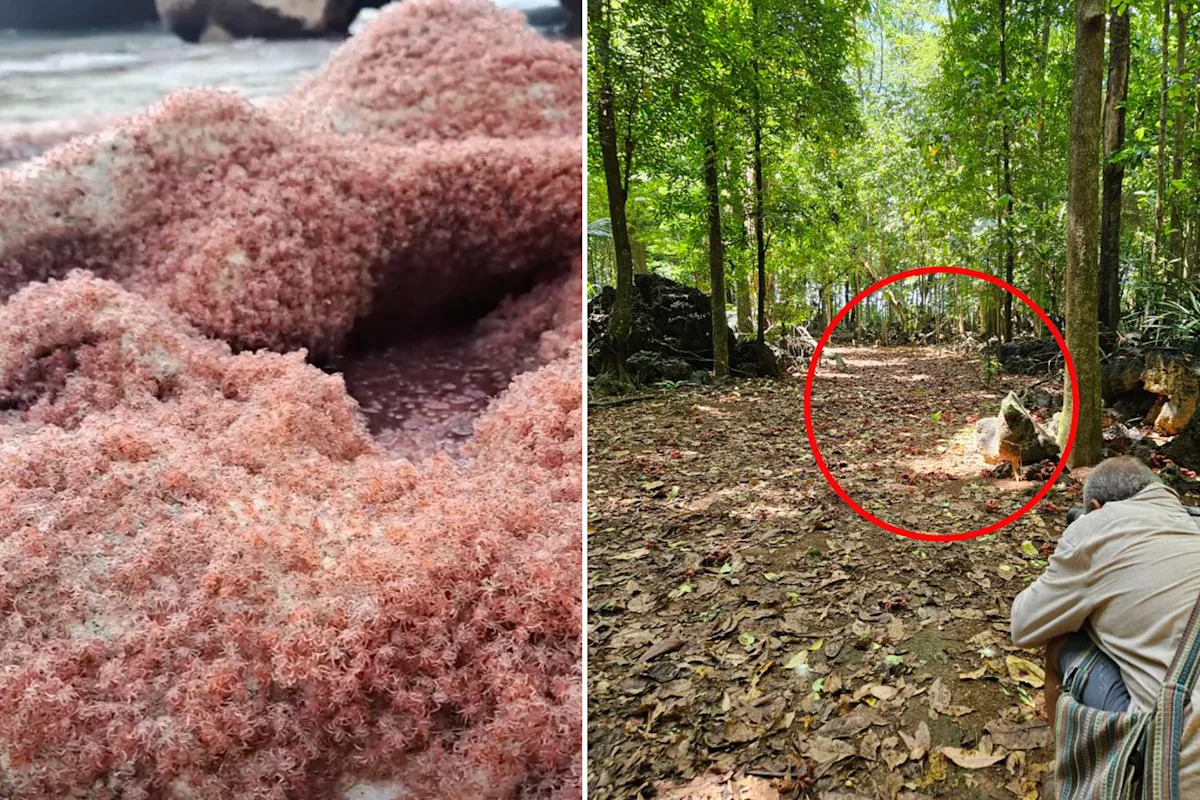
It’s one of the most phenomenal spectacles in Australia, and now the remarkable red crab migration on Christmas Island — in which tens of millions leave their forest burrows to make the journey to the coast — has entered its “exciting” yet brutal next phase.
The incredible event is all to do with the moon reaching its last quarter, a spokesman for the Queensland Department of National Parks shared with Yahoo News Australia.
“The egg-laden crabs leave their burrows and amass on the shoreline, packing into shady spots above the waterline,” he said.
In some areas, there may be “up to 100 crabs per square metre” of beach or rock. “When the high tide starts to turn before dawn, the crabs move into the sea and release their eggs before returning to the forest,” the spokesman said.
Every year on Christmas Island, triggered by the onset of the wet season, the crabs move en masse to breed, creating rivers of red across the island’s roads and landscapes. The journey is full of risks, with the crabs navigating steep terrain, roads, and predators.
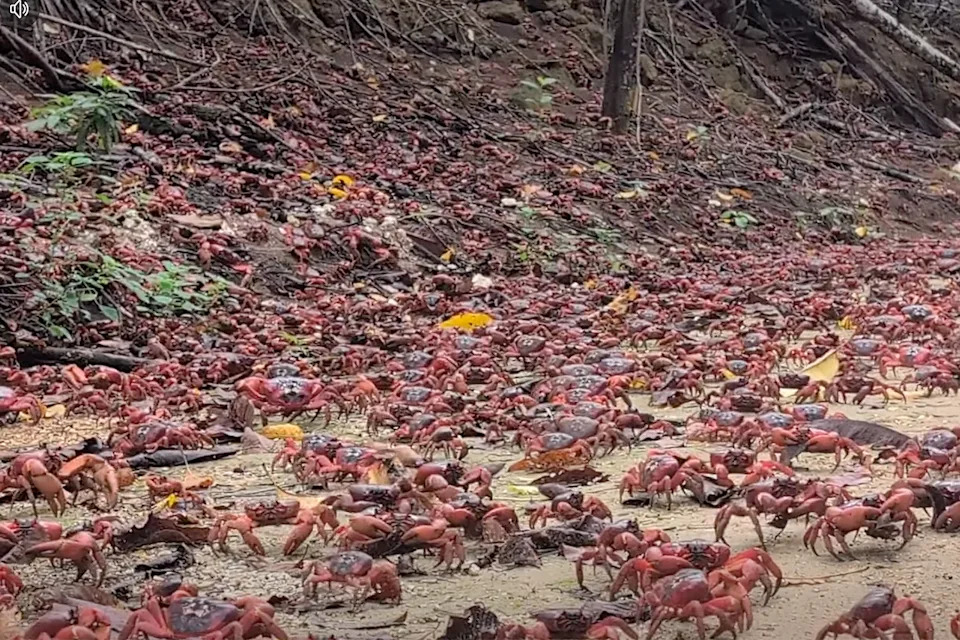
Tens of millions of crabs embark on the incredible yearly journey. Source: Queensland Government
Innovative solutions have been rolled out over the years to increase the crabs, including wildlife crossings and bridges to minimise the risk of collisions with vehicles.
Precautions in place as red army of crabs sweep Christmas Island
The migration is tightly timed with adult crabs aiming to reach the sea in sync with the lunar cycle to release their eggs into the ocean. “Vehicle interactions are the most significant impact on migrating crabs, especially during early morning and late afternoon when most crab movement occurs,” the spokesperson said
Rangers prepare each year by closing roads, erecting crab barriers, clearing underpasses and putting traffic management measures in place. “Christmas Island National Park staff and volunteers use garden rakes to help move the crabs out of harm’s way and give them safe passage on their journey,” the department representative said.
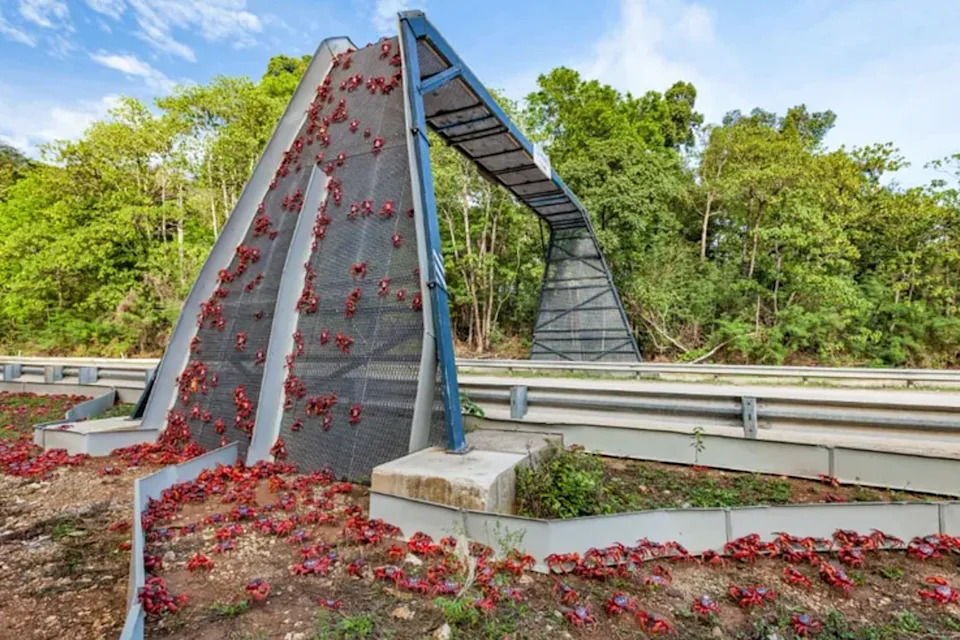
Vehicle collisions are one of the biggest threats during their migration. Source: Wondrous World Images
What happens after crabs spawn?
Spawning may occur on five to six consecutive nights during the migration period, with the larvae then embarking on an incredible journey.
“Red crab larvae hatch from the eggs as soon as they make contact with the water,” the spokesman said. “Clouds of larvae swirl near shore before being taken out to sea by waves and the receding tide.
“They grow through several larval stages over the next month, eventually developing into prawn-like animals called megalopae. The megalopae gather in pools close to the shore for one or two days until they become fully formed baby crabs and emerge from the water.”
Measuring about five millimetres across, the tiny crabs then begin marching inland, taking around nine days to reach the safety of the plateau. There they will stay hidden in rocky outcrops and forest debris for the first three years of their life.
However, the vast majority of larvae never make it out of the water — instead, they are eaten by fish, manta rays, and the enormous whale sharks that visit Christmas Island to take advantage of this annual feast. It might sound brutal, but it’s all part of the natural food web.
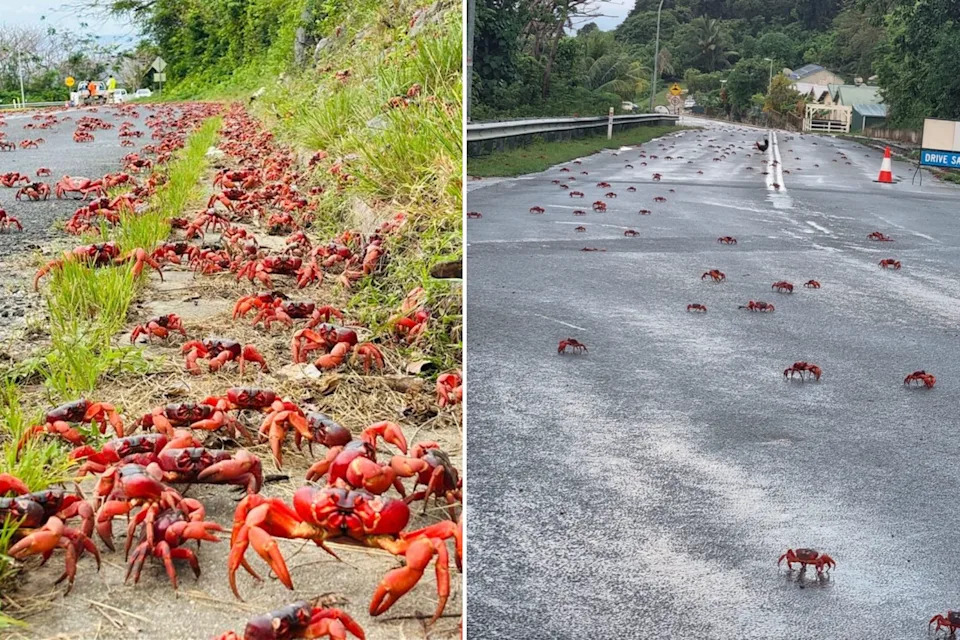
Motorists are warned to drive with care during the migration period. Source: Queensland Government
“Most years, the survival rate of baby crabs is very low,” the spokesperson said. “But once or twice a decade, a huge number will survive, which is enough to maintain the island’s large red crab population.
“Weather conditions also play a large role during their first land march to the plateau, dry and hot days without rain will prevent many from surviving this initial journey. Baby crabs usually return to shore three to four weeks after spawning.”
Some of the most incredible places to see the red crab spawning are Flying Fish Cove, Ethel Beach and Greta Beach on Christmas Island. Island drivers are urged to minimise vehicle use during these times.
After decades of decline due to habitat loss, invasive species, and human activity, Christmas Island’s red crab population is showing encouraging signs of recovery.
Conservation efforts, including predator control, reforestation, and safe road crossings, have helped numbers rebound, with millions now returning each year for the iconic migration.
Love Australia’s weird and wonderful environment? 🐊🦘😳 Get our new newsletter showcasing the week’s best stories.
