
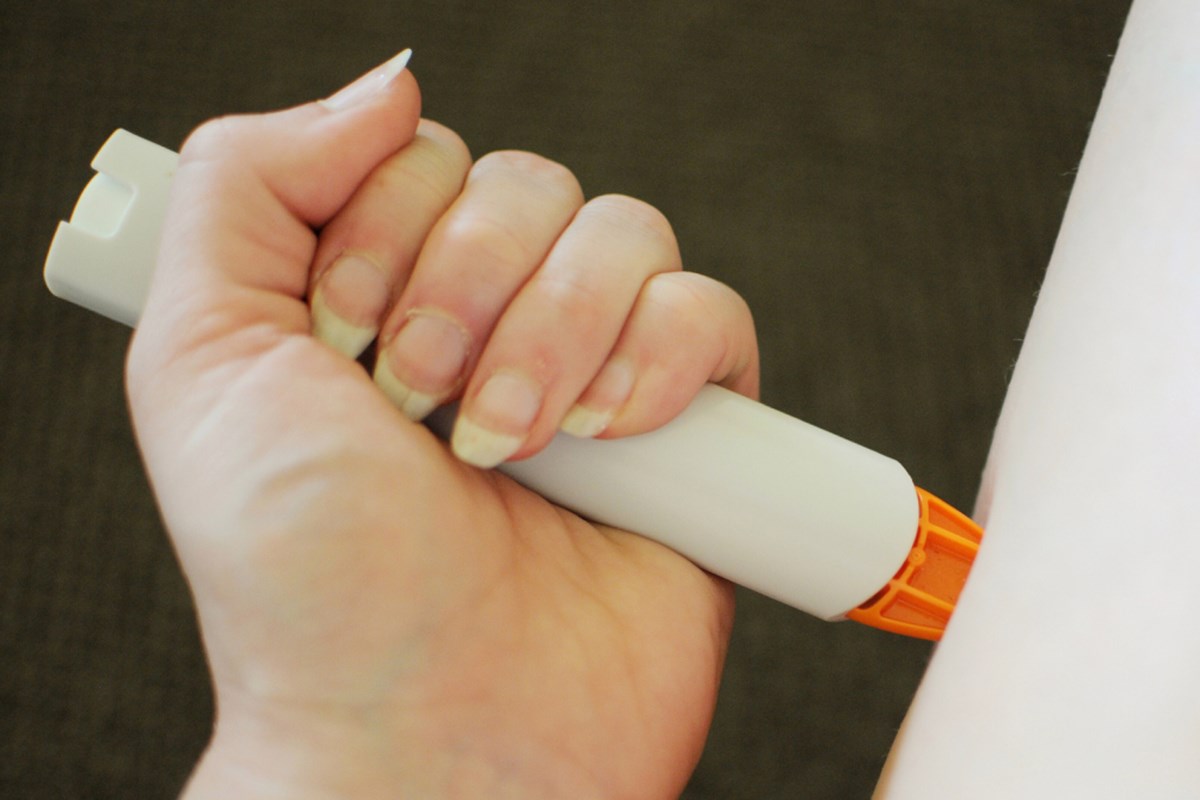
Canadian Medical Association Journal article warns against relying on less effective treatments for anaphylaxis
A medical practice article in the Canadian Medical Association Journal (CMAJ.ca) is advising that Epinephrine is the only treatment that prevents death in anaphylaxis – a severe and potentially life-threatening allergic reaction.
Epinephrine is often administered using the epi-pen style auto injection device that uses a needle that injects medicine right into a person’s major thigh muscle.
“Intramuscular epinephrine rapidly reverses airway edema and shock,” said the article, which was a warning against using less-effective treatments. Current evidence does not support use of antihistamines and corticosteroids to prevent progression of anaphylaxis or biphasic reactions, said the article. The article said the use of antihistamines and corticosteroids should not delay the use of epinephrine injection.
Anaphylaxis is a severe allergic reaction often associated with foods such as peanuts, tree nuts, milk, eggs, fish, shellfish and sesame seeds.
The article commented on the use of second-generation antihistamines, which are often used to support first generation antihistamines, in treating allergic reactions.
Second-generation H1-antihistamines are used because they are highly effective for allergies but cause significantly less drowsiness and have fewer side effects than older, first-generation antihistamines, said the article.
Health Canada estimates said roughly 600,000 Canadians may be at risk of life threatening allergic reactions and the number is rising especially among children.
There are patients who shy away from using the needle-sourced treatment such as the epinephrine pen to prevent anaphylaxis. There is an epinephrine nasal spray now being suggested, as an alternative. It is not yet available in Canada.
“Intranasally delivered epinephrine could benefit those with needle phobia or other limitations,” said the article.
While the nasal spray has been approved in the United States, it is still under review in Canada as a needle-free option that could be prescribed for people who have a severe allergic reaction.
Intranasal epinephrine is approved in the United States but, as of November 2025, intranasal epinephrine remains under review in Canada for approval as a needle-free option for patients aged four years and older and weighing at least 15 kilograms, said the article.
Recommendations for emergency medical services (EMS) after epinephrine use vary, said the report.
A 2023 practice parameter update on anaphylaxis advises that home observation may be reasonable if symptoms resolve completely within 10 to 15 minutes after a single epinephrine dose, provided the patient has immediate access to a second dose and to emergency medical care. In contrast, 2018 guidance from the Canadian Paediatric Society recommends that all children treated with epinephrine be assessed in an emergency department.
Auto-injectors are recommended for all patients with first-time or prior anaphylaxis, said the article. People with less severe allergic reactions, those with risk factors for anaphylaxis (e.g., mast cell disorders, uncontrolled asthma), and those who are located more than 30 minutes away from EMS response or transport to hospital should also be prescribed self-injectable epinephrine, said the article.
The full text of the article can be found online.