

Cor Vos
Gravel racing has become more and more popular in recent years, and with that popularity has come the rapid rise of the professionalism of the sport. Riders are able to make a living from sponsorships and by competing in the different series, from the Lifetime Grand Prix to Gravel Earth. Events have had to figure out how to attract the pros while also catering to the everyday rider who put the discipline on the map. In recent years, the UCI, too, has shown it wants a piece of the pie.
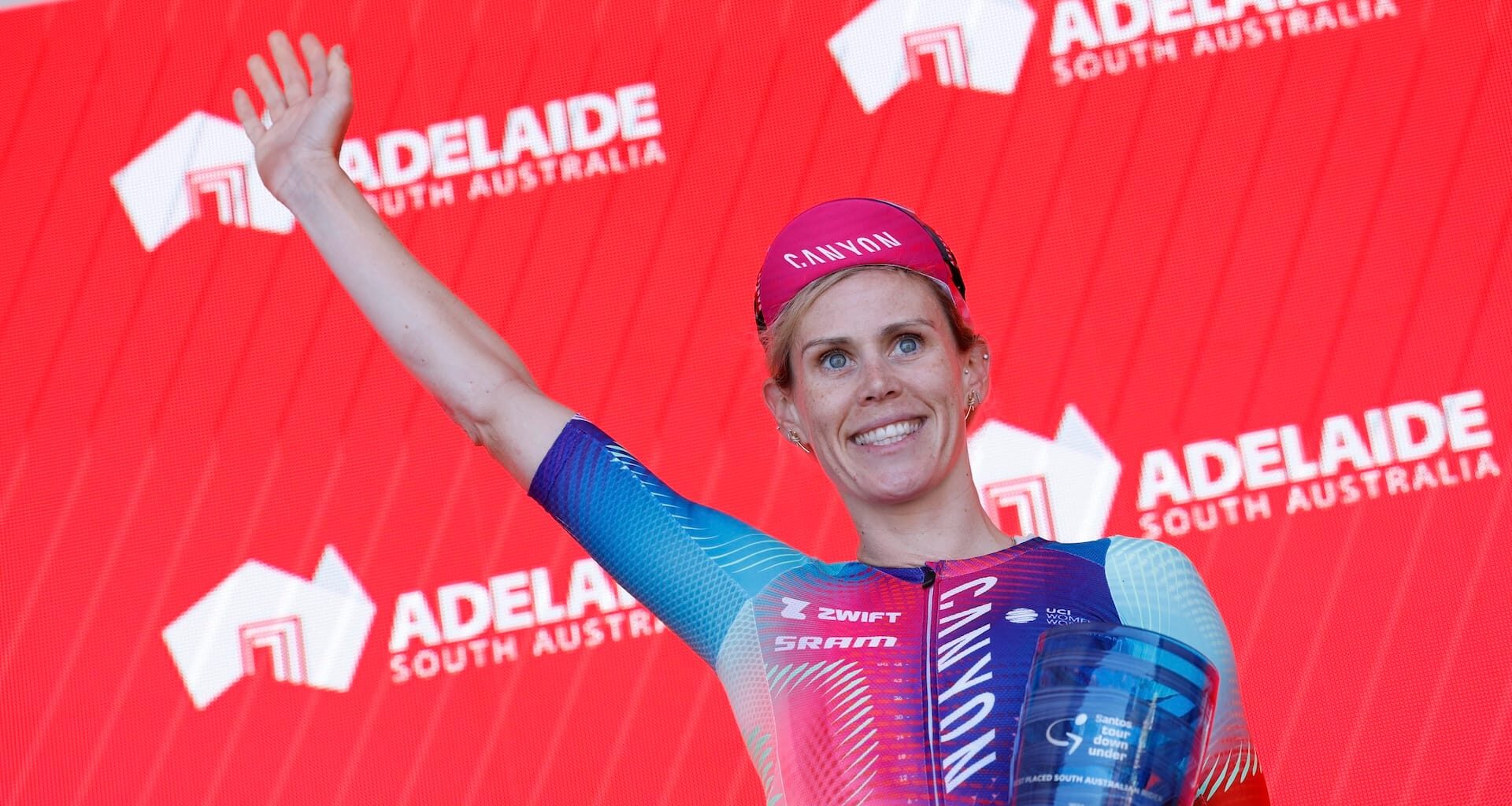
As one of the first road professionals to turn her attention to gravel, and a race organizer herself, Tiffany Cromwell sees the gravel landscape in a unique way. She understands the roots that set gravel apart from road racing, but also sees the ways in which the “vibes first” atmosphere is lining up with the rigid discipline gravel riders were trying to get away from. Cromwell enjoys the adventure that gravel brings, as well as the racing, and believes the sport is in a crucial place in its development. Turn to one side and it will continue down the same road it is on now; turn another direction and it could become a roadmap for other disciplines to follow.
Cromwell raced her first gravel event in 2019, eight years after turning pro on the road. In the weeks before the Colorado Classic, her team sent her to SBT GRVL in Steamboat, Colorado. She was there for Canyon, a major sponsor of the event, and although she participated in the race, she was in attendance as much to represent the brand before the stage race on the road a few days later.
“[SBT GRVL] was my first introduction to seeing anything gravel,” Cromwell told Escape Collective. “It was such a cool vibe, so much fun. Everyone was there to mingle. And it wasn’t about the racing. Fast forward to the last couple of years, and it’s really flipped on its head.”
Cromwell raced the 160 km course that year, and when she was re-negotiating her contract with Canyon-SRAM for the 2020 season, team manager Ronnie Lauke had an idea for Cromwell: add some more gravel events to her calendar.
“[Lauke] pitched me ‘OK, we know you always need new things to keep you excited. What’s your thoughts on gravel?’ And that’s kind of how it all started,” Cromwell said.
“At that time, it was more about the sponsors being there, you know, doing all the events and the racing was secondary. And you could get away with that, because the level wasn’t where it is now. I could go there, I could still be competitive on my road base.”
In those early years, Cromwell was sweeping up gravel victories while also maintaining a high level on the road. In 2021 AusCycling tapped her to represent Australia in the road race at the 2020 Tokyo Olympics. But it wasn’t long before her reliance on road fitness wasn’t cutting it anymore.
“Fast forward two years and bikes are getting more performance driven, more aerodynamic, weight reduced – from adventure bikes to racing bikes,” Cromwell explained. “The conversation always, for every race, is mainly what tire pressure you’re using, especially at a race like Unbound, where there’s always that high risk of peanut butter mud, and all these sorts of things.
“Then comes the nutrition side. It went from being very much self-sufficient; you had to carry everything yourself. On the men’s side, it used to be mutual respect, like you stop at the aid stations together. Then it was, ‘I take my my hydro pack, and I’m not stopping.’ So then it became nobody’s stopping anymore. Then certain races started allowing teams or support teams to feed their riders. So then it goes a little more road, but it meant you didn’t have to carry everything yourself.”
Over the years, Cromwell, with all her years of road experience, watched the gravel scene adapt rapidly with the growing popularity. And with the growing popularity came interest from the UCI.
“Love it or hate it, the UCI coming in definitely helped grow it around the world,” Cromwell said. “That’s where Europe suddenly got on board.”
The UCI’s interest in gravel has been controversial and the governing body’s control of the discipline has varied across different continents. In the United States, where gravel has been around a little longer, a series like the Lifetime Grand Prix can exist separate from the UCI. Around the world, others have tried to start rival series, some attached to the governing body, some not. Meanwhile, the UCI made a Gravel World Championships, but the race has been dominated by non-gravel riders since Pauline Ferrand-Prévot won the inaugural edition in 2022 – the first and only gravel event the Tour de France Femmes avec Zwift winner has ever done.
This year, the Gravel World Championships copped criticism from road fans who didn’t understand what they were watching, and from gravel fans who don’t see the race as a legitimate gravel race. For Cromwell, the key thing to understand is that “gravel” has many different interpretations.
“In the first years, no one really knew what to expect,” she said. “Even me – I wasn’t motivated for the very first one, I wasn’t even going to race it. I had come from the more USA side, and back then it was still very [USA] heavy in the races. There weren’t many in Europe.
“[The first Gravel World Championships] was an interpretation of what gravel is in that area.”
One of the big differences between continents is the available terrain. In the US, there are long stretches of uninterrupted gravel roads like those of Unbound. In Europe, the gravel roads are often a lot more unkempt, which is why we’ve seen varying editions of the Worlds when it comes to course design. Cromwell has raced once in South Africa and said that it too had its own unique take on “gravel”, with 50 km of road before the gravel started. She compared it to a Gran Fondo. As for the World Championships to be held in Western Australia in 2026, Cromwell thinks it will fall between some of the best parts of gravel racing in the US and in Europe.
“The last two have been put on by great organizations in Bolero,” Cromwell said. “Everybody has their opinion, but ultimately, we have to be appreciative of what they put on. They’ve given live coverage of the races, which we get in no other race. You have huge crowds because it’s a [cycling heartland], but also they had to work with what they have. I say it was more like a Classic.
“And when you suddenly get all the road pros coming in, it is more like a road dynamic in terms of the tactical side. You go from a lot more individuals to some racing together, some racing as individuals. It’s fast courses, which also lends itself a bit more to road, dynamic racing.
“If Nice went ahead, I can guarantee you that would have been a very different race to what we had in Holland. Just because I know the gravel there. It’s super chunky. It’s super hard, you wouldn’t have been able to ride it like a road race. But we got Holland – they had to put it together in six months. And I think it was a fun course.
“People criticize some European courses but you have to work with what you have. You don’t have these big open gravel roads like you find in America, like you find in Australia. They just don’t exist. So that’s why you are racing through forests, through bike paths, through cobbles, and they’re kind of just interpreting.”
This post is for paying subscribers only
Subscribe now
Already have an account? Sign in
Did we do a good job with this story?
👍Yep
👎Nope