
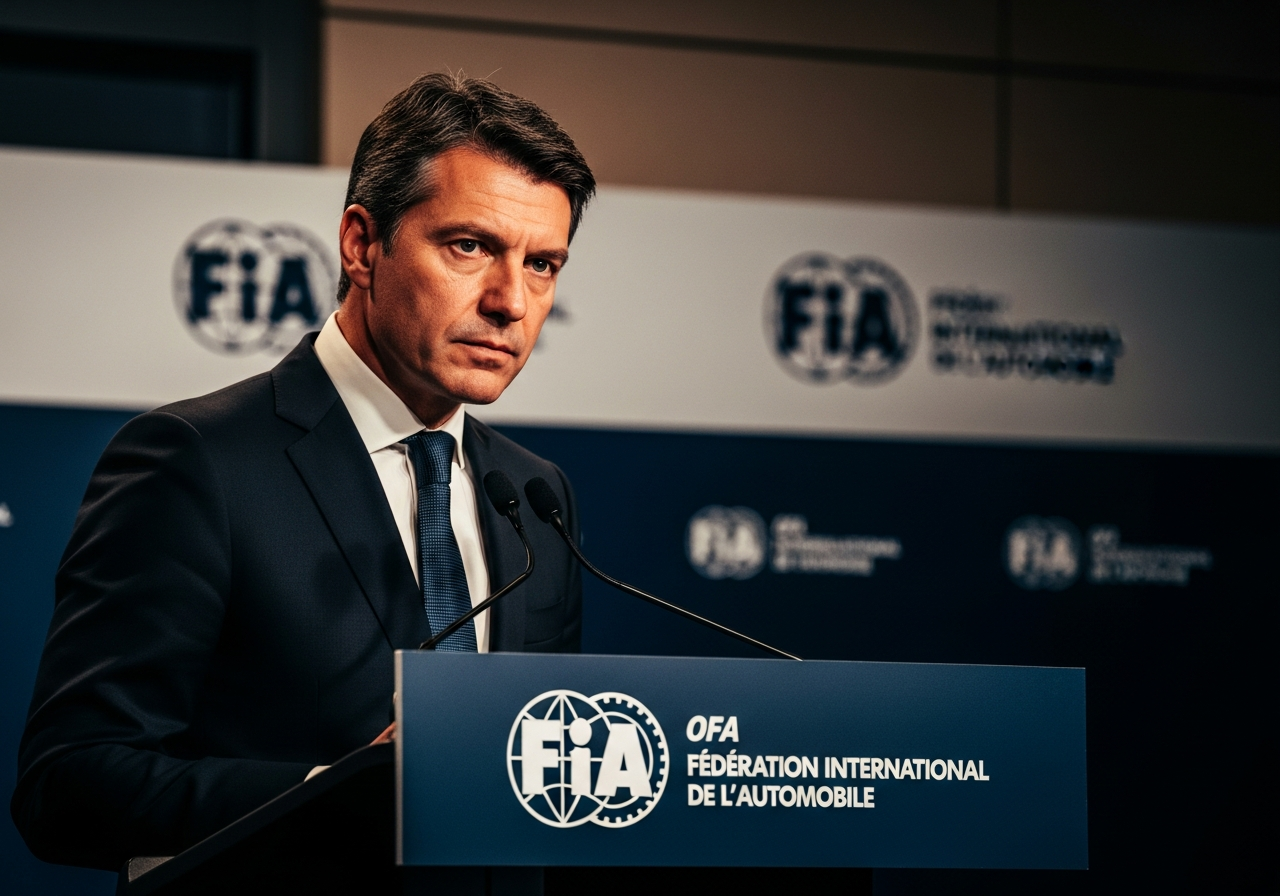
The date for electing the next FIA president is approaching, and only one candidate appears eligible.
The International Automobile Federation is facing a tense week ahead of its presidential election. Ben Sulayem stands as the sole candidate still in the running to become FIA president. This situation is surprising, as several contenders had previously announced their intention to participate in the vote.
Ben Sulayem, the only candidate for FIA president
The FIA confirms that Mohammed Ben Sulayem remains the only person meeting the required criteria. The system actually demands a full presidential list with ten members from specific regions. This requirement blocks any candidacy as soon as a position cannot be filled within the list.
Potential rivals failed to gather the necessary representatives before the deadline. As a result, the FIA presidential election is heading toward a vote without real competition.
The vice-president rule quickly locked the election
Regulations require one vice-president for each geographic zone, which includes one for South America. The FIA validated only a single person for this region. However, that person belongs to Ben Sulayem’s team.
Other candidates then become unable to submit a full list, which automatically renders them ineligible. This situation sparks internal protests and fuels the impression of a pre-determined process. The election now appears scripted even before it takes place.
A legal challenge threatens the vote
Laura Villars accuses the FIA of violating its own statutes by making her candidacy impossible. The aspiring FIA president has secured a hearing in Paris. She aims for the court to review the conditions of the vote.
The judge will issue a decision on December 3, nine days before the scheduled election in Tashkent. The ruling could suspend the entire process if the rules are found to be non-compliant. The president’s role now depends on a verdict eagerly awaited by all parties.
Lack of opposition weakens the presidency’s credibility
The federation insists that its process remains transparent and democratic. The requirements for running for FIA president are public. Moreover, the deadlines apply equally to all candidates.
Yet several members denounce a structure that excessively favors the incumbent president. Critics argue that a vote without opponents undermines the legitimacy of such a powerful position. Internal governance is therefore back at the center of a highly political debate.
Could the election of the FIA president be questioned?
Some disqualified candidates are already calling for a reform of the presidential list requirements. They argue that geographic distribution and the validation of elected members provide a structural advantage to the sitting president. The FIA rejects these accusations and points out that these rules existed in previous elections.
This situation highlights the limitations of a model that is hard to adapt to the realities of global motorsport. The likely re-election of the current president thus reignites a deeper debate about FIA governance.