
Even if it weren’t forced to disgorge that revenue, the (albeit relatively modest) impact of tariff revenues on US government deficits and debt would disappear, which would probably see longer-term government bond yields rise, so there’d be more upward pressure on the interest rates that actually impact the borrowing costs of companies and households.
The markets have shown themselves highly sensitive to any developments in the tariffs, tumbling in April when Trump first unveiled his reciprocal and baseline tariffs, recovering when (as he has done now on several occasions) he backed off in response (the Trump Always Chickens Out, or TACO, trade) and then shuddering again last month when he (momentarily) raised tariffs on imports from China by 100 percentage points.
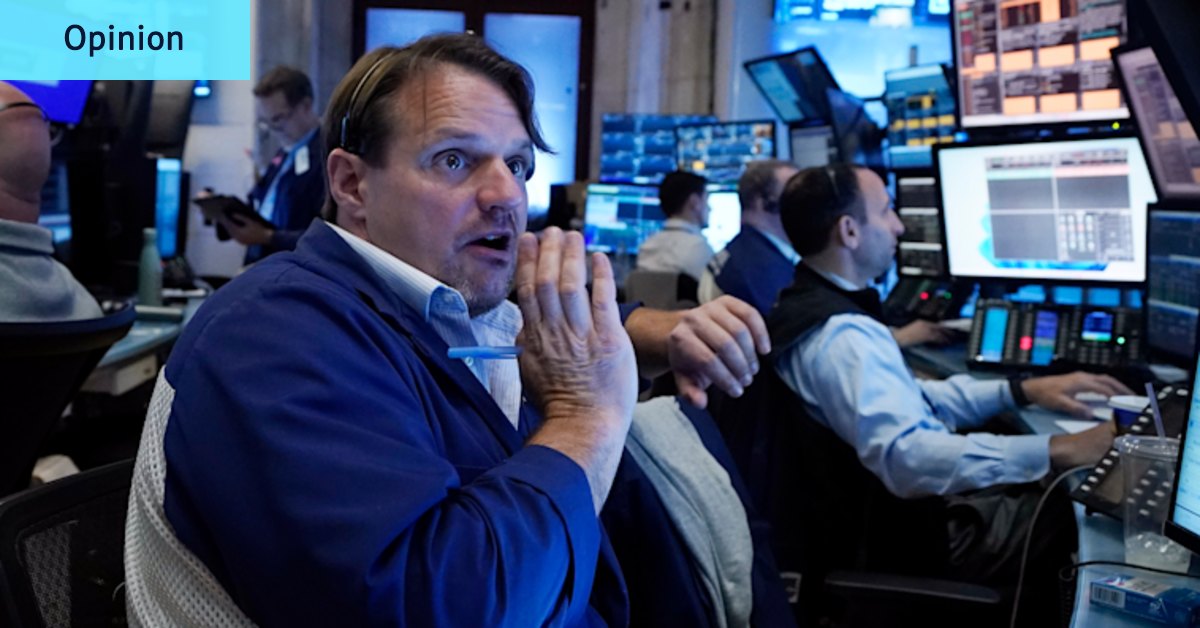
The AI-related contribution to the 4 per cent fall in the S&P 500 so far this month relates to the increasing concern that the AI stocks, and technology stocks more broadly, that had driven the market to record levels are now in bubble territory.
The “Magnificent Seven” mega technology stocks – Alphabet, Amazon, Apple, Meta, Microsoft, Tesla and Nvidia – were up about 27 per cent for the year, before the sell-off wiped nearly 7 per cent of their value.
Loading
There are very real concerns about how much the AI companies are spending on chips, training their large-language models and data centres relative to the prospective near-term returns.
The five biggest AI companies – the so-called “hyperscalers” – will spend about $US375 billion on AI this year and around $US450 billion next year, if not a lot more, for uncertain returns.
Even those companies – Google, Microsoft, Meta and Amazon – with their massive cash flows, are feeling the pinch of funding their AI ambitions, increasingly resorting to debt and therefore amplifying the risks of misjudgments between the levels and rate of investment and the timing and scale of the eventual returns.
They and others, like OpenAI, are also increasingly striking circular finance deals that are creating a web of interdependencies across the sector that have a Ponzi-like feel to them and which are creating a sectoral vulnerability.
As recently as Monday, another of those deals was announced, with Microsoft and Nvidia committing to invest up to $US15 billion in AI start-up Anthropic, which will buy $US30 billion of computing capacity from Microsoft and up to a gigawatt of computing capacity based on Nvidia’s chip designs.
Nvidia, which is at the centre of many of the circular deals, reports its third-quarter results on Wednesday in the US. It will probably, as it has consistently done, outperform analysts’ forecasts. Heaven help the tech sector, and the AI companies in particular, if it doesn’t.
The cryptocurrency market is a barometer of perceived risk, arguably providing the clearest signals of investors’ risk appetites.

Bitcoin has always been extremely volatile, but the involvement of institutional investors in the market is likely to have exacerbated that volatility and created a conduit between the crypto market and mainstream markets.Credit: Bloomberg
It has lost nearly $US1 trillion of value in six weeks, with the flagship for crypto assets, bitcoin, tumbling about 20 per cent from its peak of about $US126,000 this year to just under $US90,000 on Monday. It has since traded just above $US90,000, having lost around $US500 billion of market value from its peak.
Crypto assets are inherently speculative and volatile. They are the riskiest of assets, acutely sensitive to the external environment.
Their markets have, however, been increasingly institutionalised since Trump gave them legitimacy by pledging to make the US the world’s “bitcoin superpower” and his family plunged into the market. (They too have lost heavily – nearly $S3 billion of paper wealth in their World Liberty Financial entity has evaporated – as a result of the plunge in crypto prices.)
Loading
With institutional investors come institutional investment strategies and practices, so a lot of money has poured into crypto assets this year that is borrowed, or which needs liquidity, or which is pursuing derivative-related strategies. There’s also been a deluge of retail money via exchange-traded funds, which have yanked close to $US500 billion from the crypto market during the downturn.
Bitcoin has always been extremely volatile, but the involvement of institutional investors in the market is likely to have exacerbated that volatility and created a conduit between the crypto market and mainstream markets.
It is conceivable, indeed near certain, that some crypto investors have been hit with margin calls because of the severity of the downturn in prices and have had to drum up liquidity by selling more conventional assets, magnifying the volume of selling in equities, for instance.
With institutions, according to the latest Bank of America survey of major fund managers, barely holding any cash, and heavily overweight stocks, particularly AI-related stocks, any crack in either crypto or equity markets would have ignited a rush to exit the markets.
Loading
It’s not necessarily a bad thing that markets that have run too hard and too fast take a pause that blows some of the froth off the AI bubble, if that is what it is, or adjusts to a different outlook for interest rates and an economy which is looking vulnerable to a bout of stagflation (increasing inflation coinciding with decreased growth and rising unemployment).
Indeed, a more cautious and sceptical approach to evaluating the investment merits of the torrents of equity and debt pouring into AI – as opposed to whatever transformative affects AI may eventually have – might stave off something far worse for the real economy than a material correction in the sharemarket, or the reversal of this year’s gains in crypto prices.