
The League of American Bicyclists honored 45 colleges and universities in its latest round of Bicycle Friendly University (BFU) awards.
League of American Bicyclists
Initiatives to encourage cycling, from investing in infrastructure and strengthening community ties to making biking safer, easier, and more accessible as a means of transportation and recreation — were among the top reasons why 45 colleges and universities across the country were recognized for the 2025 Bicycle Friendly University (BFU) awards. Two additional institutions each earned an Honorable Mention.
The honorees were announced on Thursday by the League of American Bicyclists.
“What stands out about this round of Bicycle Friendly University awards is their commitment to listening, learning, and improving,” Bill Nesper, executive director of the League of American Bicyclists, said in a statement. “That spirit of progress is helping shape today’s students into tomorrow’s leaders, equipping them to carry on the work of building a more Bicycle Friendly America.”
The benefits of supporting riding a bike at institutions of higher learning range from improving health and the environment to making cycling a core part of campus life and beyond, the cycling group noted.
The new round of honorees includes higher education institutions designated as bike-friendly for the first time and others previously cited that moved up in the ranking.
The awards, which include five levels – diamond, platinum, gold, silver, and bronze, plus an honorable mention category – are part of the League’s Bicycle Friendly America program, which evaluates communities and businesses in addition to universities.
This year’s awardees are part of a network of 204 Bicycle Friendly Universities in 42 states, that range from the small, 700 student M State Fergus Falls in Minnesota to the more than 74,000 student Arizona State University’s Tempe campus. College and university campuses are ideal settings to cultivate a pro-bike culture, as many are already “high-density areas designed for students to navigate without a car,” the League said.
Encouraging cycling also addresses challenges on campuses like easing pressure on overcrowded and costly parking lots, supporting climate and carbon reduction goals, and enhancing safety by reducing vehicle traffic.
Many of the honorees were cited for their progress in implementing initiatives recommended by the League in previous years, and for partnering with nearby towns to provide better access to safe, enjoyable biking beyond campus borders, for both the university’s students, faculty and staff, as well as for the wider communities.
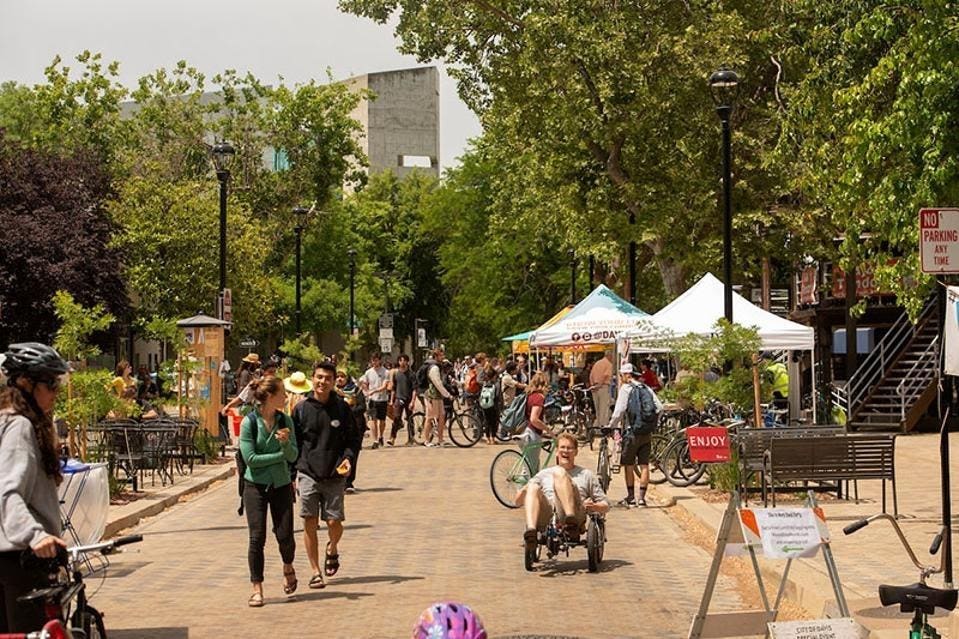
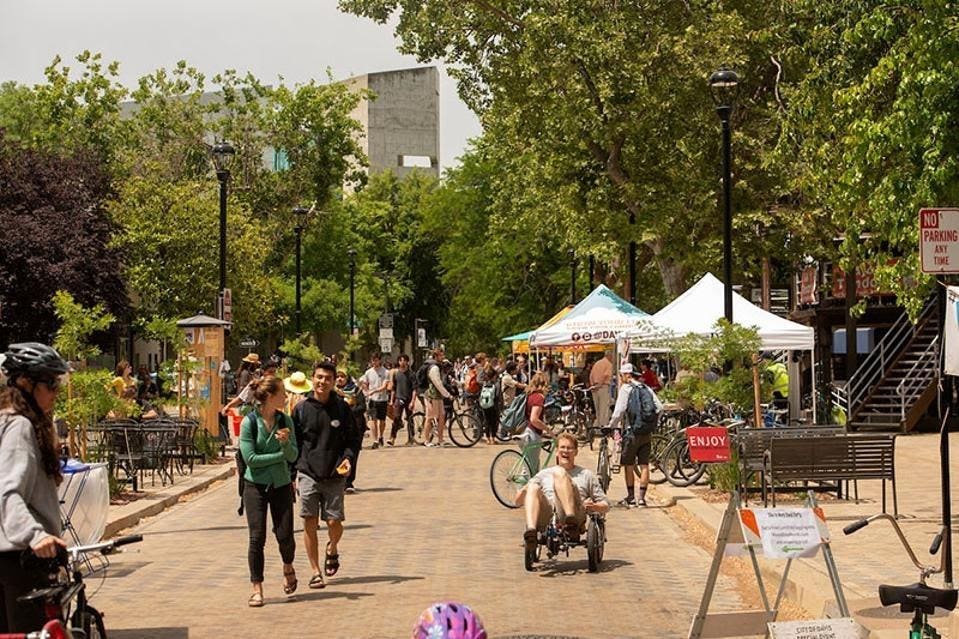
the University of California, Davis acted on the League’s advice to implement new inclusive bike parking standards to accommodate tricycles, cargo bikes, and other adaptive cycles across campus;The University of Colorado Boulder was cited for a range of initiatives that embed biking in campus culture, like a mandatory fee that funds transit and bike infrastructure, free bikeshare memberships for more than 22,000 riders, and year-round biking events like the CU Bike Fest, which celebrates cycling on campus while increasing access to ridership through on-site maintenance and free refurbished bikes. Illinois State University and California State University, Chico were commended for their steady improvements. Illinois State University, for example, partnered with a nearby town for a “Pedestrian and Roadway Campus Safety Initiative” that expanded bike networks and improved campus and community safety.
“We realize that biking is bigger than us,” Virginia Commonwealth University, which renewed its Gold-level designation, noted in a statement. “Rather than focus solely on the university population, VCU’s bike program encourages youth and diverse populations across the city to bike more. We hope this will influence the culture of Richmond as a whole.”
An interactive map provides details about Bicycle Friendly initiatives across the country, including a list of Bicycle Friendly Universities in each state.
To learn more about the Bicycle Friendly University program, including considerations for the next round of awards, click here. To view the recent and complete lists of honorees, click here and here.