
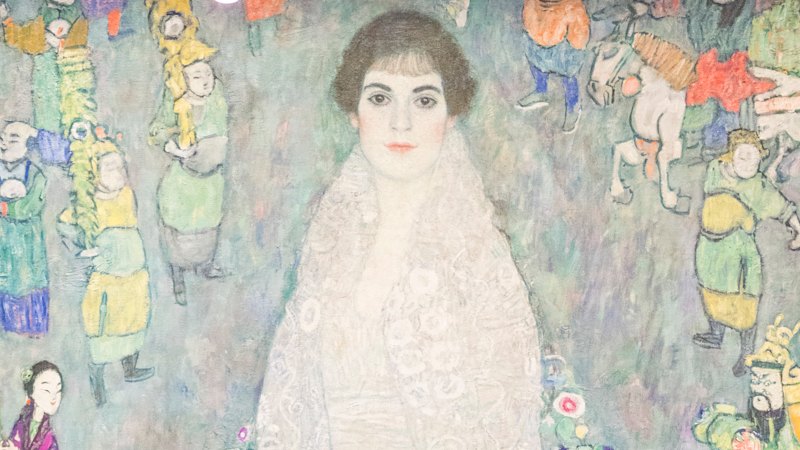
Washington: A World War I-era painting by Austrian master Gustav Klimt has sold for $US236.4 million ($366 million) in New York, making it the second most expensive painting ever sold at auction, and breaking the record for a modern artwork.
Klimt’s six-foot tall Portrait of Elisabeth Lederer, which depicted the daughter of one of Vienna’s wealthiest families, sold for $US205 million ($317 million) under the hammer, plus fees, after a 20-minute bidding war.
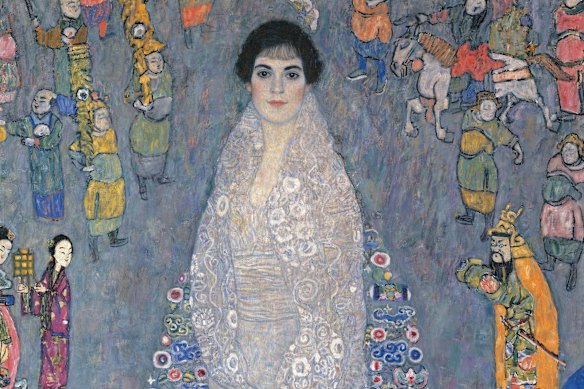
Painted between 1914 and 1916, the portrait played a role in Elisabeth Lederer’s deception of the Nazis after Austria was annexed in the 1930s.Credit: Sotheby’s via AP
It helped deliver Sotheby’s its highest ever total for a single auction night, $US706 million, driven chiefly by billionaire Estée Lauder heir Leonard Lauder’s collection, which netted more than $US527 million.
Lauder’s collection, including several Klimts, Matisses, Piccasos, a van Gogh and an Edvard Munch, generally outsold price estimates. Lauder died in June, aged 92.
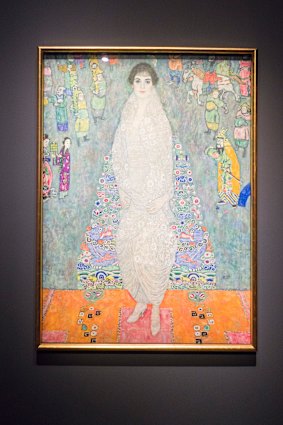
Gustav Klimt’s Portrait of Elisabeth Lederer sold for $US236.4 million including fees.Credit: Ben Sklar
The audience cheered as the price for Lederer hit $US200 million, and again, with greater gusto, when the hammer finally came down. “That is a record for any work of art ever sold at Sotheby’s – somewhat unsurprisingly, of course – and also the highest price for any modern work of art ever sold at auction,” said auctioneer Oliver Barker.
The colourful painting depicts the Lederer family’s life of luxury before Nazi Germany annexed Austria in 1938. Elisabeth, as a Jewish divorcee, was in grave danger. Ultimately, the painting helped save her life.
She penned a memoir about her young life which falsely claimed Klimt, not August Lederer, as her biological father. “After various types of examinations, Elisabeth was recognised as the artist’s illegitimate daughter and therefore as possessing some of his ‘Aryan’ blood,” Sotheby’s said.
The Nazis, possibly seeing the family portraits as “too Jewish” looking, put them in storage instead of displaying them as they did with the other seized paintings from the Lederer collection. The portraits were returned to the family after the war.