
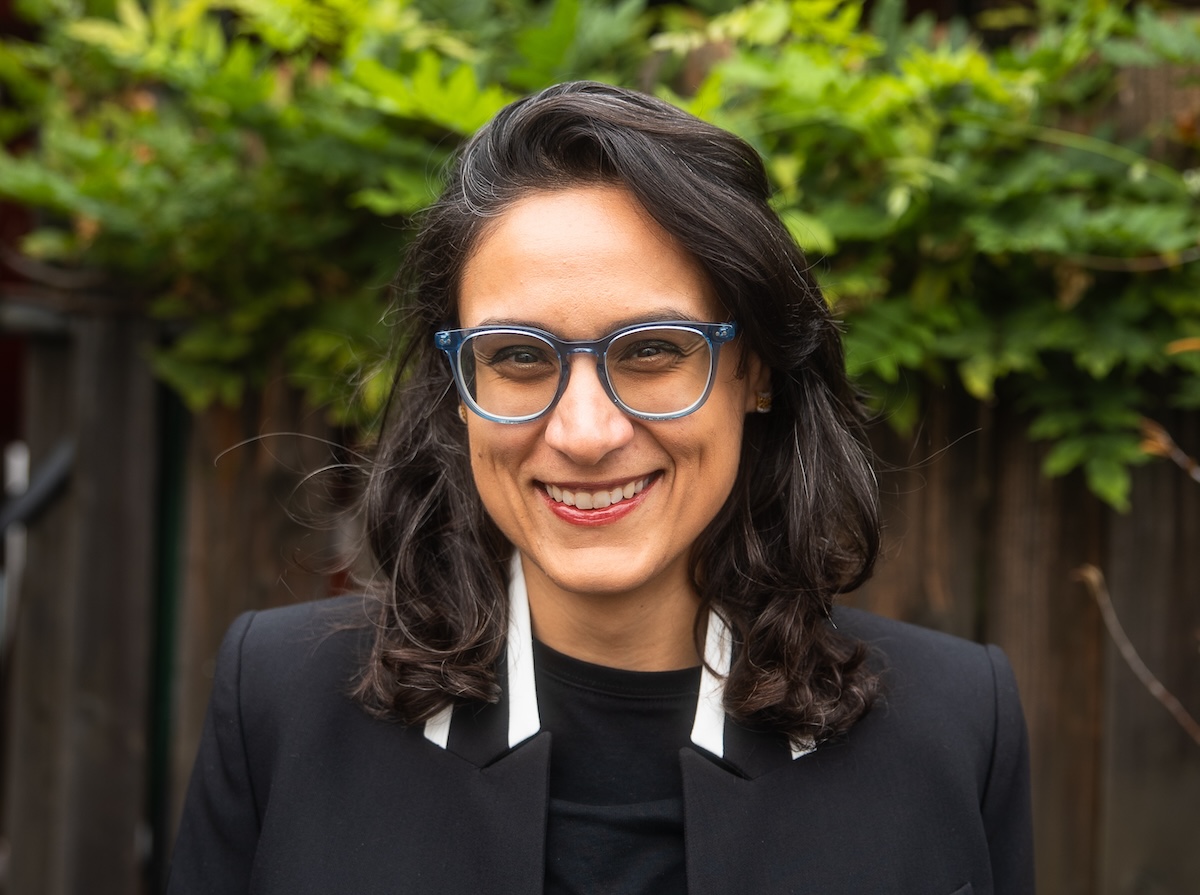
 Manta Cares Founder & CEO Samira Daswani. Image: Manta Cares
When Samira Daswani was diagnosed with stage 2B breast cancer at 30, she thought the hardest part would be fighting the disease. Instead, she discovered a second battle: Navigating a healthcare system so fragmented that patients make hundreds of life-altering decisions with little guidance or support.
Over 18 months, Daswani endured 123 appointments, 18 infusions, and seven ER visits – the typical journey for a breast cancer patient, she later learned. Armed with a bio-engineering background from MIT and healthcare design training from Stanford, the former McKinsey consultant began building tools to navigate her own treatment. When her oncology team saw what she’d created, they wanted it for their other patients.
Today, Manta Cares officially launches with $5.4M in seed funding led by Pear VC and Sozo Ventures, with participation from 1843 Capital and strategic angels including Dr. Stanley Marks, Chair of UPMC Hillman Cancer Center and founder of Via Oncology, transforming those personal tools into a free platform already trusted by 8,000 cancer patients and families.
Beyond Information to Navigation
The platform centers on what Daswani calls “the map” – a visual representation resembling a subway system that charts 300-500 decisions patients face from first suspicion through treatment.
“Navigating cancer felt like a treacherous hike where you don’t get access to a map, the right tools, or the right guides,” explains Daswani. “Information today is easy to access. It’s identifying right from wrong, appropriate from inappropriate, relevant from irrelevant that’s the challenge.”
Each “station” on the map connects patients to evidence-based resources, practical tools like appointment notebooks and symptom trackers, and critically, support services they might not know exist. In one example, pharma companies invest $15,000-20,000 per patient annually in copay assistance programs – yet under 3% of eligible patients know they’re available.
Redesigning the Ecosystem, Not Just the Experience
What distinguishes Manta from typical digital health tools is its ecosystem approach. The company already partners with three of the top 15 pharmaceutical manufacturers, eight health systems including Stanford, and 40 patient advocacy groups.
“We’re shamelessly patient-first,” Daswani emphasizes, noting the company has turned down six-figure deals that didn’t meet that standard. Instead, revenue comes from partnerships that genuinely benefit patients – like connecting them with financial assistance programs at precisely the right moment in their journey.
The approach is attracting attention beyond patients. Clinicians report that appointments improve when patients arrive prepared with Manta’s tools. In the U.S., where doctor visits average just 10 minutes, giving patients structure for those precious moments transforms care delivery.
“We’re not here to replace care teams – we’re here to complement and support them,” says Dr. Doug Blayney, Manta’s Chief Medical Officer and former president of ASCO, who brings four decades of oncology experience to ensure clinical validity.
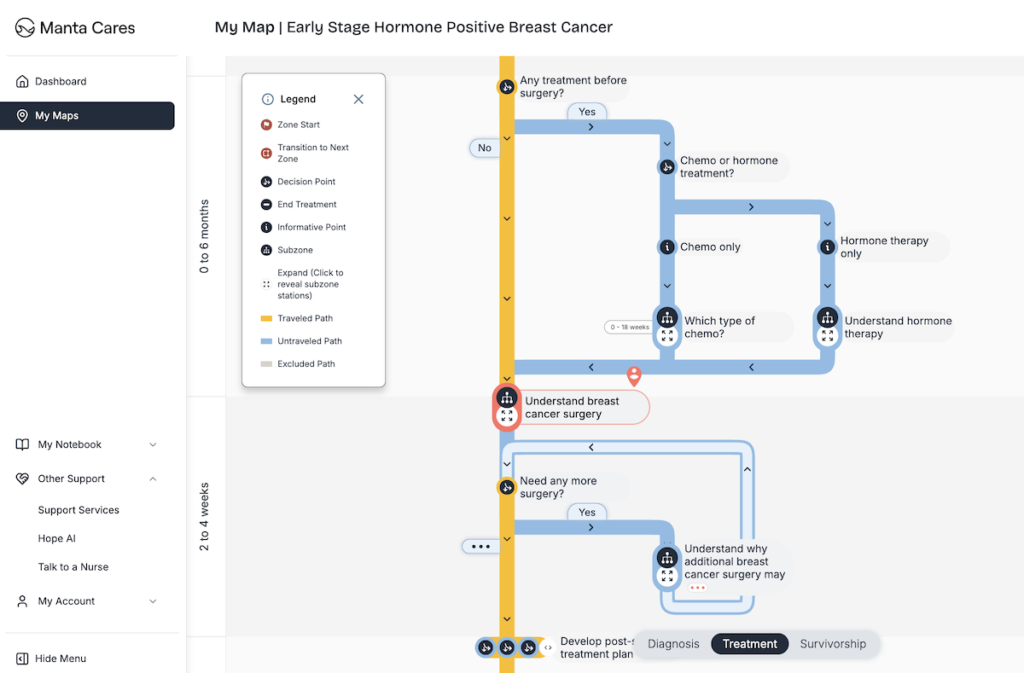 Image: Manta Cares
Built by Those Who’ve Been There
The 10-person team shares a defining characteristic: Cancer is personal to nearly everyone. Whether survivors themselves or those who’ve lost family members to the disease, the team combines lived experience with interdisciplinary expertise spanning healthcare, consumer technology, and design.
This personal connection shapes product decisions. Rather than “wellness inspiration” or glossy dashboards, Manta focuses on practical realities – tracking medications, preparing questions for appointments, understanding treatment options.
“Samira and the Manta team are tackling one of the most quietly devastating gaps in healthcare – with humility, urgency, and a rare precision,” said Mar Hershenson, Managing Partner at Pear VC. “They’re not building another health tech tool – they’re creating something that truly puts patients first as they manage the chaos of cancer.”
Expanding Beyond Breast and Lung Cancer
Currently supporting breast and lung cancer patients, Manta plans to add prostate and colorectal cancers next. While the model could extend to any complex condition imposing significant burden on patients and families – fertility and rare diseases generate the most outside interest – the company remains laser-focused on oncology for now.
“When someone gets diagnosed with cancer, they should get access to a map like the one we’re building,” Daswani says. “That feeling of not knowing where you are and that loss of control in a place where we actually know what the map looks like – for me, that’s not acceptable.”
The company has already earned recognition from those who matter most: Patients. Recent honors include Advocate Health’s #LovedOneStandard Award and the Corinne Leach Patient Experience Award at CancerX, both selected by patient communities.
A Different Kind of Fight
For the millions diagnosed with cancer annually, Manta represents something fundamental: The recognition that patients shouldn’t have to fight two battles at once.
“We often talk about ‘fighting cancer,’ but the truth is, we’re up against two battles – one against the disease and one against a system that was never designed for patients,” Daswani reflects. “Manta exists so people don’t have to fight both at once.”
As healthcare increasingly embraces patient-centered design, Manta’s approach – building with rather than for patients, partnering across the ecosystem rather than disrupting it, and focusing on navigation rather than information – offers a blueprint for meaningful change.
The platform remains free for all users, available at mantacares.com. For those facing cancer’s dual battles, it’s the roadmap they shouldn’t have to create themselves.