
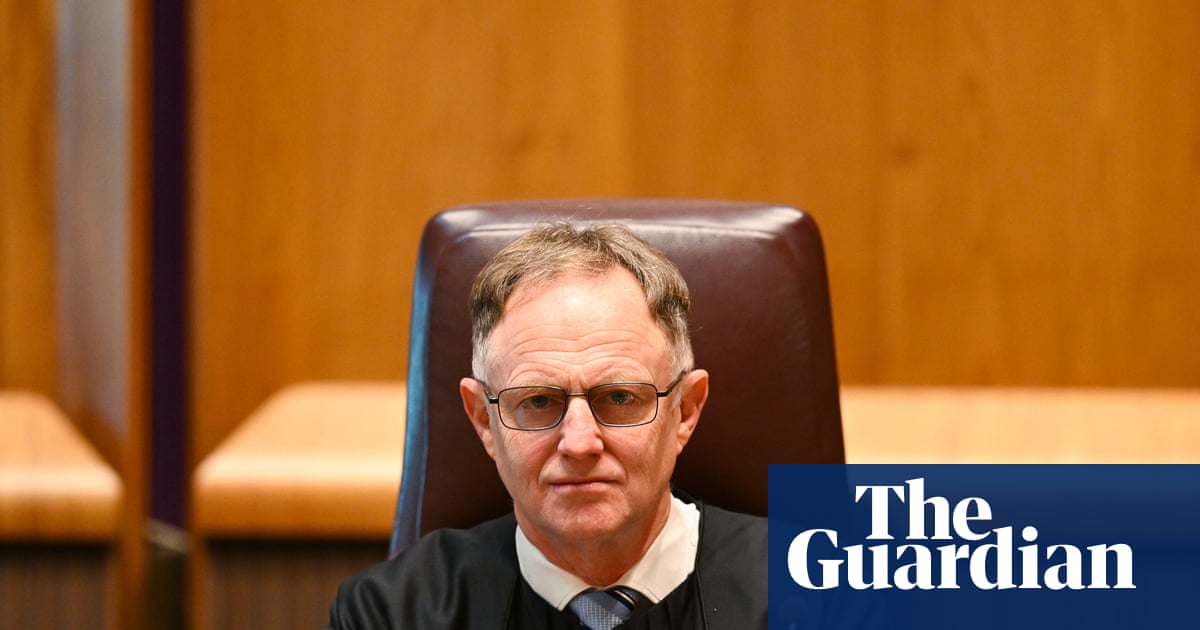
The chief justice of the high court says judges around Australia are acting as “human filters” for legal arguments created using AI, warning the use of machine-generated content has reached unsustainable levels in the courts.
Stephen Gageler told the first day of the Australian Legal Convention in Canberra on Friday that inappropriate use of AI content by litigants self-representing in court proceedings, as well as trained legal practitioners, included machine-enhanced arguments, preparation of evidence and formulation of legal submissions.
Gageler said there was increasing evidence to suggest the courts had reached an “unsustainable phase” of AI use in litigation, requiring judges and magistrates to act “as human filters and human adjudicators of competing machine-generated or machine-enhanced arguments”.
But he said AI technology could be highly beneficial in the legal system, describing its potential to help deliver civil justice that “aspires to be just, quick and cheap”.
Gageler, the most senior judge in the country and the presiding judge on the seven-member high court, raised the prospect of AI playing a role in decision-making in courts and tribunals, a situation he suggested required the value of human judgment to be carefully assessed.
“These are existential issues,” Gageler said. “The need for the Australian judicature to grapple with them is arising as the pace of development of AI is outstripping human capacity to assess and perhaps even to comprehend its potential risks and rewards.”
Sign up: AU Breaking News email
Practice guidelines for the use of AI in the law have been issued in most jurisdictions and a specialist review by the Victorian Law Reform Commission is under way.
Cases of false precedents being cited in court cases have proliferated around the world. In September, a Victorian lawyer became the first in Australia to face professional sanctions over AI-generated false citations in a case. The lawyer failed to verify the precedents and was stripped of his ability to practise as a principal lawyer.
Appointed in 2023, Gageler can serve on the high court until the mandatory retirement age of 70, in July 2028.
Gageler used the address to urge Australia’s judges and magistrates to speak up about their own wellbeing, including stress and mental illness from unrelenting work and constant media and public scrutiny.
“Many have experienced vicarious trauma as a result of cases with which they have been required to deal, including cases involving family or sexual violence,” he said.
“Many have experienced threats of physical harm. All are entitled to a safe system of work.”
He warned the justice system was failing to support victims of sexual violence to seek justice, and to hold perpetrators to account, and said some legal proceedings could be daunting or overwhelming for complainants.
An Australian Law Reform Commission report tabled in federal parliament in March said one in five women and one in 16 men over the age of 15 had experienced sexual violence.
Gageler said improving responses to family and sexual violence required the involvement of the entire legal system.
“It is incumbent on us all to be aware of the problem and to be part of the solution to the extent we can,” he said.