
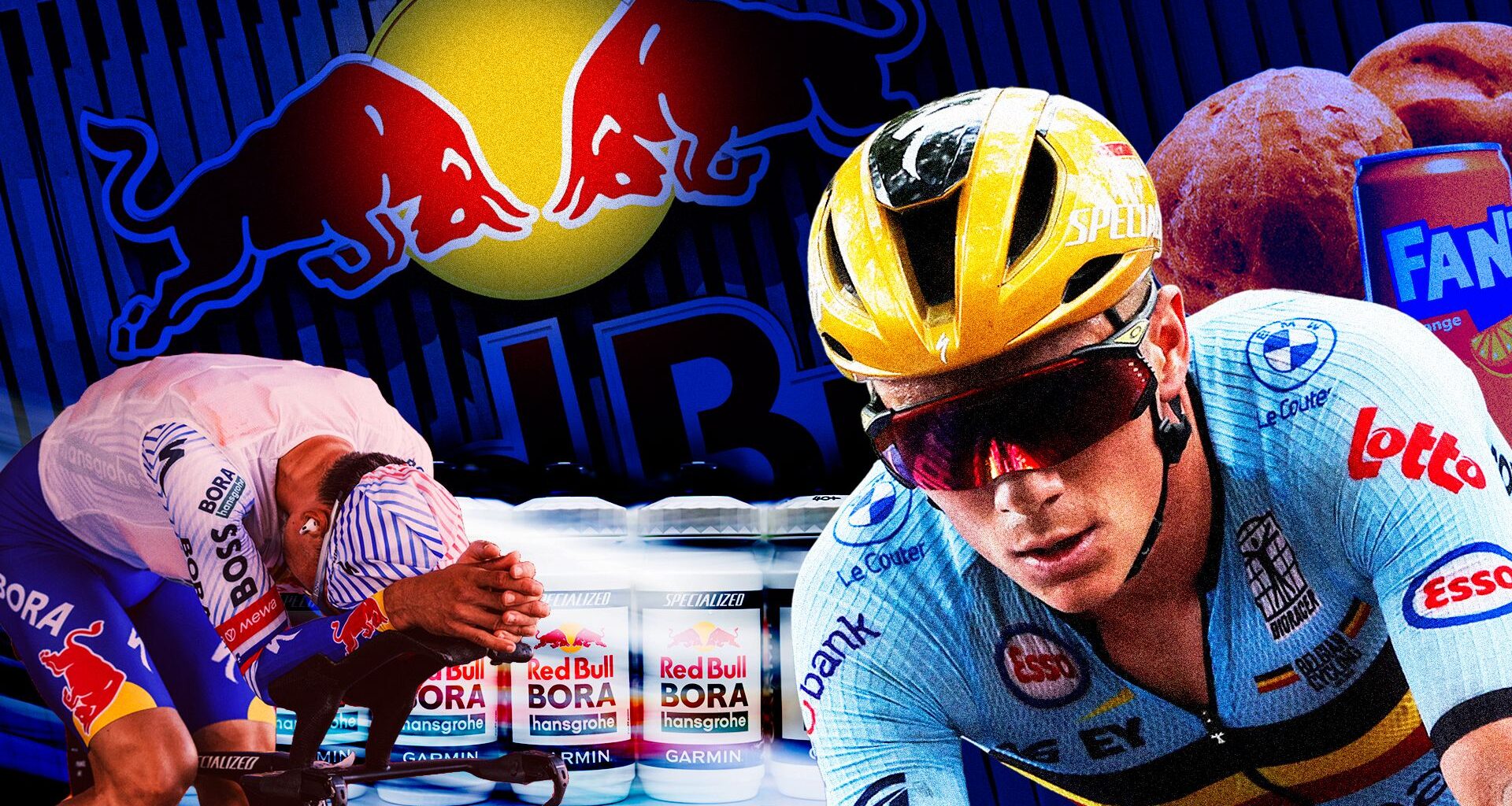
Remco Evenepoel officially moves from Soudal-QuickStep to Red Bull-Bora-Hansgrohe on January 1, 2026. Unofficially, the work is already well underway to turn the Belgian superstar into a rider capable of challenging Tadej Pogacar and Jonas Vingegaard at the Tour de France, with the support staff analysing every facet of the 25-year-old’s performance in search of small but significant gains. That includes nutrition.
Here, we catch up with Red Bull-Bora-Hansgrohe’s head of performance nutrition, Stephen Smith, to serve up the science-backed fuelling strategies that he claims will not only shape Evenepoel’s season, but could also help recreational riders cook up a new PB in 2026…
Welcome to Food Coach
What will the move mean for the Belgian’s menu? Presumably, very little when it comes to the time trial. “I’ve been eating the same thing before a time trial ever since I was a junior,” the Evenepoel commented in 2023. “They are ‘pistolets’ with jam, a banana, some honey, half a litre of Fanta and slices of chicken fillet. It turns out to be a good meal to prepare for a time trial, because when I eat it, I almost never miss the podium.” A pistolet is essentially a bread roll.
Despite what the data might say about Fanta and its fuelling qualities, they’d be foolhardy to change something that’s historically given the Belgian such rapid wings. What Evenepoel will discover is that he has many experts to turn to in search of optimising each and every session.
“We’re lucky on this team as we have five nutritionists. Some teams might only have one,” says Smith, who recently took up that head of performance nutrition role after working across Red Bull’s Athletic Performance Centre for the past five years, where he fuelled a range of athletes from MotoGP riders to skiers, downhill mountain bikers to triathletes.
They’ll be in attendance at the team’s pre-Christmas training camp, where new riders will be introduced to the team’s Food Coach app. The app was originally developed in 2018 for Jumbo Visma (now Visma-Lease a Bike) in collaboration with Jumbo Supermarkets. The German-licensed team have been using it since early this year, arguably driven by Asker Jeukendrup, who formerly worked for the Dutch team where he contributed to the app before taking up his current position at Red Bull-Bora-Hansgrohe as Director of Sport Strategy in October 2024. This, says Smith, provides the basis for ensuring riders have a rich and varied diet while hitting performance goals.
“You can select from a large range of recipes whose macronutrient content is based on your training session, so calculated via the effort duration and your average power output,” he says. “It achieves this by syncing with power software like TrainingPeaks.”
This ability to match input to output is key to periodising nutrition, which is simply the concept of your diet reflecting your training workload and physiological aims. “We put the goal of the session at the centre,” says Smith. “So, what is the adaptation we’re looking for? Then, how can we tailor the nutrition before, during and even after a ride to make sure that we maximise those adaptations? That will change depending on the focus of the year or, more technically, the macro cycle.”
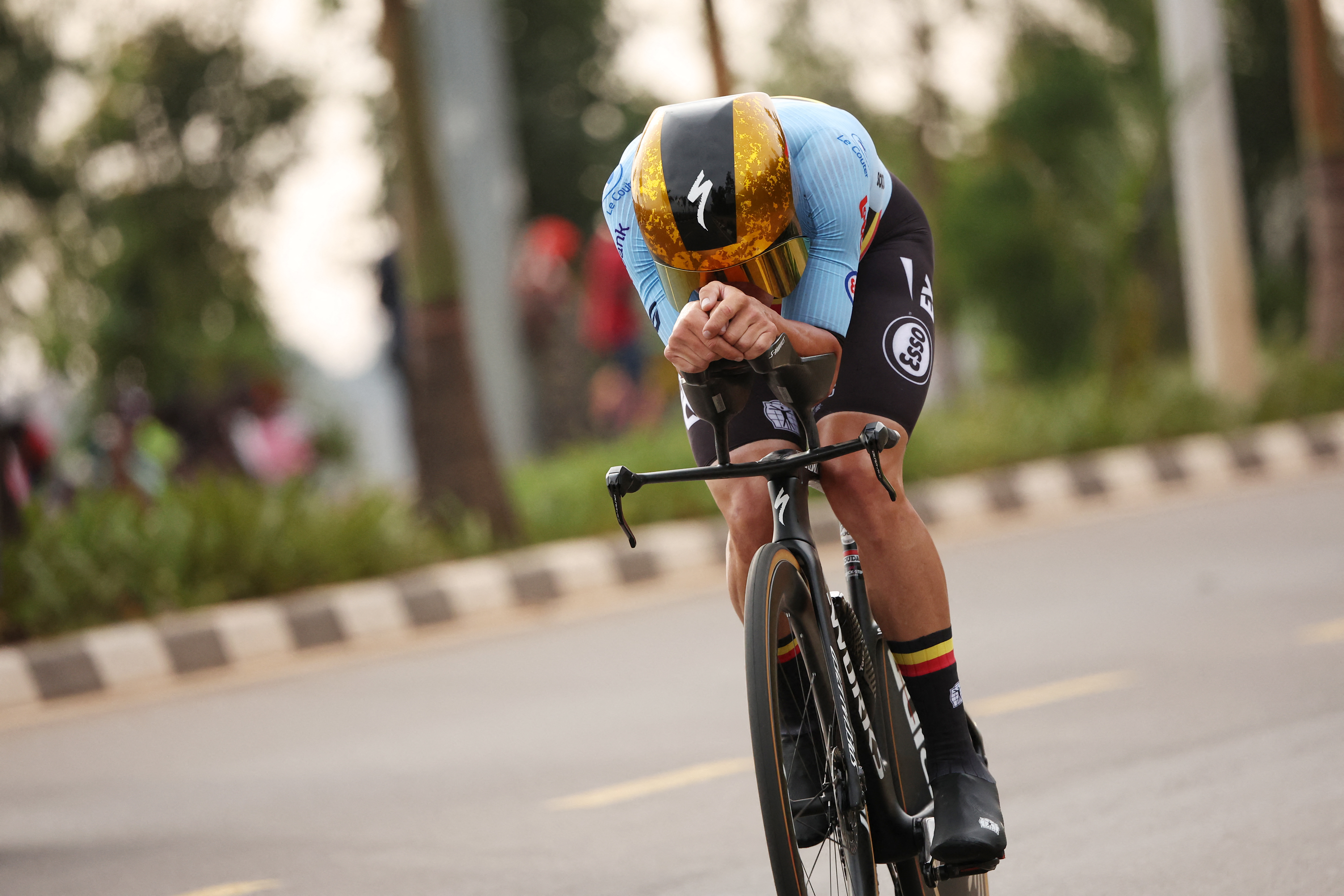
Evenepoel in full TT mode as he powered to a third world title in Kigali, Rwanda (Image credit: Anne-Christine Poujoulat/Getty Images)
Limiting to liberate performance
We’re in mid-November as I type this, which means no racing unless riders are moonlighting on the cyclocross circuit.
“In general, that means training intensity is a little lower, so we might use this time of the year to target enhanced adaptations,” says Smith. “That would include carbohydrate-restricted training for specific riders.”
Well, there’s a term you might not have heard for a while. ‘Carbohydrate-restricted’, ‘glycogen-depleted’ or ‘fasted’ training, where activity is carried out with low levels of stored carbohydrates in the body. It previously dominated the WorldTour nutritional narrative for years, ostensibly from Team Sky’s application and them working with James Morton, professor of exercise metabolism at Liverpool John Moores University, who now works with Manchester United.
The Belfast nutrition guru worked with the British team for years and, through his academic and practical work, was a strong proponent of reducing carbohydrates to stimulate cycling gains. Of course, the idea of cutting carbohydrates is at odds with the zeitgeist for carbohydrate overload, but this is off the bike, not on it and is applied at a time of year that’s ideal for tapping into the mooted gains, namely the off-season.
Those targeted adaptations Smith referred to are, according to a recent paper led by Morton, entitled ‘UCI Sports Nutrition Project: Nutritional Periodisation: Strategies to Enhance Training Adaptation and Recovery’, numerous and include cranking up mitochondria numbers – a boon for riders as these are the energy powerhouses of the cells – and retraining the metabolism to focus more on fats. These changes are activated by reduced access to glycogen, amplifying these molecular signalling pathways.
Interestingly, for those of you who believe in the power of glycogen-depleted sessions, Morton and his co-authors cite a recent review of the literature by Javier Diaz-Lara and his team that noted “absolute post-exercise muscle glycogen concentration may be more of an influential factor” than pre-riding glycogen concentration and that “adaptations associated with carbohydrate restriction are particularly evident when the pre-exercise muscle glycogen concentration permits exercise-induced depletion to post-exercise concentrations that are less than 200-300mmol/kg dry weight”.
Arguably, measuring your blood-glucose levels in search of that 200-300 figure at the end of every fasted ride is unrealistic for the majority of riders, albeit there are continuous blood-glucose monitors available like those from Lingo and Ultrahuman.
The authors also note a reason why glycogen-depleted training had fallen off the media radar: that there’s limited evidence that these physiological adaptations result in performance improvements. But they contested, “Given that the metabolic adaptations associated with ‘train low’ are especially relevant for prolonged cycling (i.e. increased muscle oxidative capacity and lipid oxidation), future studies should utilise performance testing protocols (e.g. exercise durations of four to six hours) in which such physiological adaptations are more likely to translate to improved exercise performance.”
Choice of underfuelling
There are various theoretical models of carbohydrate periodisation – the fasted model whereby you ride before breakfast; twice-per-day model that involves a morning ride, minimal feeding after followed by an afternoon ride; sleep low model where you ride in the evening, restrict post-ride feeding, sleep and then ride again before feeding; and the recover low model, whereby you ride as normal but restrict carbohydrate feeding after. Smith highlights that some of his riders will generally ride for two hours fasted before feeding when carrying out glycogen-depleted sessions.
Like any adaptation, its root cause is stress. This is why glycogen-depleted training is generally at low to moderate intensity. Too intense, and your immune system can suffer. That’s something Smith considers at Red Bull, which is why he advises limiting these sessions to a maximum of twice a week during the off-season. “We’ll often restrict for the first couple of hours of that ride and then start to introduce carbohydrates.
“But whether we use that strategy or not also depends on their role in the team and [the] rider’s physiology,” he adds. “It doesn’t always make sense for a sprinter or a Classics rider to be racking up hours of low-carbohydrate or fasted training, unlike a climber, say. Another thing to consider is training history. If a rider’s experienced, we’ll often do it; if they’re a young rider with a relatively minimal training experience, we might not.
“The thing is with elite cyclists, it’s something that they’d have done from a very young age when they’re simply cycling. They’ll get up, go out on their bike for a few hours and generally not take any carbohydrates. In general, the elites can tolerate a fair duration on low feeding, certainly lower than someone like myself, a hobby cyclist.”
Smith says that while carbohydrate intake might vary throughout the season, protein and fat intake remain relatively constant, though he stresses that the elites will naturally consume far more protein than Everyman, at a rate of 2.5g of protein per kilogram of bodyweight compared to 1.6g.
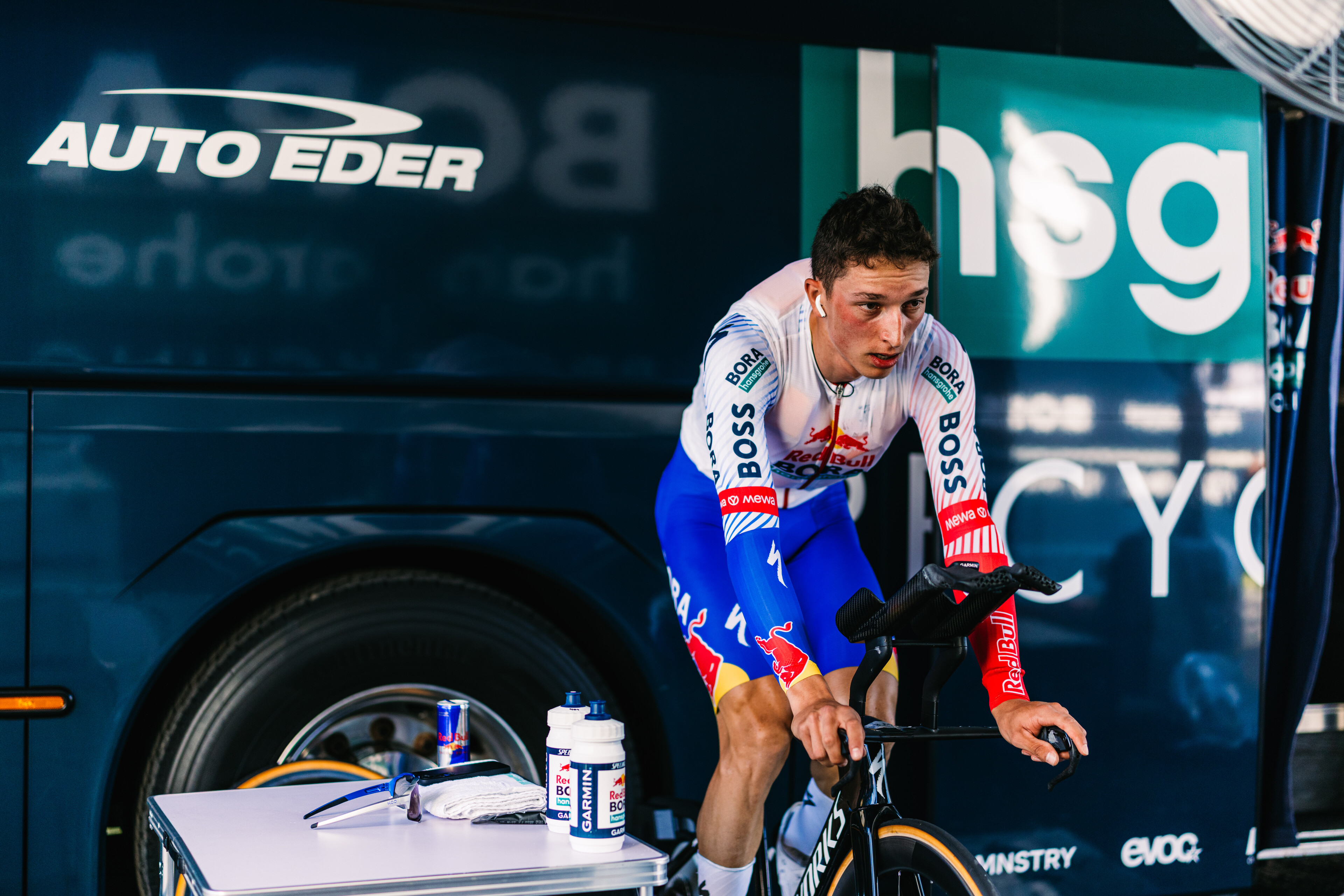
Florian Lipowitz is one Red Bull-Bora-Hansgrohe rider who may be undertaking more carbohydrate periodisation than others (Image credit: Maximilian Fries/Red Bull Content Pool)
Monitoring fluctuations
The application of fuelling science, married with app usability, is why riders turn up at the Tour Down Under in January looking leaner than in times gone by. It’s also one reason behind the ever-increasing speeds in the peloton. Whether that all-year-round lightweight maintenance is conducive to long careers remains to be seen, but it’s something Smith is aware of.
“As well as weight, we monitor the riders’ body composition throughout the season, not only for performance reasons but more importantly, health,” says Smith. “We do that via two means. One is DEXA, where we can also monitor bone mineral density, and the other is callipers, more specifically, the ISAK method. You take eight measurements – six on the upper body, two lower body – and you’re given an accurate average.”
Smith says there’ll be dialogue with the riders about how their bodies are responding to changes in training and fuelling strategy to discuss “the best composition for them in each scenario. There’s interaction between the nutritionist, coach and the DS, and we try to understand what the role of that rider is for each specific race and then make sure that their weight and body composition are appropriate for each scenario.
“For instance, for the Spring Classics we might want a domestique that little bit heavier, including a higher level of body fat, to battle the weather and the terrain. We’ll look to drop that for the Tour de France and the mountains, as not only do we look for them to deliver GC riders into key positions come the bottom of the climb, they must also be able to survive the climbs themselves to make the cut-off.”
That’s not a new idea. I recall chatting to Rob Child, then nutritionist at the Cervélo Test Team, who revealed how they prepped Thor Hushovd to win his second green jersey in 2009, despite the stiff and rather fast competition from Mark Cavendish. “Because of Cav’s speed, we devised a strategy that moved away from simply going for wins on the flat stages,” he said. “That plan involved helping Thor lose 3kg in the final few weeks before the 2009 Tour de France.”
Hushovd was regarded as a Classics specialist where muscle mass is an advantage. Come the Tour, his body fat nestled around the 6% mark. “That was due to losing some muscle mass as well, but we’d accounted for that, and it didn’t affect his power. On the contrary, his power-to-weight ratio went up, which meant he could climb much more effectively in the mountains.”
It allowed the Norwegian to rack up significantly more intermediate sprint points than Cav. “He lost every single final sprint to Cav [who won six stages that year] bar one,” said Child. “But with our weight-reduction tactics, he won the green jersey.”
How a rider’s weight ebbs and flows throughout the season was the focus of a 2021 study in the Journal of Clinical Medicine, where nine well-trained male cyclists’ weight dropped by an average of 12.44% from the base period to the main competition phase. The body fat reduction, from 10.73% to 9.17%, stemmed from burning off around 1kg of fat (7.84kg to 6.62kg). As aerobic capacity (VO2max) features a weight component – lose weight, boost VO2max – that grew from 65.78ml/kg/min to 69.67ml/kg/min. What this meant for performance wasn’t included in the study, but, in theory, it should mean more sustained speed.
More is more
As the race season approaches, glycogen-depleted sessions are put on the back burner; instead, there’s a greater focus on carbohydrates, especially during rides, with Smith a proponent of increasing how much the likes of 2025 Tour de France third-place finisher Florian Lipowitz and multiple GrandTour winner Primož Roglič can tolerate in an effort to delay fatigue.
“If it’s a new rider, we might start by analysing how much they can tolerate via testing at the Red Bull Athletic Performance Centres,” says Smith. The cutting-edge sports science facility operates at two main locations – Salzburg, Austria, and Los Angeles, USA – and is a data-driven dream where athletes have access to advanced biomechanics testing and performance diagnostics. “We might start off with a little trial-and-error of what they can tolerate, but it’s a good platform on which we can look to gradually increase their carbohydrate intake without causing gastro distress.”
Smith says they look to crank up carbohydrate intake both before and during the session. “Part of gut training is increasing the activity and expression of transport proteins in the gastrointestinal tract,” adds Smith. “These are responsible for transporting the carbohydrate through the gut into the blood.”
More specifically, glucose and fructose – a common energy product formulation used by many manufacturers, including MNSTRY, who fuel Red Bull-Bora-Hansgrohe – are absorbed in the small intestine via transporters SGLT1 and GLUT5, respectively. Research shows that consistent exposure to high carbohydrate loads increases the abundance of both, which is one reason behind the increased carbohydrate rates.
Typically, teams will target one or two sessions at different times of the year to crank up carbohydrate intake, which not only raises the activity of these transporters but also forces the stomach to become better at pushing fluid and carbohydrate into the small intestine for, in theory, greater carbohydrate absorption and less risk of nausea, bloating, sloshing or cramping.
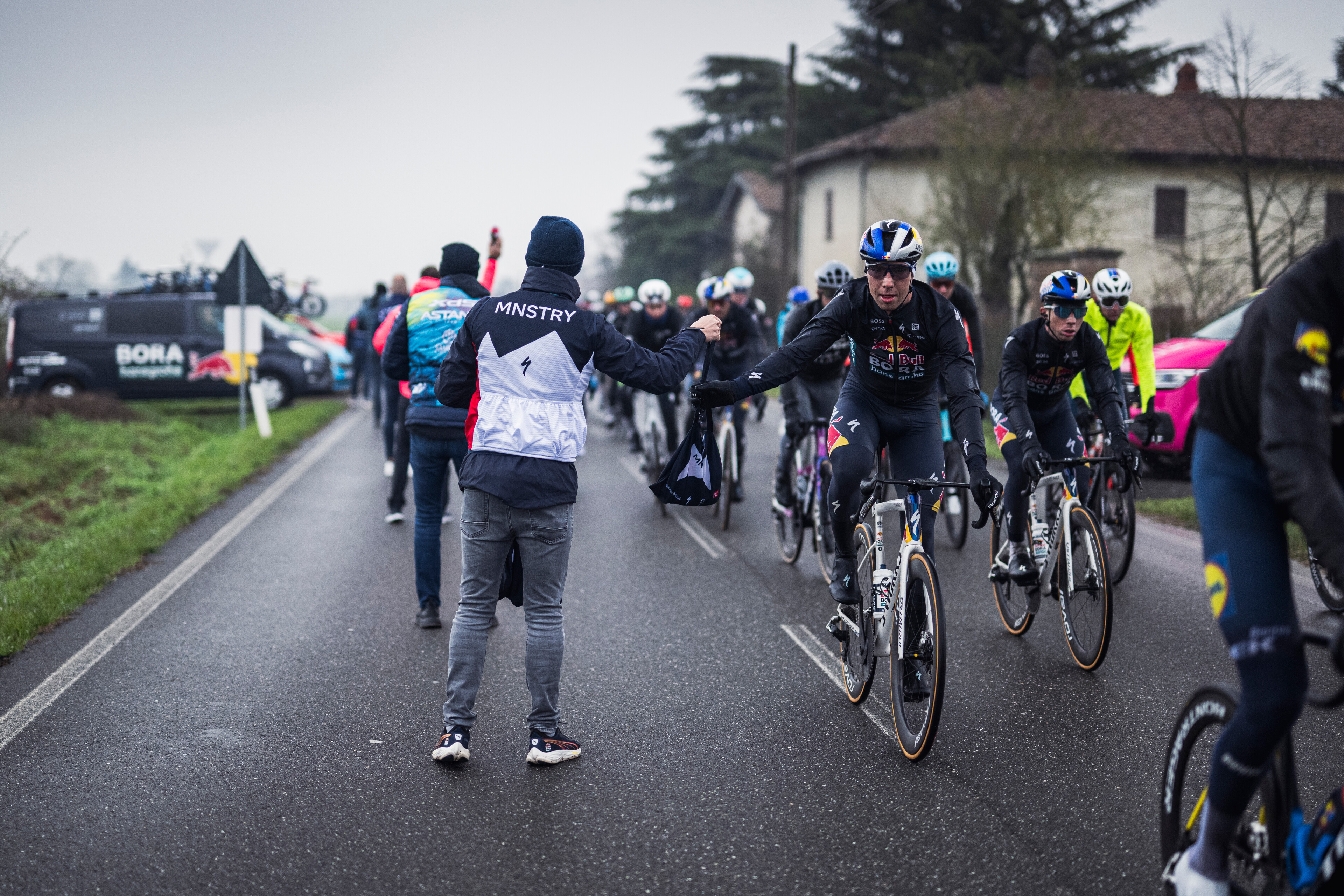
Red Bull-Bora-Hansgrohe work with nutrition provider MNSTRY for their on-bike fuelling supplies (Image credit: Charly López/Red Bull Content Pool)
Supplementing speed?
Supplementing with carbohydrates is a proven performance-enhancer. But what about supplementing with other mooted ergogenic aids? How do the likes of Smith determine what’s touted by marketing teams as a game-changer without treating their valuable assets – the riders – as guinea pigs?
“There are various steps we take. We’d start by looking at the mechanism behind the claimed benefits and the body of evidence. What methods have been used to research that end product? We’d look for randomised control trials as a gold standard for assessing the likelihood of it being effective.”
A randomised controlled trial is a study where subjects are randomly assigned to one of at least two groups: a treatment group and a control group (placebo). This means each of the triallists has an equal chance of being placed in either group, removing potential bias. The outcomes of the groups are then compared to see if the intervention made a difference.
This heightens the chances of proving whether a supplement is of benefit or not. But it’s not infallible. As Smith knows only too well from his academic background at Liverpool John Moores University, the university students that are the predominant cohort of many studies are a very different beast from elite cyclists, whose physiology is so finely tuned that they have less bandwidth to grow than the rest of us.
“Luckily, we have access to the performance centres that have their own research and innovation departments. We can use higher-level athletes, plus we can obviously test the claims of products, which might be needed if the only evidence of that product working is from that company’s research.”
For most riders, including us amateurs, Smith says a good general diet that contains a hearty mix of macro and micronutrients negates the need for the majority of supplements, albeit immune-boosting vitamin D should be a staple during wintertime.
All in all, Smith says periodising nutrition is a useful strategy to optimise performance, whatever level of rider you are. At its basic level, it’s about shifting that carbohydrate slider up and down depending on workload and physiological goal. High carbohydrate intake before and during high-intensity efforts results in better-quality sessions and higher power outputs. Low-carbohydrate training efforts in targeted sessions boost fat oxidation and mitochondrial adaptations that will lay the foundations to optimise those harder sessions as race season approaches. Do that and you’ll crank up your chances of riding up the results listings. Will a change of nutritional scene have the same effect for Remco? Watch this rather rapid space…