
Posted on 18 November, 2025
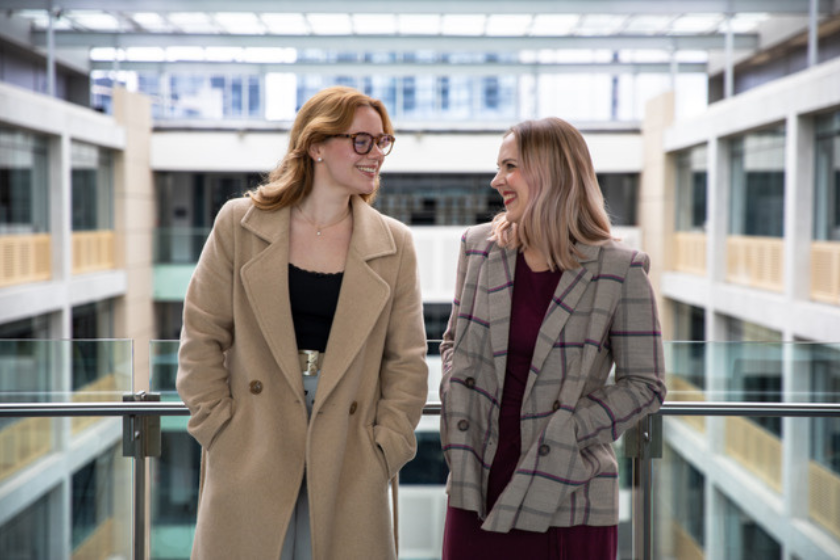
Against a field of industry giants and in a landscape often dominated by large consulting firms, a Canberra woman and her small, female-led business has secured Australia’s very first dedicated AI security contract.
As the founder of Mileva Security Labs, Harriet Farlow says the moment she heard the news, the first thing she experienced was disbelief.
The next was excitement.
The initiative is being undertaken in partnership with Malware Security, a company managed by Miranda R., another technical woman shaping the field. And as they begin to work with the Australian Bureau of Statistics (ABS) to develop the first AI security framework and risk assessment guidance in government outside of national security, it marks not only a professional milestone, but a significant moment for women in tech across the country.
Starting Mileva Security Labs in 2023 to help organisations harness the power of AI, Harriet’s passion for security comes from her firsthand experience seeing the vulnerabilities in AI systems and the growing complexity of AI advancement.
Harriet’s career spans roles at Deloitte Australia (where she specialised in Defence portfolio projects as a Senior Consultant), the University of Sydney (as a Data Scientist), a tech education start-up in New York City (as Senior Delivery Lead), and the Australian Government (as acting Tech Director). But it was a pattern she noticed across all these experiences that led her to launch Mileva: a significant gap in AI security awareness and implementation.
Realising that many organisations – especially those outside of the intelligence community – are not prepared for the unique cybersecurity risks associated with AI, Harriet launched Mileva with the support of the Canberra Innovation Network to equip them with the tools they need.
“AI was never anticipated to suddenly be integrated into literally every enterprise system,” she says. “It started as cool techniques to do specific problems faster.”
“For the two and a half years that I’ve been running Mileva, I’ve been working with organisations and getting people to not just care about the safety impacts of AI…but specifically caring about cyber security attacks on AI.”
It’s something of a contentious topic.
As debate continues in the public sphere about the benefits and downfalls of AI – from automating tedious emails to the risk of embedded biases and discrimination – Harriet’s work focuses on a different threat entirely: how AI systems themselves can be attacked, manipulated, or misused to compromise organisations.
Winning the tender for the Australian Government’s first AI security contract, Mileva and Malware Security are breaking barriers in a largely male-dominated field as it makes history in Australia.
“It’s definitely just amazing that of all the companies to win it, it wasn’t one of the big consultancies everyone expects – it was us,” says Harriet.
“It’s just so shocking, but lovely that it was us, and I’m really grateful for that. And the ABS has been amazing to work with.”
With a female-led team, Harriet also hopes that by winning the tender, Mileva can help shine a spotlight on the women leading the way in the world of AI and cyber security.
And while she admits that hiring a majority of women is likely due to her own “subconscious biases”, it’s a nice twist on the usual tale told about women working in technology.
“Women still aren’t taken seriously in tech – they’re seen as women first, rather than professionals. All of us have ridiculous stories about how we think that we’re having a sales conversation with someone, and then the person asks you out on a date,” says Harriet.
“People in tech companies say that they can’t find female talent. I think that’s ridiculous, because I have people reaching out to me all the time and they are mostly women.”
“I think that women will find the spaces where they feel empowered and included and I feel really glad that my space is one of those for them.”
Harriet is currently studying her PhD in Machine Learning Security and is about to release her first book – The AI Security Handbook. And when she looks to the future of AI and society, she says that she’s an optimist.
Believing that AI has the potential to make everyone’s lives better, she hopes that the more people and organisations who understand AI security is something that needs to be taken seriously, the more it can be used for good.
It all just comes down to how it’s used – and that’s where she comes in.
“It all depends on how it’s implemented and making sure that it’s implemented correctly, safely and securely,” says Harriet.
“There could be such a great future where people don’t have to do menial jobs and people don’t need to have jobs that put their lives in danger…AI can bring a lot of productivity and growth to the world, but it can also make the rich get richer, and so much of that is how we set it up now.”