
WINNING in Adelaide has always required a fast car and a fast driver, but not necessarily a record of past Supercars success.
The event’s quarter century-plus history is filled with the names of legendary race winners, from Lowndes to Ambrose, Skaife to Tander, and more recent heroes McLaughlin and van Gisbergen.
All of them, however, had amassed incredible CVs by the time they stood atop the podium in the South Australian capital.
This year’s event takes on an added edge courtesy of Supercars’ new Finals Series, meaning four drivers head to Adelaide next week with a genuine chance of leaving the city with the championship trophy.
Three of them already have race wins in the event previously known as the Adelaide 500.
The outlier is Kai Allen, the full-time rookie who scored a stunning upset at Sandown by securing the fourth and final title contender berth.
While his rookie year has been exceptional, it is missing one crowning achievement: a race win.
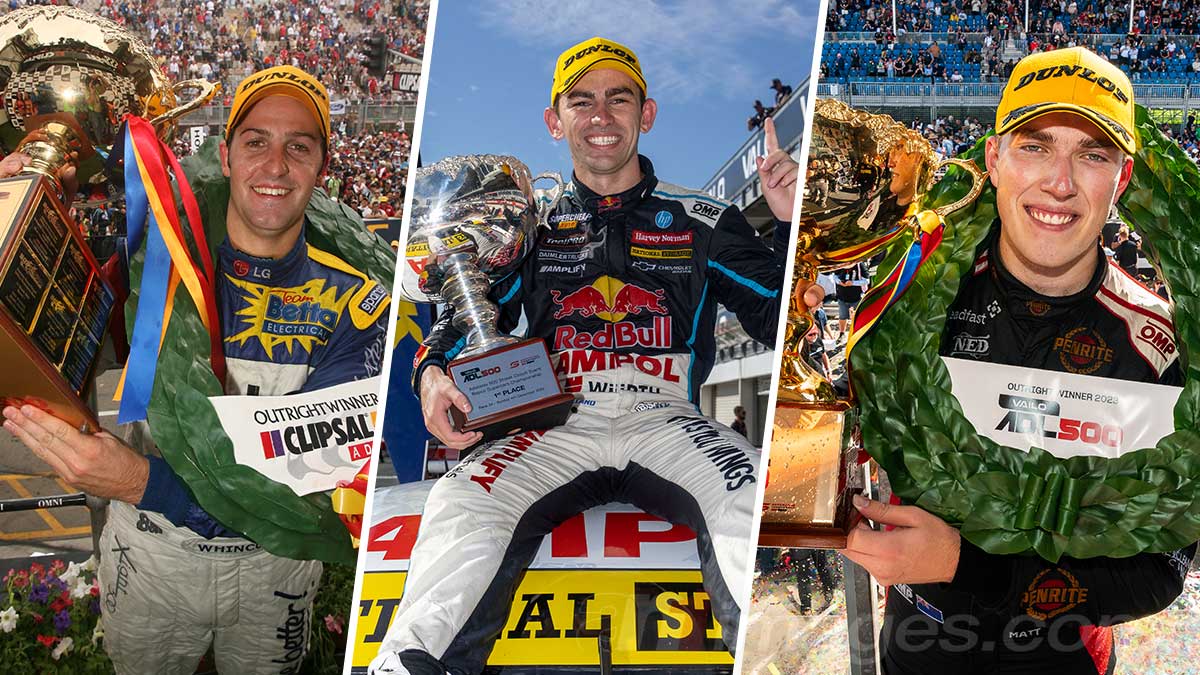
But in good news for Allen, three Adelaide race winners were in the same boat. They all took the first race wins of their Supercars careers on the Sunday of the iconic event.
The other good omen for Allen?
Their victories marked the start of bigger things ahead. For one of them, it proved the first stop on the way to the Supercars Hall of Fame.
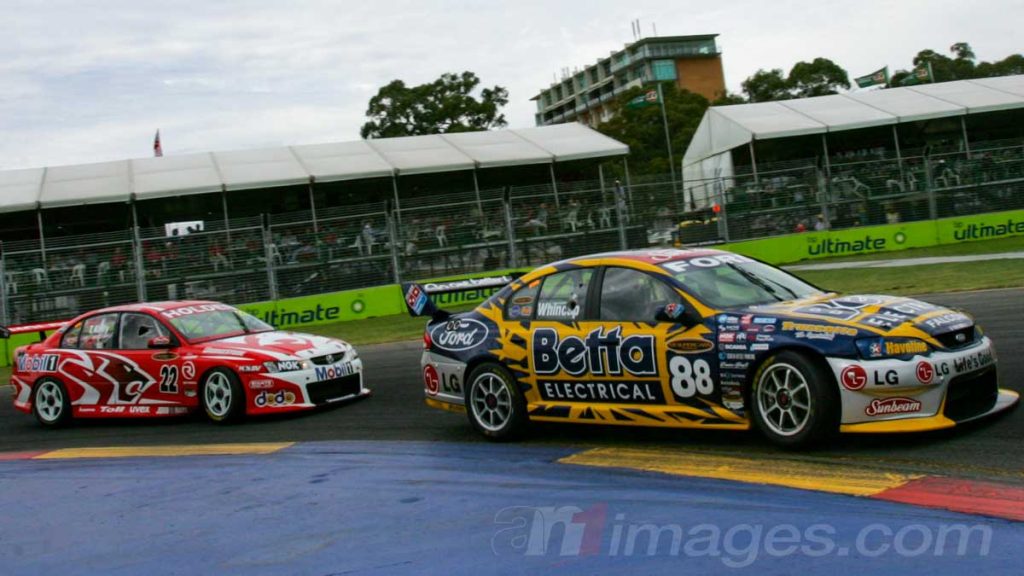 Whincup fended off Todd Kelly to claim his maiden Supercars race win. Pic: an1images.com / Dirk Klynsmith
Jamie Whincup, 2006
Jamie Whincup was thought to be a good driver – but maybe not a great driver – when Triple Eight signed him for the 2006 season.
Moreover, he’d already been chewed up and spit out by Supercars. A dream rookie season with Garry Rogers Motorsport in 2003 had rapidly turned into a nightmare that left Whincup out of a job at the end of the year.
With tenacity, he clawed his way back onto the grid. First was an enduro-only drive with Perkins Motorsport, where he was a teammate – albeit in a different car – to the legendary Jim Richards.
He’d missed out on an enduro drive with Tasman Motorsport that same year but impressed veteran chassis guru Wally Storey in a 10-lap test at Oran Park. A further recommendation from Richards, based on what he’d seen at Perkins, led Tasman to recruit him for 2005.
Whincup delivered a quietly impressive season headlined by strong co-drives at Sandown and Bathurst, and those performances put him on Triple Eight team owner Roland Dane’s radar.
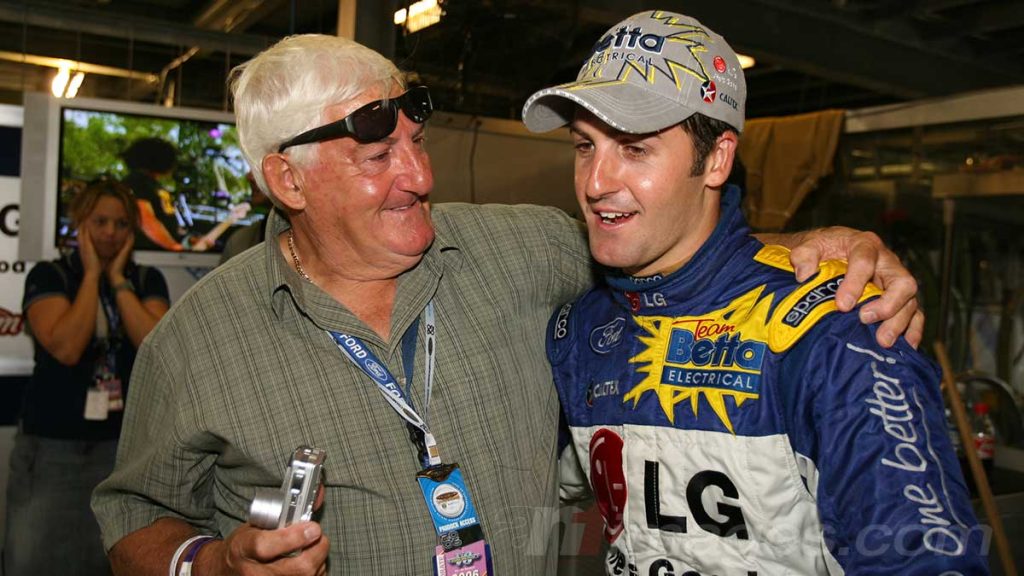 Whincup with proud father David in the Triple Eight garage after the race. Pic: an1images.com / Scott Wensley
Triple Eight’s honchos believed they were getting a good young driver who would do a good job alongside established star Craig Lowndes at the enduros. When they finally put him in one of their cars, in a test at Queensland Raceway in December ahead of the 2006 season, they realised they’d gotten someone special. After Adelaide, everyone else realised it too.
Right on Lowndes’ hammer in qualifying, Whincup out-paced his teammate in the Top 10 Shootout to start ahead, sixth vs seventh. But the cagey veteran won the opening race while Whincup delivered a smart drive to finish third, less than a couple of seconds adrift, to nab a second-row start for the Sunday race.
He nearly undid all that good work with a tardy start, but soon made up for it. An early pitstop gave him a clear track, and a string of searing laps leapfrogged him back into contention. He also had a helping hand from clever race strategy; the rules called for two compulsory pitstops, and Triple Eight completed Whincup’s second under a lap 22 Safety Car, while the bulk of the field completed their first.
The downside was that he had to make his tyres survive for 72 laps at a winning pace, and with the Holden Racing Team’s Todd Kelly breathing down his neck. But Whincup, as he’d do countless times over the years that followed, withstood the pressure and came home with his first silverware.
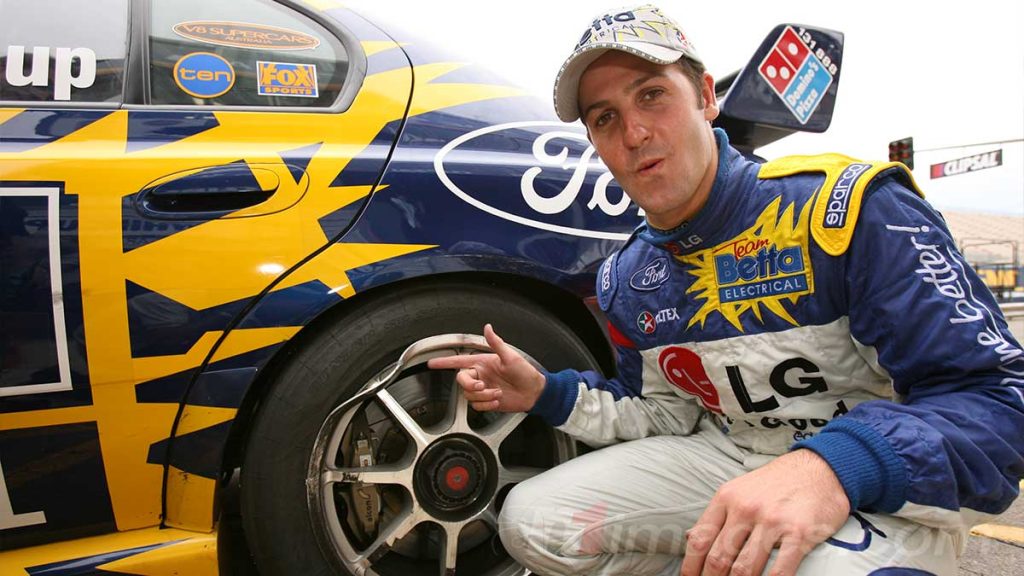 A relieved Whincup with the badly bent wheel rim. Pic: an1images.com / Scott Wensley
There was a slice of luck, too: Whincup had clashed with a slower car and badly bent a wheel rim, and he was extremely fortunate the tyre stayed inflated. The team later gave him the damaged wheel as a prize…
Nonetheless, that Adelaide triumph kickstarted a career that has delivered 125 championship race wins, including four Bathurst 1000 victories and four Adelaide 500 triumphs, plus a berth in the Supercars Hall of Fame upon his retirement as a full-time driver at the end of 2021.
Fittingly, Whincup’s replacement was the first driver to repeat his feat of notching a breakthrough career triumph in Adelaide. He is also one of Allen’s title rivals; arguably, he is the driver to beat.
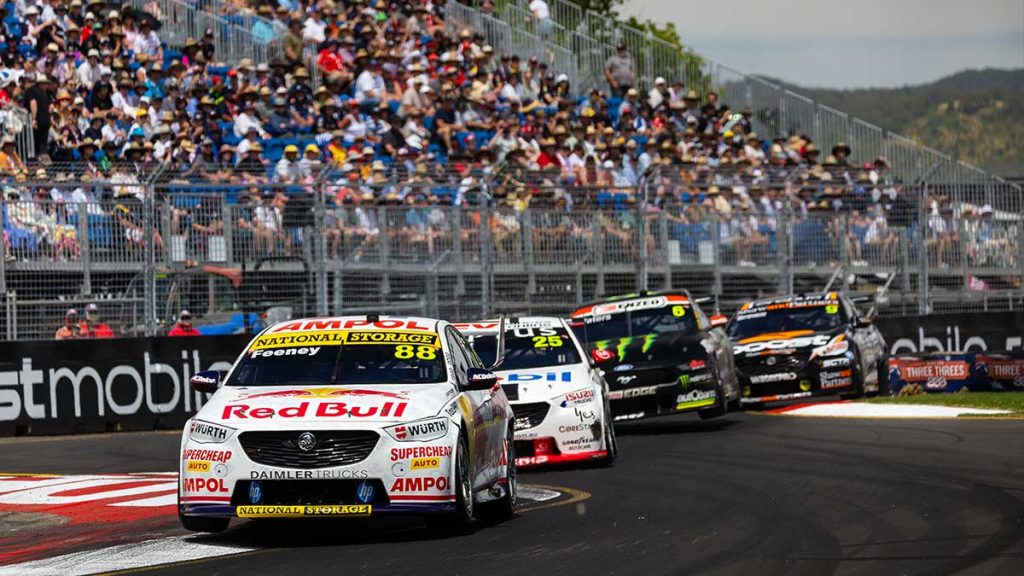 Feeney leading Chaz Mostert, Cam Waters and Will Brown through the Senna Chicane. Pic: Supplied
Broc Feeney, 2022
Broc Feeney’s family history points to a career on two wheels rather than four. His father is Paul Feeney, a motorcycle racer and sidecar passenger of the 1970s and 80s. In fact, Feeney the younger raced motorcycles up to the age of nine, when he switched to karting.
His rise from karts to cars to Supercars was rapid. He arrived in Toyota 86 at age 15 – and won. He moved onto the Supercars ladder with Super3 at age 16 – and won. He graduated to Super2 at age 17, made his Bathurst 1000 debut on his 18th birthday and, within a few weeks, secured a move to race for Triple Eight in Super2 for 2021.
Then came a giant carrot: Whincup announced at the start of the season that 2021 would be his last. A vacancy had come up at Supercars’ best team, and Feeney didn’t just have his foot in the door – he was already inside and sitting on the couch. But he still had to prove he deserved the call-up, and a blitz to the Super2 title meant he was officially anointed as Whincup’s successor by mid-season.
Despite the high-profile seat, Feeney was partly shielded from the spotlight by his teammate Shane van Gisbergen’s dominant run to the last championship of Supercars’ Gen2 era. With SVG doing all the winning, consistent top 10 finishes – allied to the odd podium – were enough to ensure Triple Eight also earnt the all-important Teams’ Championship title.
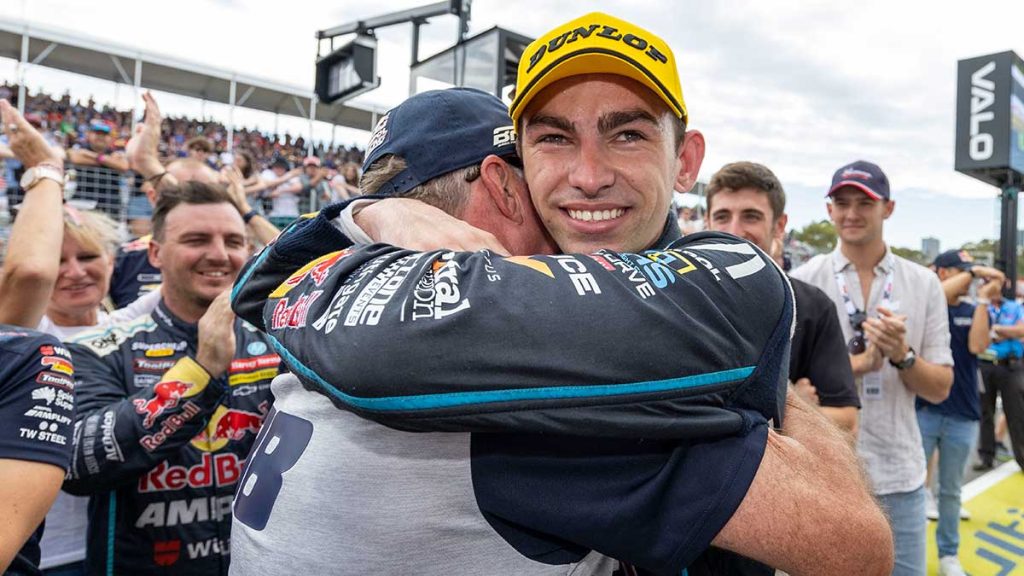 Feeney celebrates his maiden win with father Paul. Pic: Supplied
Both titles were sewn up by the time Feeney arrived in Adelaide, the event making its grand return to the calendar as the final round of the season. Unlike Whincup in 2006, the Saturday – when he qualified 17th, crashed twice and somehow found himself eighth at the flag – was no pointer to what was to come on Sunday.
On the final day of his rookie season, Feeney qualified eighth, converted it to third on the grid with a mega lap in the Top 10 Shootout. As in 2006, the #88 car was the first to pit among the leaders, vaulting Feeney from fourth to second, which became first when sustained pressure on Will Davison prompted the veteran to outbrake himself at the hairpin.
Though he had the lead, the job wasn’t done. A mid-race Safety Car put Walkinshaw Andretti United’s Chaz Mostert onto his tail. Much like Whincup in 2006, Feeney had to sustain 30 laps of pressure from one of the category’s top guns. He didn’t crack under the strain and took the chequered flag with Mostert under a second away.
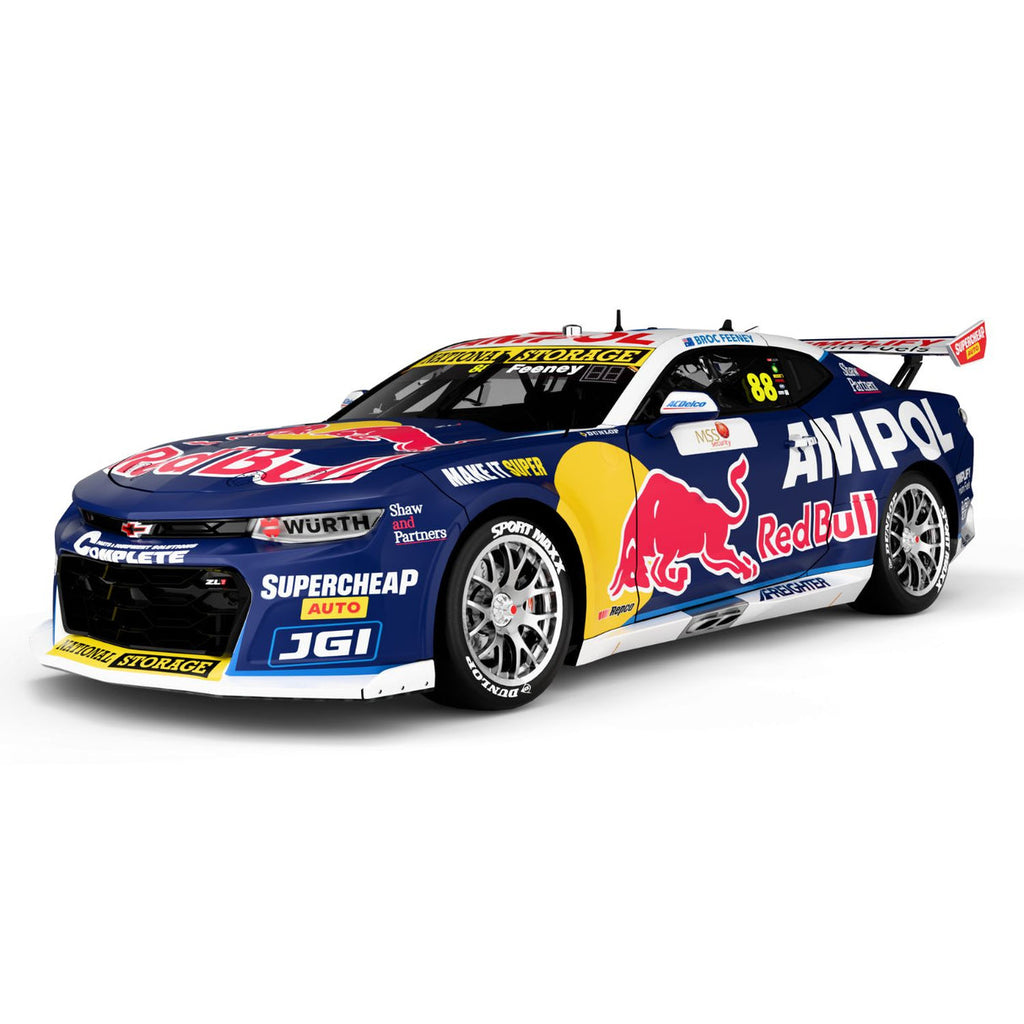
Not only was it his first championship race win, but Feeney goes in the record books as the last driver to win a Supercars race aboard a Holden.
The wait for the next breakthrough winner didn’t take 16 years. It took just 12 months.
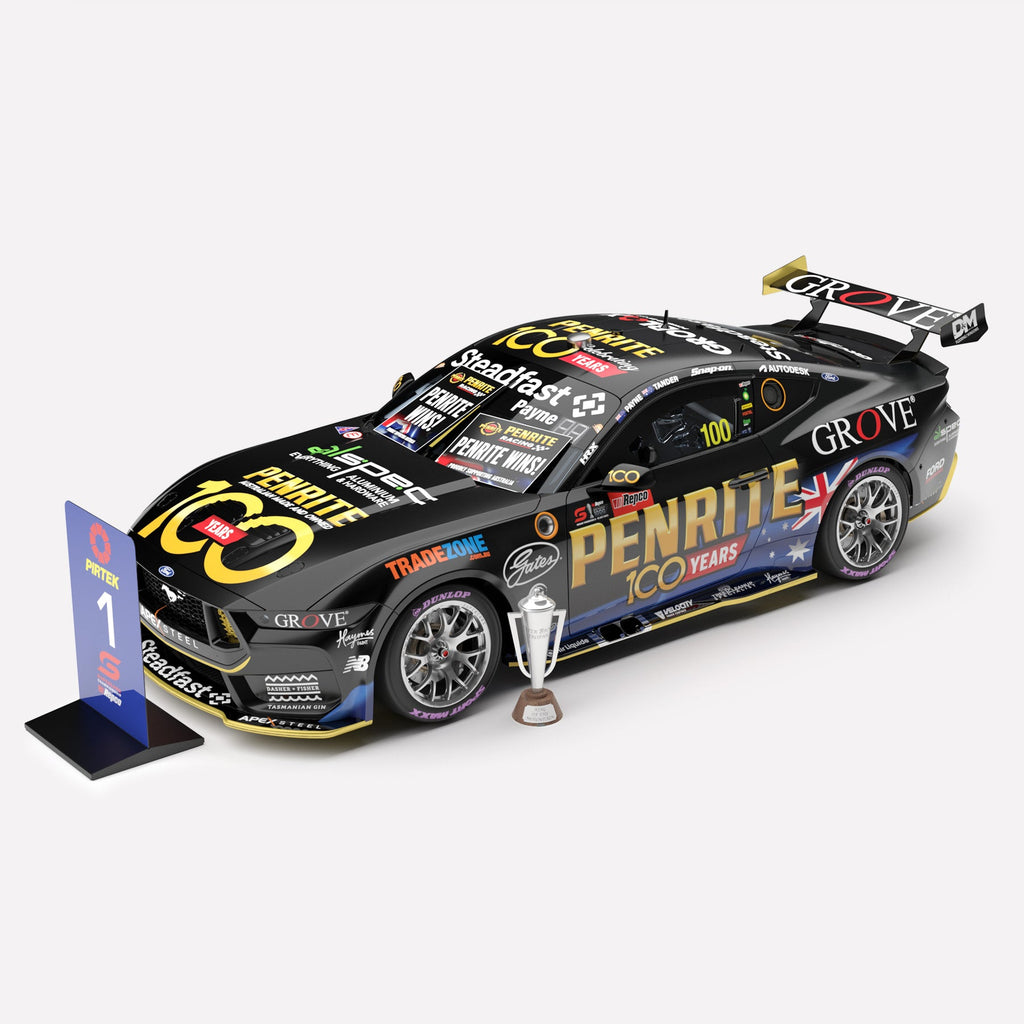
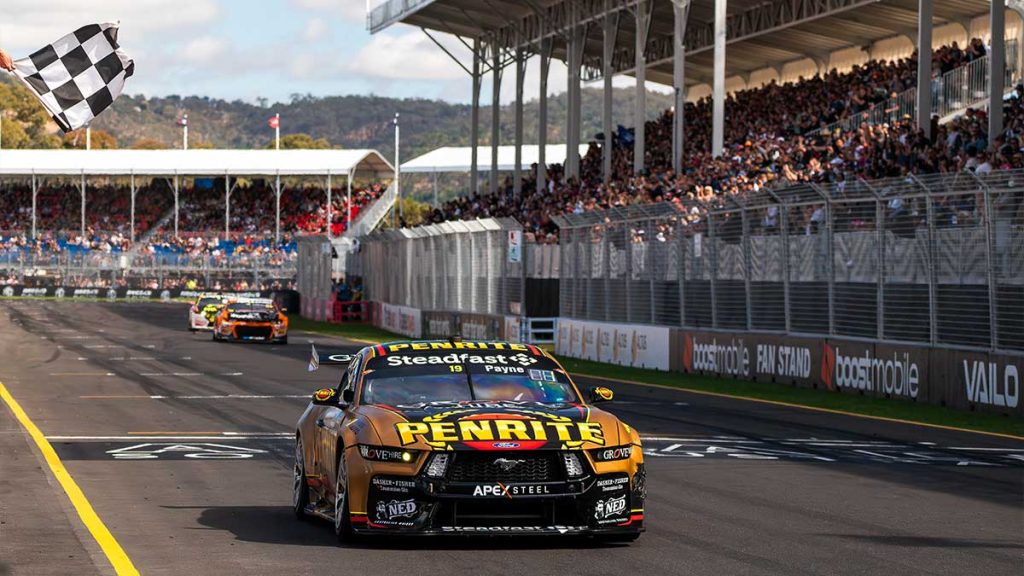 Second place isn’t even in the picture as Payne crosses the line to take his maiden Supercars race win. Pic: Supplied
Matt Payne, 2023
The inaugural season of Gen3 Supercars was also the rookie season for Matt Payne – but that hadn’t been the original plan.
A talented karter whose overseas ambitions were curtailed by the COVID pandemic, Payne’s impressive car racing debut in his native New Zealand in 2021 drew the attention of Stephen and Brenton Grove. They saw a special talent in Payne and quickly signed him up as the foundation member of the Grove Junior Team.

His graduation to Supercars was nearly fast-tracked by 12 months. The Groves, with a looming vacancy on their team, looked at trying to usher the 18-year-old Payne through the various hoops required for a driver to become eligible to race in the Supercars Championship, including a pair of Super2 starts at the end of 2021.
In the end, they elected to let Payne develop further via a full season of Super2 in 2022. The decision was vindicated by a solid second-tier campaign and his mature drive to sixth place alongside veteran Lee Holdsworth at the Bathurst 1000.
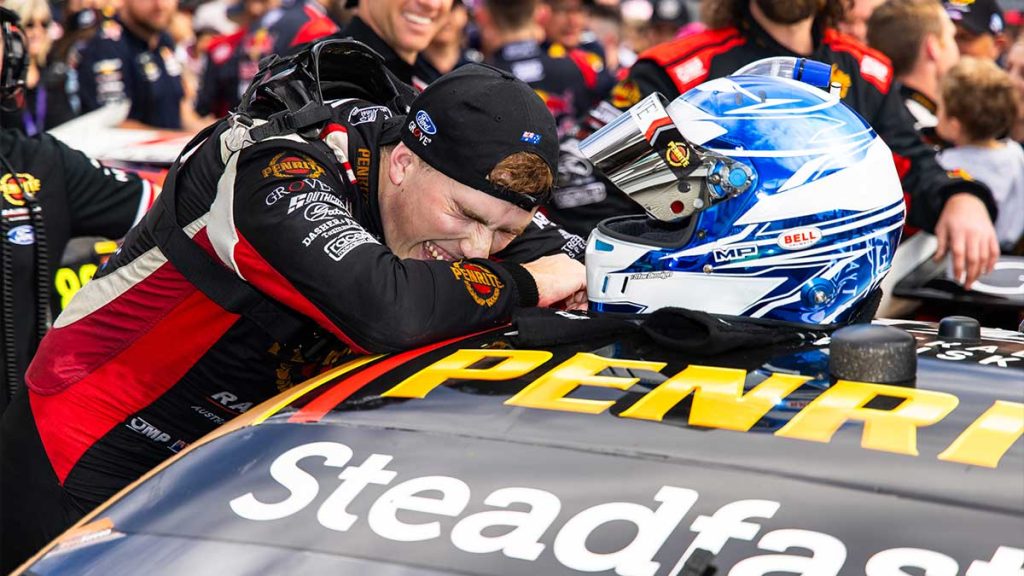 Matt Payne. Pic: Supplied
While Payne initially didn’t have race-winning machinery at his disposal amid the ongoing parity war that marked the first year of Gen3, there were clear signs of speed. He managed top 10 qualifying efforts at Albert Park and Wanneroo, the latter of which he converted to top 10 finishes.
But as the parity pendulum swung Ford’s way, Payne’s star truly shone. From The Bend round onwards, the #19 Mustang didn’t dip outside the top 10 on the grid. At the Gold Coast, it was on the front row for the Saturday race, while on the Sunday he fell one place shy of a breakthrough podium finish.
Then came the final race of his rookie season in Adelaide. Unlike the victories of Whincup and Feeney, where certain dominoes fell their way, Payne’s maiden victory was a true tour de force.
From the front row, he blitzed champion-elect Brodie Kostecki to take the lead into the first corner. And he simply didn’t look back. With machine-like consistency, Payne edged away lap after lap until he was four seconds clear of the pack by the first pitstops. After the second round of stops, it was out to 5.1 seconds. By the chequered flag, a whopping 8.5 seconds separated Payne from his nearest pursuer.
 Pic: Supplied
What came next for the breakthrough winners
Whincup, Feeney and Payne all quickly followed up their maiden successes in Adelaide.
While Whincup didn’t win another solo race throughout 2006, he pocketed more than a few in 2007 on his way to a stern title campaign. Oh, and he won the Bathurst 1000 both years alongside Lowndes.
Feeney’s uncanny knack for winning the final races of the weekend in 2023 led to him earning the tag ‘Mr Sunday’, amid his own title challenge that only properly faltered with a mechanical failure while contending for the Bathurst 1000.
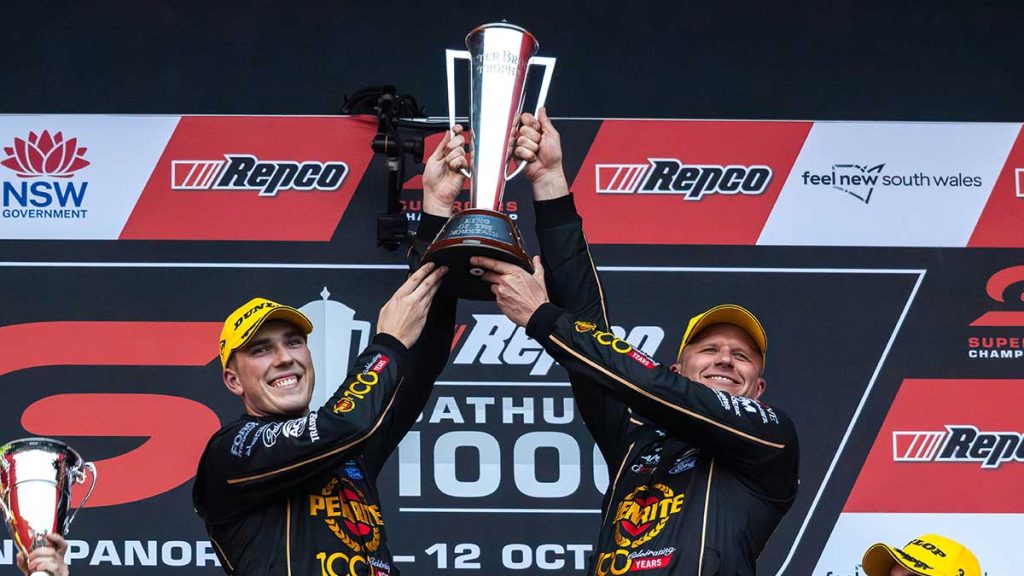
Payne too has proven his Adelaide success was no flash in the pan, emerging as a title contender in 2025 prior to his shock Sandown elimination, and claiming victory in the Bathurst 1000 with Garth Tander.
But for all, their initial success demonstrated that success on the Adelaide streets can pave the way to a bright future.