
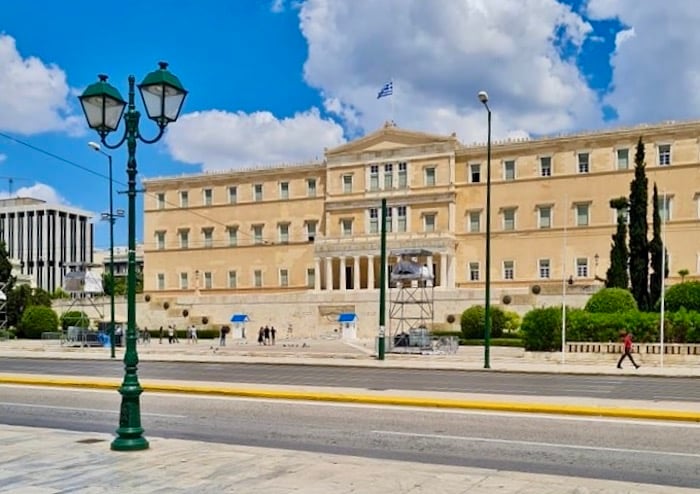
“Our target is to stop being the most indebted country in Europe in the next years,” Finance Minister Kyriakos Pierrakakis said. Credit: Greek Reporter
Greece’s final budget plan projects accelerated economic growth for 2026 and a significant reduction in its public debt, by almost eight percentage points, driven by increased public and private investment and sustained consumer spending.
The government expects economic output to rise 2.4% next year, outperforming Europe’s major economies, following expansion of 2.2% this year, partly with the help of European Union recovery funds.
Greece projects a primary surplus, which excludes debt servicing costs, of 2.8% of gross domestic product next year, on the back of higher tax revenue and lower unemployment. Since emerging from a bailout in 2018, the country has regained its investment grade ratings in 2023, revived its banking system, and relied solely on debt markets for its borrowing needs.
Its public debt, now the highest in the Eurozone, is seen dropping by 7.7 percentage points to 138.2% of GDP in 2026 from 145.9% this year and to below 120% in 2029. “Our target is to stop being the most indebted country in Europe in the next years,” Finance Minister Kyriakos Pierrakakis said at a press conference presenting next year’s budget plan.
Greece’s 2026 budget includes tax breaks
The new budget includes tax breaks of about 1.7 billion euros ($1.96 billion) to better support households with children and fund pension hikes amid the rising cost of living, funded by the primary surplus.
Greece should achieve a primary surplus of approximately 2% annually, compared to 3.7% this year, to cover its interest rate payments and maintain a sustainable debt burden. The country plans to borrow about 9 billion euros (about $10.37 billion) next year from bond markets and repay more bailout loans in December ahead of schedule.
Related: Fitch Ratings Upgrades Greece, Citing Strong Debt Reduction and Economic Growth