
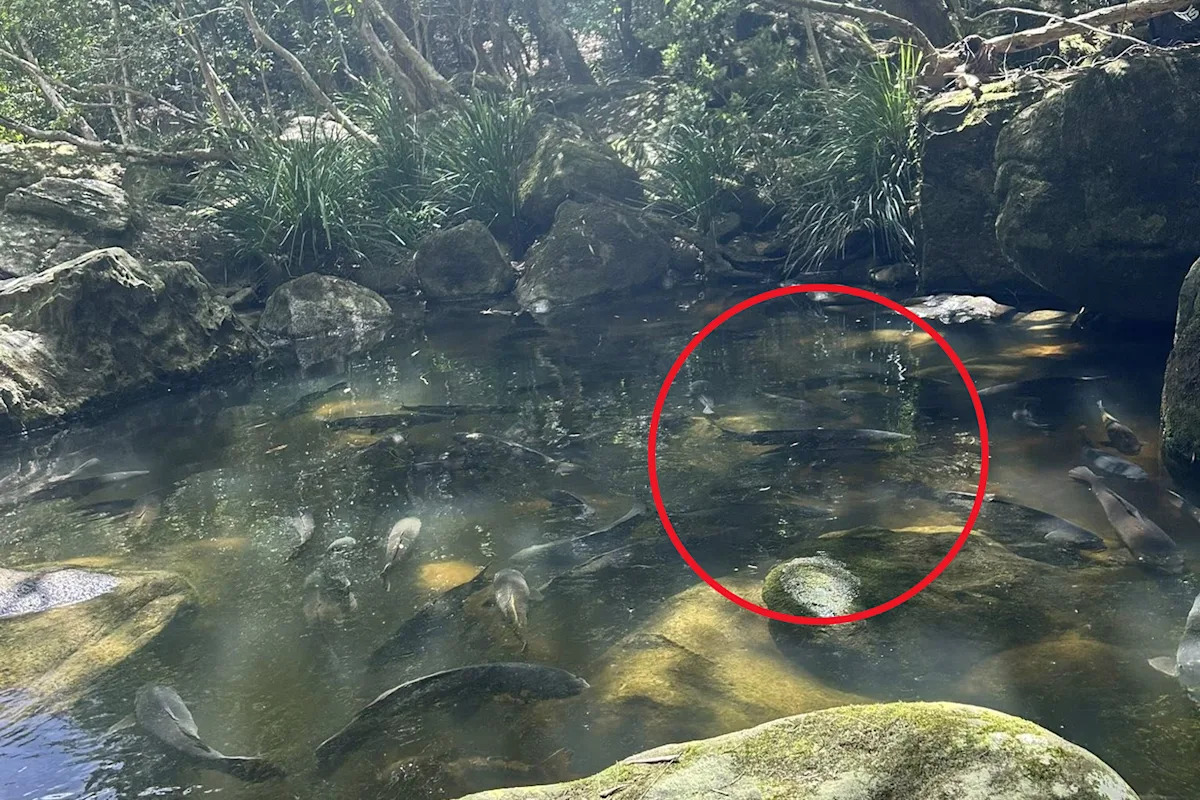
Australia’s ongoing battle with carp is under the microscope again after a fisher highlighted the “crazy amount” present in a popular east coast river. Widely considered one of the most destructive introduced pests in Australian waterways, European carp now exist in plague proportions, particularly in the Murray-Darling Basin.
A New South Wales-based angler was fishing along Piles Creek Loop on the Central Coast earlier this month when he encountered an incredible concentration near the Phil Houghton Bridge.
“If anyone likes hunting pests, there is a crazy amount of these carp in the waterway,” he wrote. “I managed to catch a couple by hand, but it would be much more efficient with a rod, spear or bow.”
Images show dense swarms of fish choking the waterway — a scene that’s becoming disturbingly common. A spokesperson for the Central Coast Council acknowledged the issue is growing. Speaking to Yahoo News, they said community members are encouraged to help in containment efforts.
“Our community is certainly encouraged to make the most of this beautiful weather and fish for the invasive species, ultimately helping to maintain and improve the health of our waterways,” they said.
“Should you catch a carp, you can cook it at home … Wrap it in newspaper, freeze it, then dispose of it in the red lid bin as close to bin collection day as possible.”
Recently, calls have surged for intervention from the federal government, amid reports that the pests now make up an astonishing 90 per cent of fish biomass in waterways like the Murray-Darling Basin.
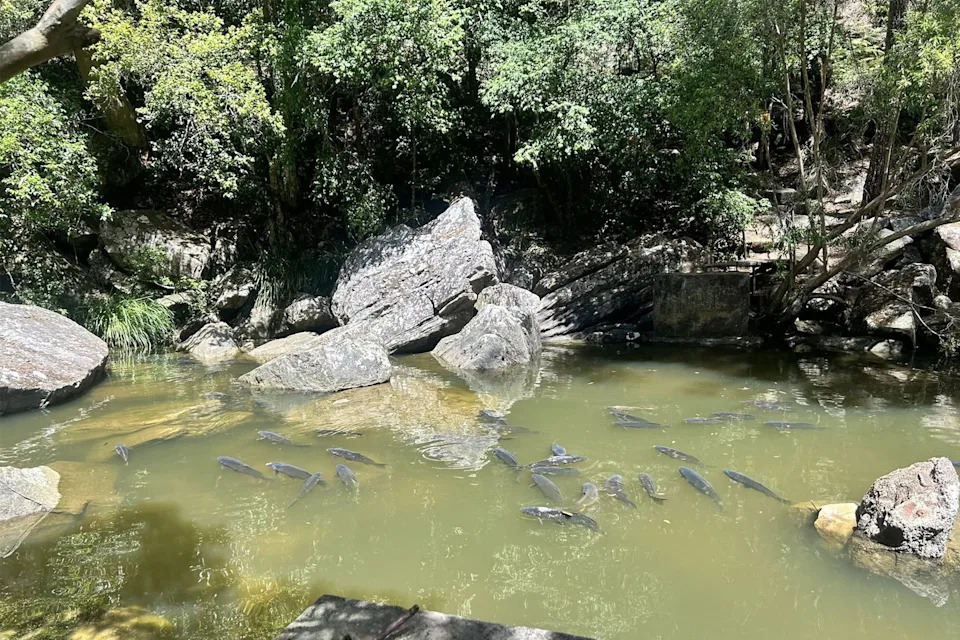
Images show dense swarms of fish choking the waterway. Source: Josh Thiele/Facebook
Conservationists and invasive species specialists have joined a growing chorus of voices pushing the federal government to step in and “release the carp virus”. According to a report commissioned by Canberra itself, the cyprinid herpesvirus-3 could reduce carp numbers by up to 60 per cent, but the government says it is still assessing the potential impact on wildlife.
The National Carp Control Plan (NCCP) estimates that the total impacts of carp cost the Australian economy between $11.8 million to $500 million per year. This broad range accounts for various factors, including ecological, social, recreational and infrastructure impacts.
What makes carp so destructive?
European carp are one of the most damaging pests in Australia’s freshwater systems. Their feeding habits churn up the riverbed, clouding the water with sediment and stripping away vital aquatic plants. This constant disturbance releases excess nutrients, lowers oxygen levels, and creates murky, unstable conditions that make it harder for native fish, insects and plants to survive.
Originally introduced in the mid-1800s, carp didn’t become a widespread problem until the 1960s, when a particularly hardy strain escaped into the wild.
Since then, their numbers have exploded. In parts of inland NSW, carp now account for up to 90 per cent of the total fish biomass — effectively overrunning entire ecosystems. Their continued spread places enormous pressure on water quality, native species and the overall health of rivers and creeks across the state, making their management one of Australia’s most persistent environmental challenges.
Carp spreading into new regions
In September, other NSW fishers spoke out after carp were photographed at the Brooklyn end of the Hawkesbury River in NSW — an estuary where freshwater from upstream mixes with saltwater from the ocean. One local said it was the “first time” they’d seen the marine pests at the spot just north of Sydney. They were surprised to see the fish were swimming in brackish water, a mix of salt and fresh.
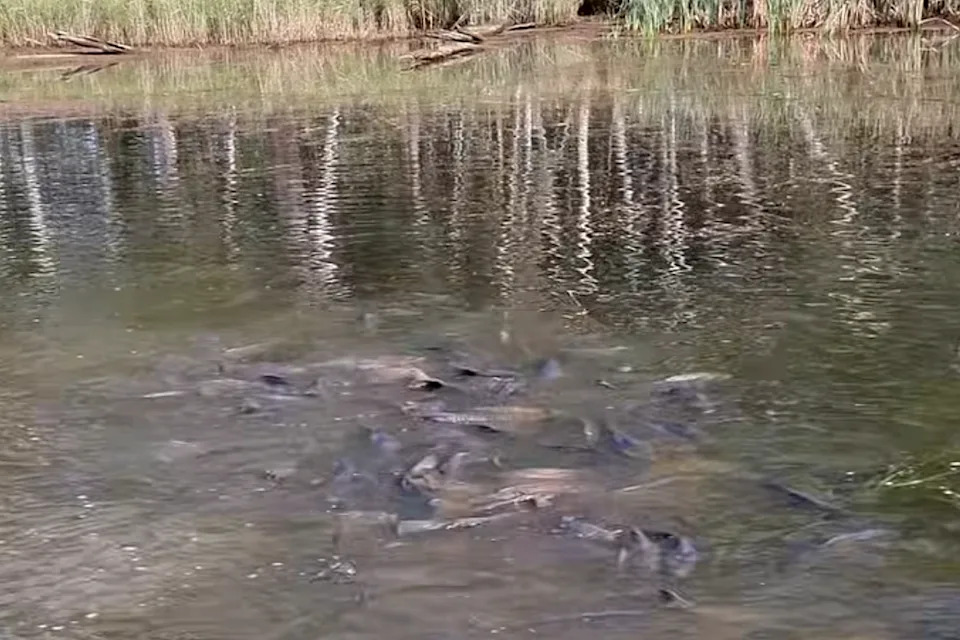
One female can produce up to 300,000 eggs and can spawn up to twice a year. Source: VFA/David Borninkhof
But experts say the pests will survive almost anywhere. “They can [live] for limited periods of time in higher salinities… they’ve even been found in full saltwater in Port Melbourne, just outside the mouth of the Yarra,” one person wrote online.
While carp thrive in freshwater, they can also tolerate slightly brackish conditions. According to the NSW Department of Primary Industries, carp are “widespread” in the Hawkesbury-Nepean and Hunter river systems, as well as the Shoalhaven and upper Murrumbidgee River, and “in much of the ACT”.
Love Australia’s weird and wonderful environment? 🐊🦘😳 Get our new newsletter showcasing the week’s best stories.
