
Welcome back to the Monday Tennis Briefing, where The Athletic will explain the stories behind the stories from the past week on court.
This week, the fine line between class and cringe when it comes to trick shots, a South Asian tennis figurehead’s final bow, and a Hall of Fame nod for a legendary broadcaster.
If you’d like to follow our fantastic tennis coverage, click here.
How did a great tennis entertainer go too far?
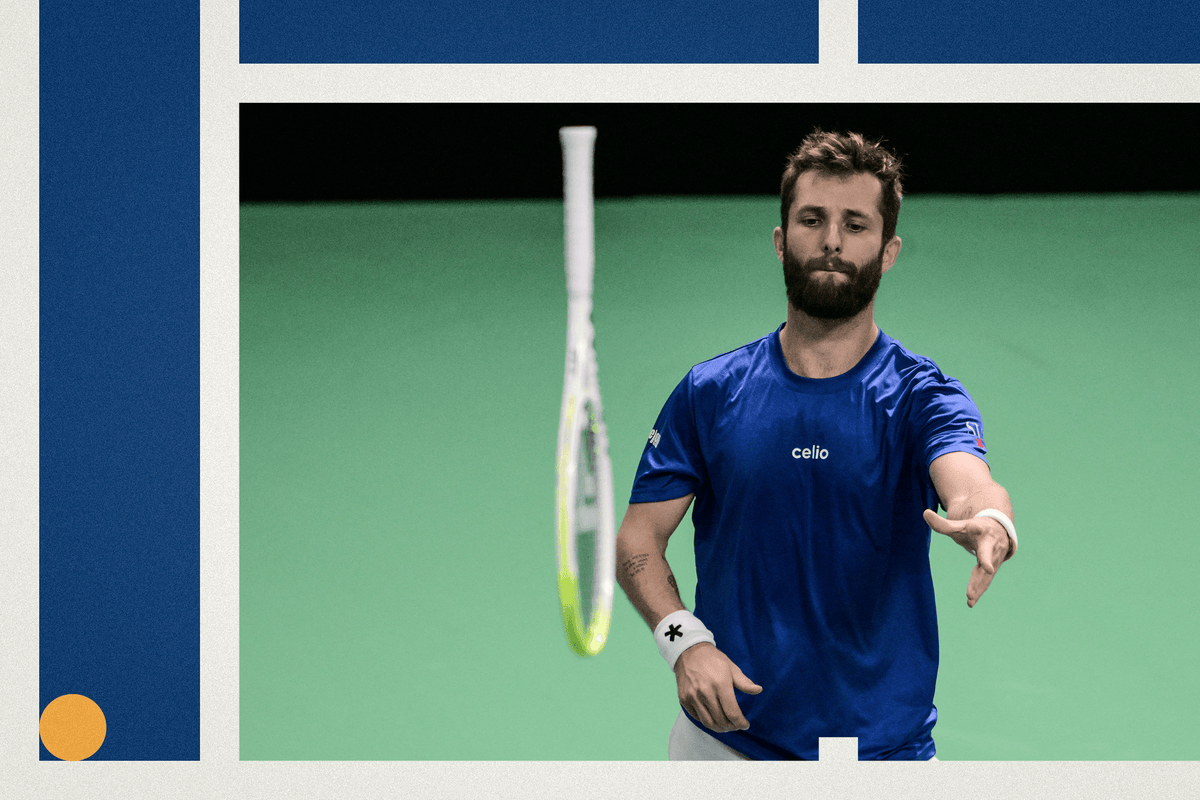
Down 6-5 toward the end of the second set of his rubber against Raphaël Collignon during France’s Davis Cup quarterfinal against Belgium Tuesday, Corentin Moutet did what he so often does. He opted against playing the simple shot, and went for the spectacular.
For Moutet, the spectacular is routine. So when an out-of-position Collignon hoisted up a hopeful lob, the Frenchman would have had little doubt that a through-the-legs half-volley would be a winning play. Instead, he got it catastrophically wrong, barely made contact with the ball, and lost the point. Having won the first set 6-2, Moutet was broken to lose the second 7-5 and went on to lose the match, too. France then lost the second singles rubber, so was eliminated.
Corentin Moutet attempted this completely unnecessary trick shot while up 6-2 5-6, 15-15 on Raphael Collignon of Belgium, leading to France, not just himself, losing the set and the match, and now being at risk of elimination in the Davis Cup Finals.
No words. pic.twitter.com/pnwyTgShKq
— Bastien Fachan (@BastienFachan) November 18, 2025
Moutet’s shot selection became the hinge point of the tie, with its apparent recklessness undercut by the fact that playing such a shot is very much in his nature. He produced a stunning one at Wimbledon against Francisco Comesaña of Argentina in July, and was applauded for it; his mastery of the underarm serve is one of the most thrilling elements of his game.
After his match with Collignon in the Italian city of Bologna, Moutet said the shot was borne out of nervousness, rather than complacency.
“I think that the stress, the tension of the match, the emotion, that’s how I expressed it,” he said in a news conference. “I was tight on this game. So I think that’s why I did it.”
It served as a reminder that stress manifests itself differently in different players, and that team events can be the most gruelling of all. For some players, that stress means an overly aggressive second serve that misses, for others, it’s a more conservative play. For Moutet, it was this.
“What do you want me to say?” Moutet had said earlier. “Was it the best shot to play? I’m not sure. Or is the best choice to do on this ball? I’m not sure, as well. What can I say? I made it (that shot) many times. People said I’m a genius when I made it. Now they’re probably going to say that I’m a clown. That’s how I feel right now.”
He added: “It was an important point. Will be much smarter to finish with a volley. I said, ‘I cannot play this shot again’. If I would have to play it again, I would do different, for sure. It’s easy to criticize when it doesn’t go well, and say that it’s a great shot when I make it. So I’m trying not to be too hard on myself. In the same time, I try to be honest with myself, as well.”
Moutet, who achieved a career-high ranking of No. 31 a few weeks ago, is coming off the back of a very successful 2025.
Will he ever change his penchant for trying these high-wire shots? And, given playing that way has got him this far, should he?
— Charlie Eccleshare
Who will join Roger Federer in the Tennis Hall of Fame next year?
“This is one of the biggest upsets in the history of the sport,” longtime tennis broadcaster Mary Carillo said during an interview last Wednesday afternoon.
Carillo wasn’t talking about a match. She was talking about her election to the International Tennis Hall of Fame, which she will enter next August alongside someone called Roger Federer.
She may not be wrong. And that’s not to denigrate her broadcast contributions, which have been at the top of the field for going on 50 years.
On the court, Carillo didn’t crack the top 30. Her lone major win was a French Open mixed doubles title in 1977, partnered by a high-school kid named John McEnroe. In singles, she never made it past the third round at a Grand Slam. She was done at 23.
“I sure as hell didn’t get in on my tennis,” Carillo, whose Olympic Games coverage helped her enter the Sports Broadcasting Hall of Fame in 2018, said Wednesday.
No, she did not. She spoke her mind, and lost contracts because of it — yet another reason to bet against her — but ultimately beamed insight and humor about her sport all around the world.
“Yoy get forced to make decisions about what you want to be,” she said.
Carillo made some good choices. Off to Newport she goes.
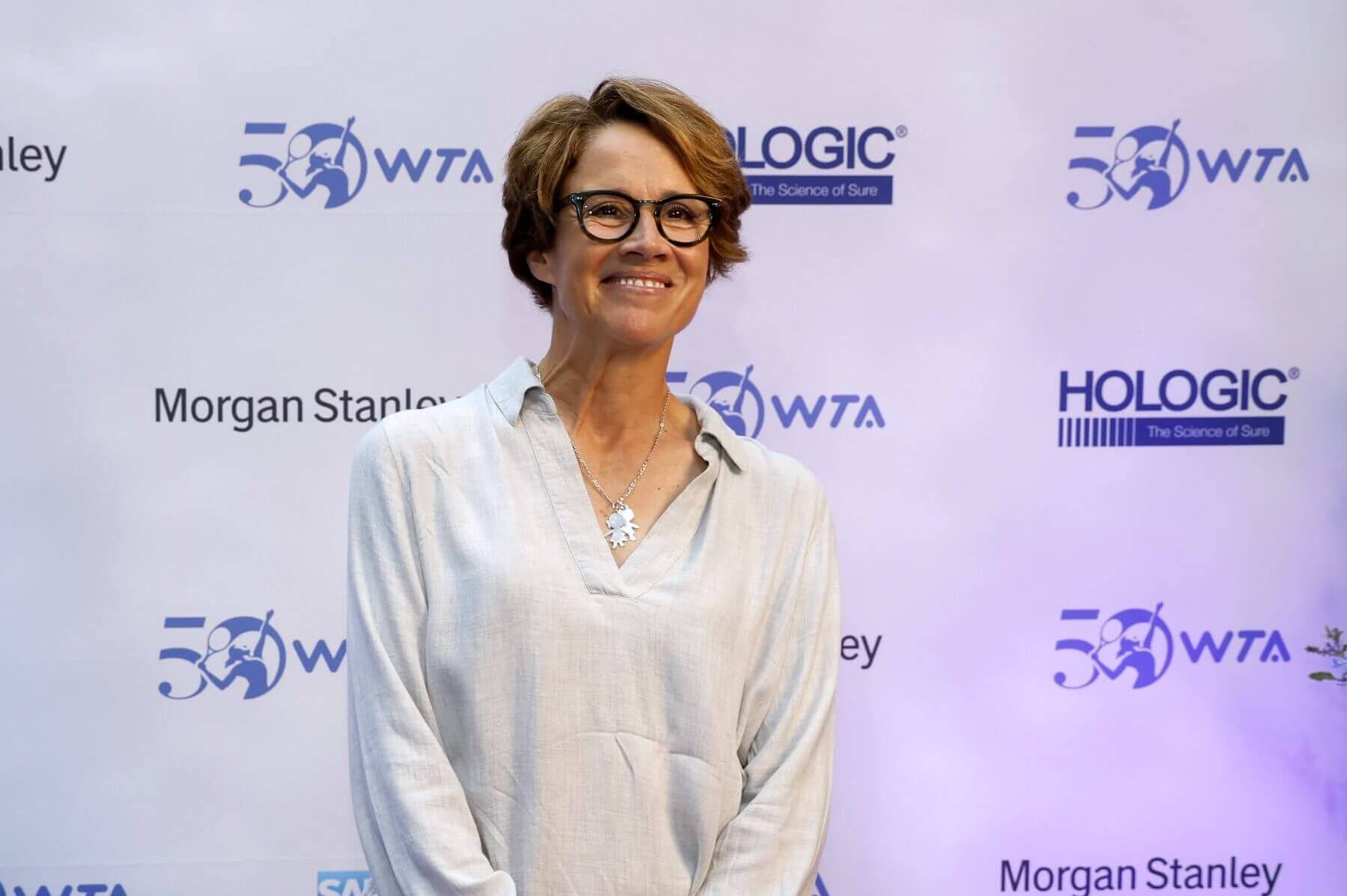
Mary Carillo will enter the International Tennis Hall of Fame next year. (Sarah Stier / Getty Images)
— Matt Futterman
How will a doubles great leave his mark on his home country?
This week sees an ATP Tour event taking place in Pakistan for the first time, with the Islamabad Challenger starting Monday.
The tournament is the brainchild of the Pakistani Tennis Federation president Aisam-ul-Haq Qureshi, far and away the most successful player in the country’s history. A doubles specialist, Qureshi reached the U.S. Open final in 2010 with partner Rohan Bopanna and was ranked as high as eighth in the world. He retired this year, aged 45, but will play the Challenger as a last farewell.
Securing an event in Pakistan is a source of immense pride for Qureshi, who is desperate to grow the sport in a nation where, generally, cricket rules. He only got the go-ahead less than two months ago, and so it’s been a scramble trying to get everything ready. “I think it’s going to change the whole dynamics and ecosystem of tennis,” Qureshi told a couple of reporters at the ATP Tour Finals 10 days ago.
During his career, there were times when Davis Cup ties couldn’t be hosted in Pakistan because of security concerns. And this week’s event has added significance because of the military conflict with neighbor India earlier this year, as well as tensions between Pakistan and Israel. Israeli citizens are not permitted to enter Pakistan, and vice versa.
Qureshi has previously been denied access to Israel, India and China for events, and had to make use of the ATP Tour provision that places players in other tournaments should they be unable to get a visa somewhere.
He has long seen sport as a way to bridge geopolitical divides, and said that he “learned a lot about finding solutions, about peace, about love, friendship” during his career. He played doubles with the Israeli Amir Haddad, in 2002, and with India’s Bopanna — getting to that New York final — in 2010. Manohar Singh Gill, then India’s sports minister, said ahead of that match against Bob and Mike Bryan: “I have one question for everyone. If Bopanna and Qureshi can play together, why cannot India and Pakistan?”
Qureshi is one of only four players in ATP history to win the Arthur Ashe Humanitarian Award twice, doing so in those years partnering with Haddad and then Bopanna.
The short-notice field in Islamabad means that eighth-seeded Dominik Palan is ranked outside the world’s top 500, only three players in the draw are ranked in the top 300 and world No. 169 Elias Ymer is the top seed. Nonetheless, Qureshi hopes the event will help Pakistani players, by giving them their first experience of ATP Tour tennis.
“I want more Pakistanis to be on the Tour,” he said, “and hopefully this chapter will open a lot of doors for international tennis in Pakistan in the future.”
— Charlie Eccleshare
🏆 The winners of the week
🎾 ATP:
🏆 Italy def. Spain 2-0 to win the Davis Cup in Bologna, Italy. It is Italy’s third consecutive Davis Cup title.
Tell us what you noticed this week in the comments below.