
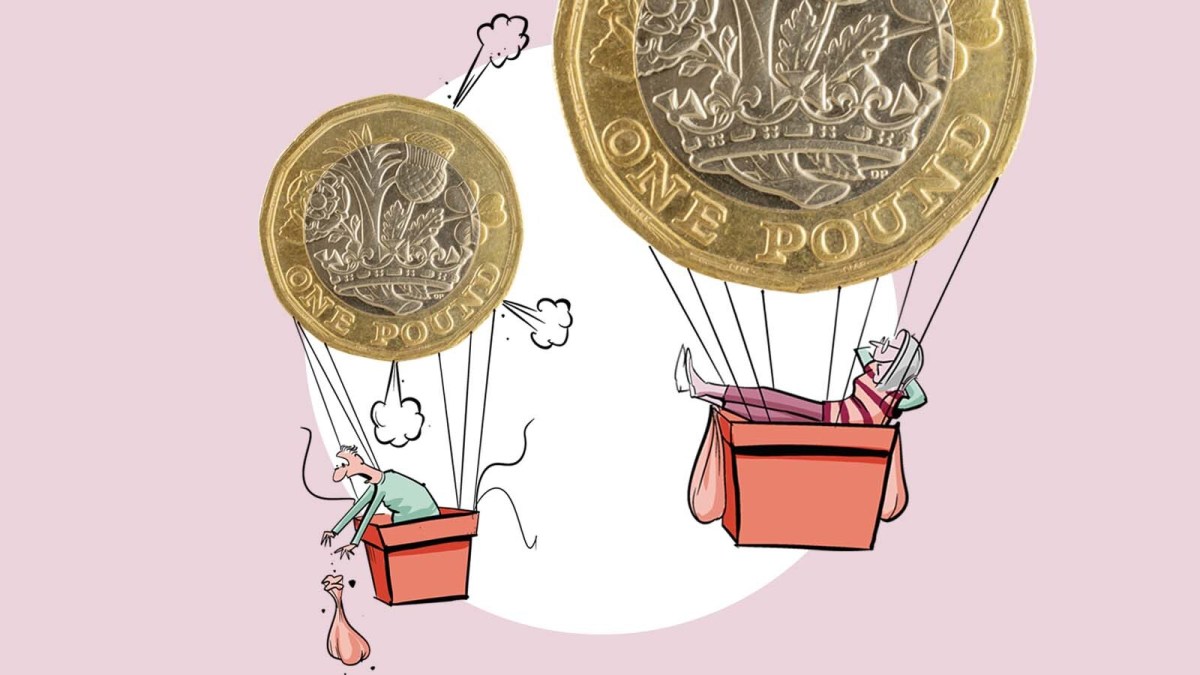
Public sector workers are being promised pensions that pay more than £11 for every £1 they save. Yet a private sector worker can expect to get backless than half that, Times Money can reveal.
Analysis of the country’s top pension schemes found that the NHS scheme paid out £11.30 for every pound invested over a 20-year retirement while the civil service scheme paid £10.08. Whereas those working in the private sector can expect to get £5.34 back for every pound paid in.
It comes as the chancellor is feared to be considering a tax raid on salary sacrifice pension contributions that could cost private sector workers tens of thousands of pounds. The former chancellor Jeremy Hunt has also called for the “unfair and unaffordable” public sector schemes to be phased out.
Rachel Reeves is understood to have been considering limiting national insurance tax relief on the first £2,000 of annual pension contributions to save around £2 billion a year. Such a move could mean that a private sector worker earning £40,000 could lose £20,000 from their retirement pot over the course of their career. It would also widen the retirement wealth gulf even further, because most public sector workers do not use salary sacrifice schemes.
The pensions consultancy LCP compared four public sector workers in different schemes with a private sector worker who contributed the statutory minimum of 5 per cent of their salary into a defined contribution (DC) pension and whose employer contributed 3 per cent. With DC pensions what you get back in retirement depends on how much is paid in and how well your investments perform, whereas with public sector pensions, an income based on your earnings is inflation-proofed and guaranteed for life. The analysis assumed workers had a salary of £25,000 at the start of their working lives.
The former pensions minister Steve Webb, now a partner at LCP, said: “In most cases, as you might expect, the public sector worker is doing better. What happens to the private sector worker depends hugely on investment returns.”
• Jeremy Hunt: We need to kill off gold-plated public sector pensions — here’s how
The consultancy calculated the value that each scheme would generate for every £100 invested and multiplied it to cover a 20-year retirement. It found that the outcome for private sector pensions has improved slightly since 2021, when savers could expect as little as £3.32 per pound invested.
This is largely because rates on annuities, which savers can buy to convert their pension pot into an annual income, are at their highest level for 20 years. Annuity rates fluctuate in line with interest rates and yields on government bonds so there is no guarantee that they will stay high.
Why are public sector pensions more generous?
Taxpayers will fork out £57 billion this year to fund the pensions of retired public sector workers, according to official figures.
Public sector pensions are defined benefit (DB), which guarantee a fixed pension amount after retirement, based on salary and years of service. These used to be “final salary” schemes, which promised a retirement income based on a set proportion of a worker’s salary when they retired. But in 2015 these changed to a “career average”, meaning that payments are based on the worker’s average earnings over the length of their career.
This can result in a lower pension for employees who have enjoyed significant promotions towards the end of their careers.
Most private sector pensions are DC schemes, where you build up an investment pot to provide your retirement income. You can then use this pot to buy an annuity or take an income from the pot through what is known as drawdown.
Under the salary sacrifice scheme, employees can make pension contributions from net pay, so that they don’t pay income tax or national insurance, which helps to offset their costs.
Traditionally public sector pensions were more generous to make up for lower wages, but the average weekly pay for a private sector worker now is £717. For someone in the public sector, it is £730, according to the Office for National Statistics.
What a difference contributions make
A teacher earning £30,000 would contribute 7.4 per cent, or £2,220 a year, into the Teachers Pension Scheme, and their employer would pay 28.68 per cent. If they worked for 35 years, that would give them an annual pension starting at £18,410, because for each year that they work they accrue 1/57th of their salary.
However, someone in the private sector earning £30,000 would save 8 per cent on anything above £6,240 — around £1,900 a year. Adding in basic tax relief, the cost of pension saving is just over half what a public sector worker has to pay.
Over one year, a private sector worker will have saved enough to buy an annuity worth £112 a year, while a public sector worker will have added £526 to their annual pension income — although it has cost them more to do so.
In reality, the private sector worker should benefit from investment growth on their pot, but even with bumper growth, they are unlikely to catch up with the teacher.
• How to solve the state pension problem
To get the equivalent of the teacher’s £18,410 retirement income, the private sector worker would need a pot of £385,000, assuming that they used it to buy an annuity at today’s rates.

Public sector schemes operate on a “career average revalued earnings” basis
GETTY IMAGES
Based on a starting annual contribution of £1,900, above, and assuming annual inflation of 2.5 per cent, they would be on track for a pot of just under £100,000 after 35 years, according to Pension Bee’s calculator.
Webb said: “In the public sector, you will have to pay more in than in a private sector job, but the pension you get in return is likely to be substantially higher.”
The price of security
With a DC pension, you can either buy an annuity or take an income that you need and leave the rest of your savings invested through drawdown. Unless you buy a lifetime annuity, then there is no guarantee that your savings will last — unlike with a public sector pension which pays out until you die.
Andrew Tully from the investment platform Nucleus Financial said: “One of the biggest issues when you have built up that pot of money is that you get to retirement age and you have to turn that pot of money into an income for the rest of your life. If you don’t do the sums properly, and investment markets don’t work, you could run out of money.”
• Should I buy an annuity or use drawdown?
Those in the public sector usually have greater security when it comes to their pension — they get a higher pension payment, relative to what they contributed.
Alistair Cunningham from Wingate Financial Planning, which specialises in retirement, said: “Public sector pensions are structurally more valuable — employer contributions often exceed 25 per cent of pay versus about 3 to 6 per cent in private DC schemes, and benefits are guaranteed, inflation-linked and include dependants’ cover.
“Combined with broadly comparable, or higher pay, total public sector reward far surpasses private sector packages in real, long-term value.”
According to the investment firm Hargreaves Lansdown, 58 per cent of public sector households are likely to be on track for an adequate retirement income compared with 42 per cent of private sector households. It warned that there was “still a long way to go” to close the gap.