
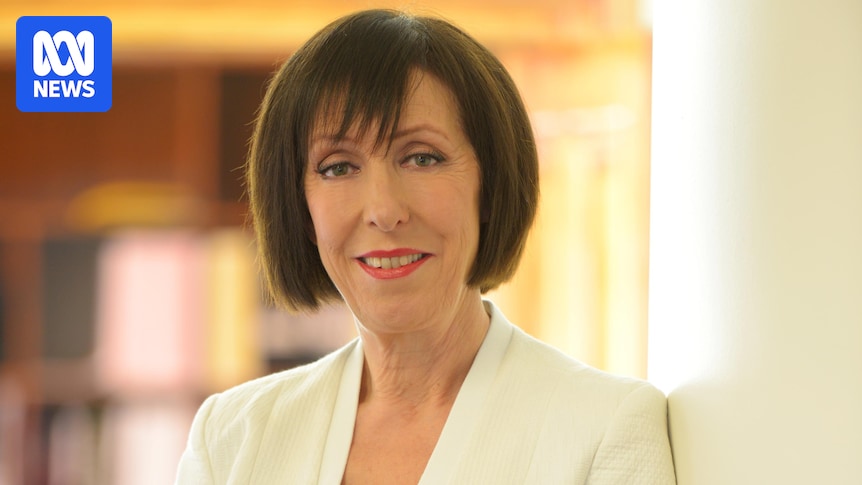
On November 25, 2003, Marilyn Warren made history when she was appointed chief justice of the Supreme Court of Victoria — the first woman in the role not just in her state but in any supreme court in Australia.
Then aged 53, Warren was quickly, naturally labelled a “trailblazer” — she had also been the first female articled clerk in the Victorian public service in 1974.
Of course, it was a time when the law was dominated by men; when, in some legal offices, women were excluded even from typist roles because it was thought they should not read the confronting details of criminal cases such as rape.
“I am privileged to be appointed,” Warren said in 2003. “It is doubtless of significance that I am the first woman appointed to the office. I wish there had been others.”
During the next 14 years, Warren would transform the Supreme Court from what Justice Pamela Tate described as an “old and crusty institution” full of “old and crusty men” into a modern and efficient organisation that was “welcoming” of women.
Still, she has never thought of herself as a trailblazer.
“I just did the job, whatever it was … and I didn’t think a lot about gender,” Warren told ABC News in a recent interview. “Having said that, there were times when I was made aware of my gender, because of treatments and attitudes, but I didn’t go around wearing it as a badge or singing, ‘I am woman, hear me roar’ — I just did the best job I could.”
Gender as a burden
Warren’s gender may not have been a badge of honour, but it was, at times, a burden. She said she was “acutely conscious” that if she made a mistake or was “difficult” over a particular matter, then other lawyers or colleagues might chalk it up to her being female.
“I would certainly acknowledge that there was dissatisfaction — even hostility, in some limited quarters — because I was appointed over and above somebody else they would have preferred,” she said. “However, there were not many of those people and I found the best strategy was just to press on with the role.”
As chief justice, Warren made changes both significant and small. She ended the tradition of judges and barristers wearing wigs in court, arguing they were outdated (it caused a kerfuffle). She oversaw the installation of classical music so people waiting nervously outside courtrooms could be soothed, as well as the remodelling of a judges’ car park into a tranquil plaza.
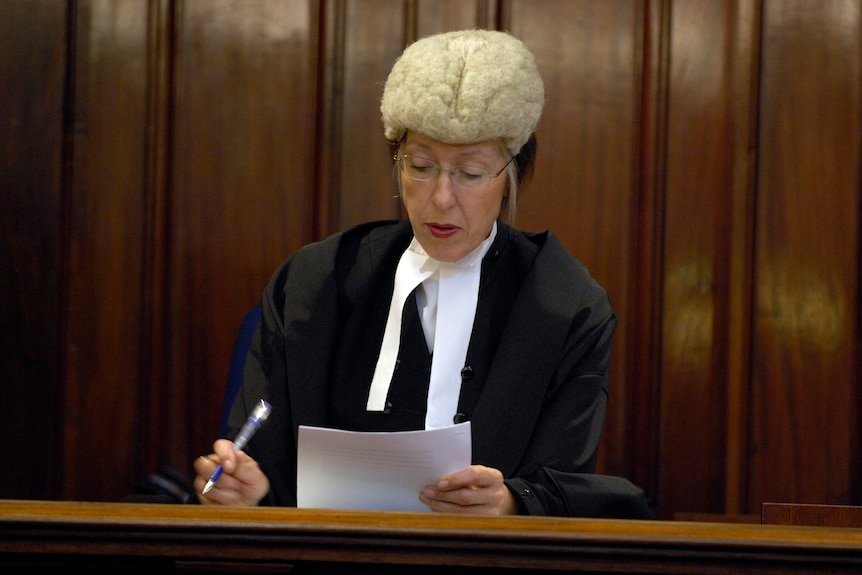
Chief Justice Marilyn Warren ended the tradition of judges and barristers wearing wigs in court, arguing they were outdated. (Supplied: Supreme Court)
She reckoned with how courts might embrace modern technology, as well as the challenges and opportunities of social media (she said it had been a “radical” step for the Supreme Court to join Facebook and Twitter).
Warren also pushed for an overhaul of the way Victorian courts are funded, arguing that the Department of Justice’s control of funding posed a threat to courts’ independence and weakened the judiciary (judicial services became independent of government, and courts directly accountable to parliament, with the establishment of Court Services Victoria in 2014).
Along the way, she developed a deep capacity for work she did not know she had.
“It is a very, very large role, if it’s done well,” said Warren, who was appointed a Companion for the Order of Australia in 2005. “I also learned a lot about myself, how to find inner strength at times where I encountered confronting situations outside the courtroom. So, for example, dealing with the government, times where I had to advocate for the court for resources and funding.”
Praise and pride
One particularly exciting development during her time as chief justice, she said, was the establishment of Victoria’s Civil Procedure Act 2010, which was “transformative in bringing to the fore obligations on lawyers to resolve cases — not to play tactical games, to mediate and endeavour to settle a case.”
Another was the “groundbreaking” introduction of human rights law in Victoria through the 2006 charter. “To lead the education of the judiciary in how to interpret and apply the new charter was a significant challenge but very, very exciting,” Warren said.
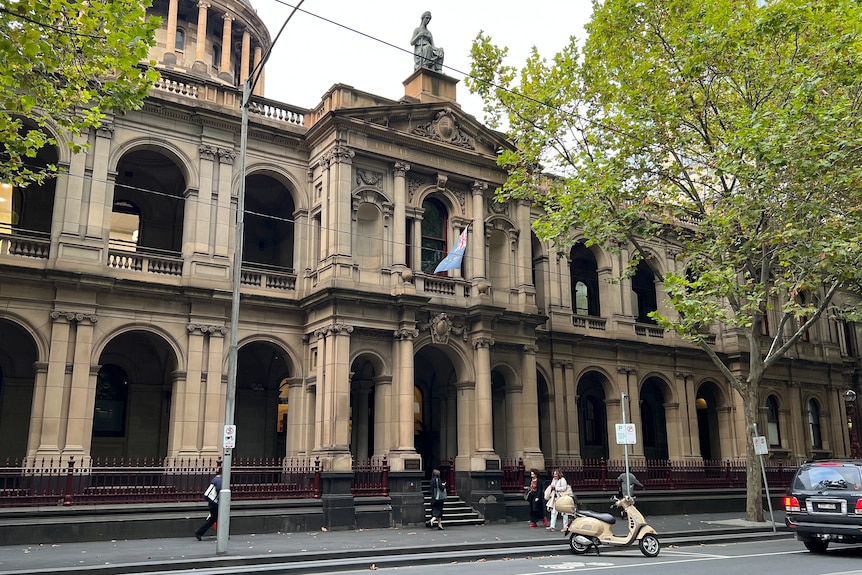
The Supreme Court of Victoria building on William Street in Melbourne. (ABC News:Chris Le Page)
After retiring from the bench in 2017, Warren said she had overseen the admission of more than 17,000 lawyers as officers of the Supreme Court of Victoria, with women consistently making up two-thirds of new lawyers in recent years. Despite this, she wrote in Portia, the annual journal of Victorian Women Lawyers, “there is still a great need to increase the visibility of women in our profession.”
In the same piece she confessed that, after 40 years, she still had trouble accepting praise and commendation.
“I hate people talking about being proud of something, I think it sounds terribly narcissistic and conceited,” Warren told the ABC this month. “Because at the end of the day, when you’re running an institution, you have achievements but they’re not personal achievements. They’re the achievements of the institution and all your colleagues within it. Without them, I would have achieved nothing.”