
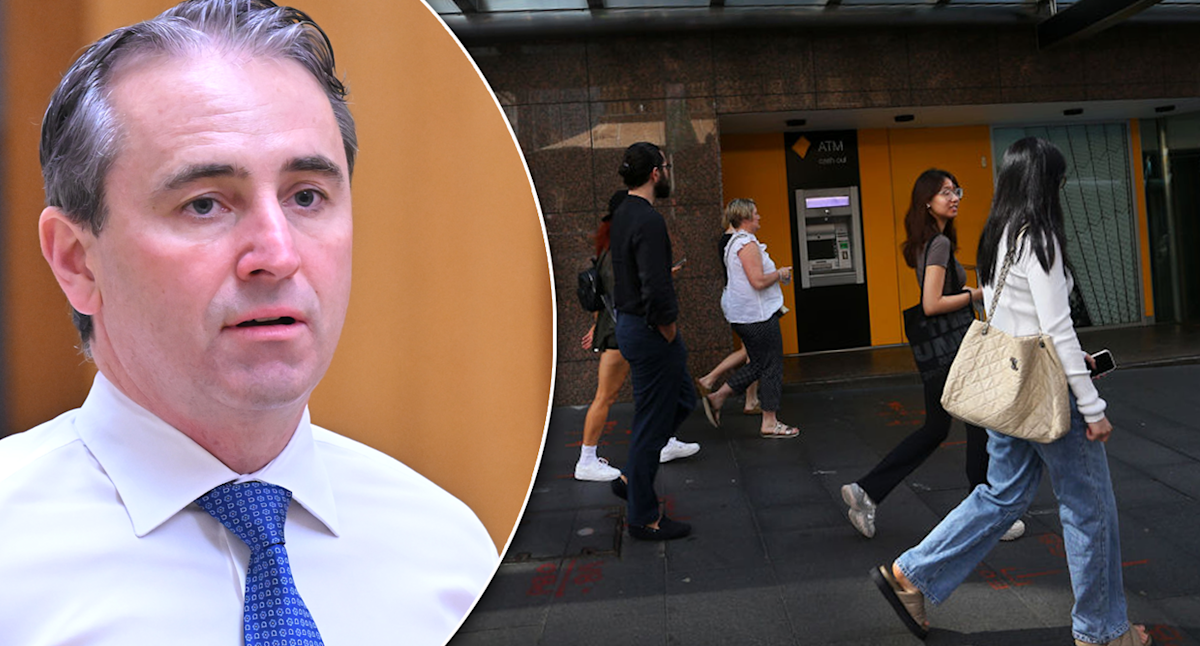
 Commonwealth Bank’s chief economist says borrowers should prepare for the potential of rate hikes in the new year. (Source: AAP) · Reuters
Heading into the second half of 2025, Michele Bullock and the Reserve Bank of Australia looked liked they’d pulled it off. The fabled ‘soft landing’ was in sight.
Inflation appeared to be tamed, the tight labour market was coming back into balance without a major jump in unemployment, and growth was returning. “The RBA was sitting pretty,” according to Commbank’s chief economist Luke Yeaman.
But all of a sudden the picture is a little bit murkier – and consumers should brace for the potential of more rate hikes in the new year as the Australian economy faces emerging price challenges.
“Recent data has complicated the task of the RBA,” he wrote to investors on Tuesday in a note posing the questions of whether Australia is “about to crash through its economic ‘speed limit’?”.
RELATED
The confluence of factors currently present in the Australian economy heading into the holiday period means Aussies could be getting future rate hikes for Christmas.
“Stronger growth, a resilient labour market, rising house prices and an inflation surprise in the September quarter have taken rate cuts off the table and raised the risk of hikes in 2026,” Yeaman wrote.
“Three points are clear: potential growth in Australia is now lower; we are starting this cyclical upswing with less excess capacity … than is normal; and we are already getting close to our economic speed limit.”
To translate that, the bank is clearly worried about the return of inflation, particularly driven by a surging housing market the and rising cost of materials and construction.
Yeaman admitted economists like him were surprised by the spike in inflation in the September quarter, as well as how quickly house prices have reaccelerated.
While the picture should become a little clearer in early 2026, current trends could be setting the scene for rate hikes.
“If the housing market continues to strengthen, we should expect more price pressure,” Yeaman wrote.
“We will continue to run close to the economy’s speed limit, so the RBA Board will constantly be on edge and rate cuts will remain off the agenda. If the economy builds more steam than we expect, watch for rate hikes in 2026.”
Commbank CEO Matt Comyn last week suggested investor home lending was running too hot. (Source: AAP/Getty)
The word of warning from Commbank’s Head of Global Economic & Markets Research comes as a new national report into housing affordability shows just much house price increases have divided Australia.
The research from Cotality shows three key national indicators – the house price-to-income ratio, the number of years required to save a deposit, and the share of income needed to rent – have all hit record highs in 2025.
As property prices have gone up, homeowners and investors have been able to reinvest their massive capital gain windfalls back into the housing market, creating a larger gap for first home buyers and those who can’t rely on the bank of mum and dad to enter the market.
“There’s been this extraordinary separation between property prices and income,” Cotality’s Head of Research Eliza Owen told AAP.
“It definitely speaks to a widening in the divide of the haves and have nots when it comes to the property market.”
Rate hikes in 2026 would be expected to quell further house price rises, but it would also hit the borrowing capacity of those trying to get into the market, making it harder unless prices come down.
The outlook from Commonwealth Bank this morning is far from an outlier. Compare the Market economic director David Koch also said on Tuesday that the RBA would continue to be incredibly cautious in the months ahead.
“If Michelle Bullock is Goldilocks, the three bears are inflation, employment and economic growth,” he said.
“They all need to be ‘just right’ for the Reserve Bank to move on rates, because it’s such a fragile situation and one wrong step could scupper the progress we’ve made.”
Get the latest Yahoo Finance news – follow us on Facebook, LinkedIn and Instagram.