
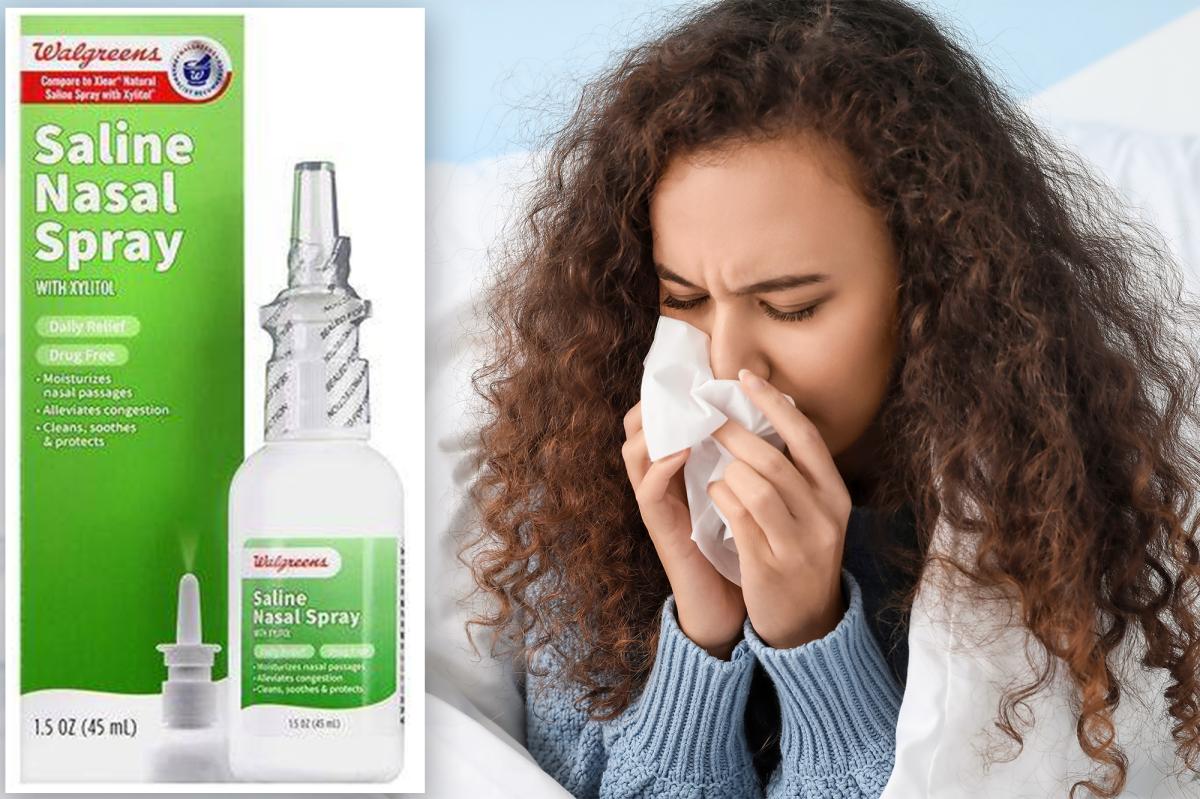
Peak cold and flu season may be upon us, but you’ll want to take a second look at that drugstore nasal spray to clear a stuffed up nose.
A recall has been initiated for more than 41,000 bottles of Walgreens saline nasal spray with xylitol due to a possible bacterial contamination.
Walgreen’s voluntarily recalled the product due to a contamination of Pseudomonas lactis, a bacterium commonly associated with raw milk products, according to the Food and Drug Administration.
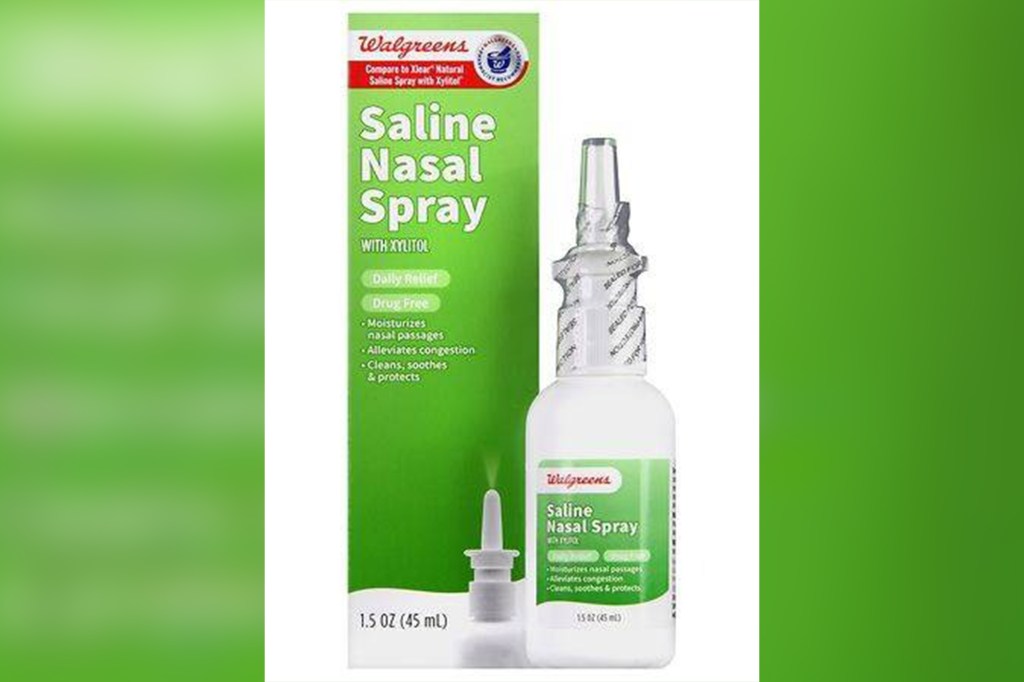 A recall has been initiated for more than 41,000 bottles of Walgreens saline nasal spray with xylitol due to a possible bacterial contamination. Walgreens
The FDA labeled the recall a Class II, the second-highest risk level, meaning the possibility of serious health consequences is “remote,” but there is a chance of temporary or reversible effects.
The species of bacteria found in the nasal spray can cause milk to spoil, and carries serious potential health risks such as pneumonia, urinary tract infections and bloodstream infections.
The nasal spray is typically used to provide relief from nasal congestion and sinus pressure from a common cold or allergies.
The recall affected two batches of the 1.5 oz spray bottle, Lot #61409 expiring Feb. 28, 2027 and Lot #71861 expiring Aug. 31, 2027.
While the FDA initiated the recall on Nov. 11, specific instructions weren’t provided. But it’s recommended to stop use and toss or return it.
 Saline nasal sprays, in particular, are often used to flush out irritants like dust and pollen while providing moisture in dry environments caused by low humidity, air travel or heated environments. Pixel-Shot – stock.adobe.com
Nasal sprays are common to reduce inflammation and clear up stuffiness.
Saline nasal sprays, in particular, are often used to flush out irritants like dust and pollen while providing moisture in dry environments caused by low humidity, air travel or heated environments — all common wintertime problems.
But overuse can lead to rebound congestion, also known as rhinitis medicamentosa, a condition that actually worsens symptoms like swelling of the nasal passage and even more severe persistent stuffiness.
Last year, a CVS-branded nasal spray for babies was recalled after they were found to have been produced in unsanitary conditions. The machines used to produce them were also used to make pesticides, Bloomberg News reported.