
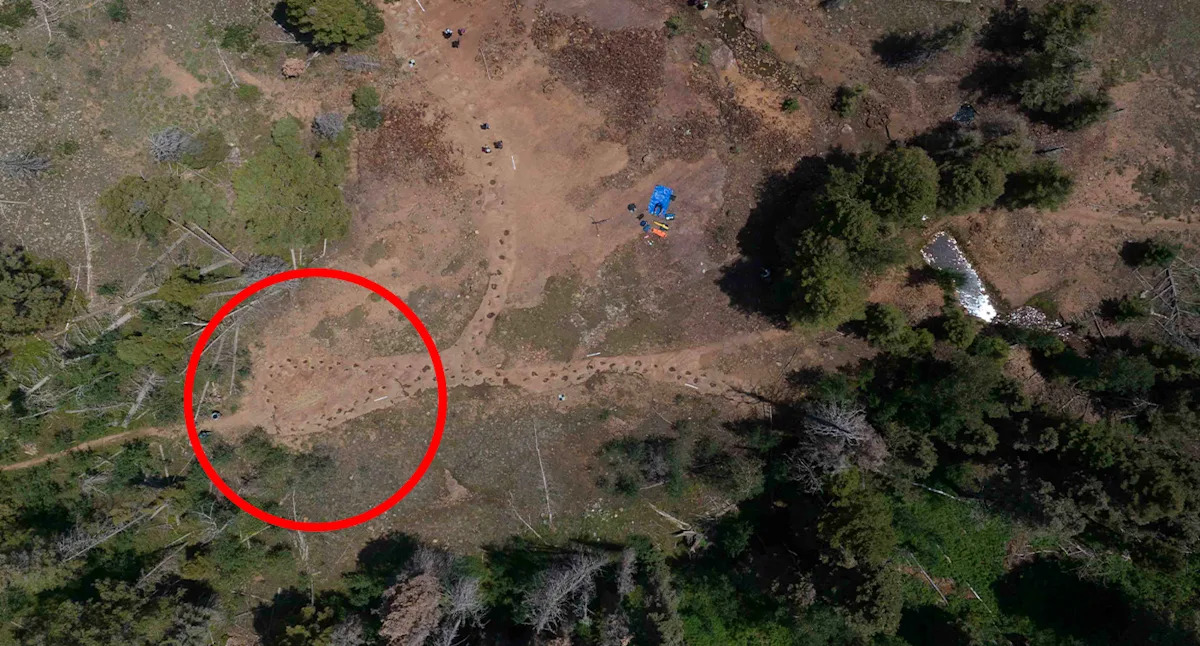
Australian scientists have taken a giant leap towards confirming a theory about an ancient loop of footprints. After taking drone images of the 95-metre-long trail, they found evidence that the dinosaur which made the prints 150 million years ago had a distinct method of walking.
From his office at the University of Queensland, palaeontologist Dr Anthony Romilio analysed 130 footprints at the West Gold Hill Dinosaur Tracksite in Colorado, USA and discovered a statistically significant difference between the animal’s left and right steps, indicating it may have limped.
“It was around 10 centimetres persistent across the entire trackway, so it was fairly decent,” he told Yahoo News.
What caused the sauropod’s strange gait remains a mystery, as its fossilised remains have never been found.
The footprints are unique because they loop around before trailing off in the opposite direction.
Related: Ancient discovery ‘rewrites the timeline’ of Australia by 10 million years
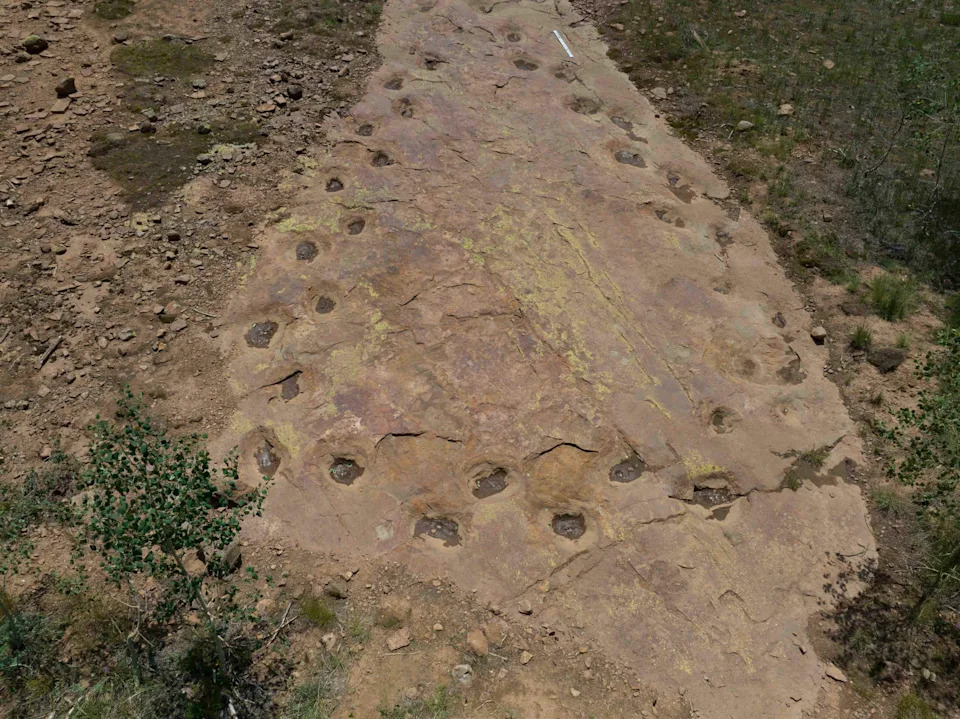
Each footprint at the West Gold Hill site is around 30 cm long, and together they form a unique loop in the rock. Source: Dr Paul Murphey
Each print is around 30cm in size — palaeontologists multiply this by four to estimate the animal’s leg-length, so at 120cm it’s not large by sauropod standards.
“The world is a nasty place, and if you’re a little tacker, you might have bigger individuals that don’t like the look of you,” Romilio said.
Analysis indicates that if the creature was injured, then the wound had likely healed, but still had ongoing effects on its ability to walk.
While it might be dramatic to imagine that it was attacked by a carnivorous predator, statistically, the culprit is more likely to have been another sauropod.
“This relates across all species. As individuals, we’re after resources, and the only things that want exactly the same resources are other members of your own kind,” Romilio said.
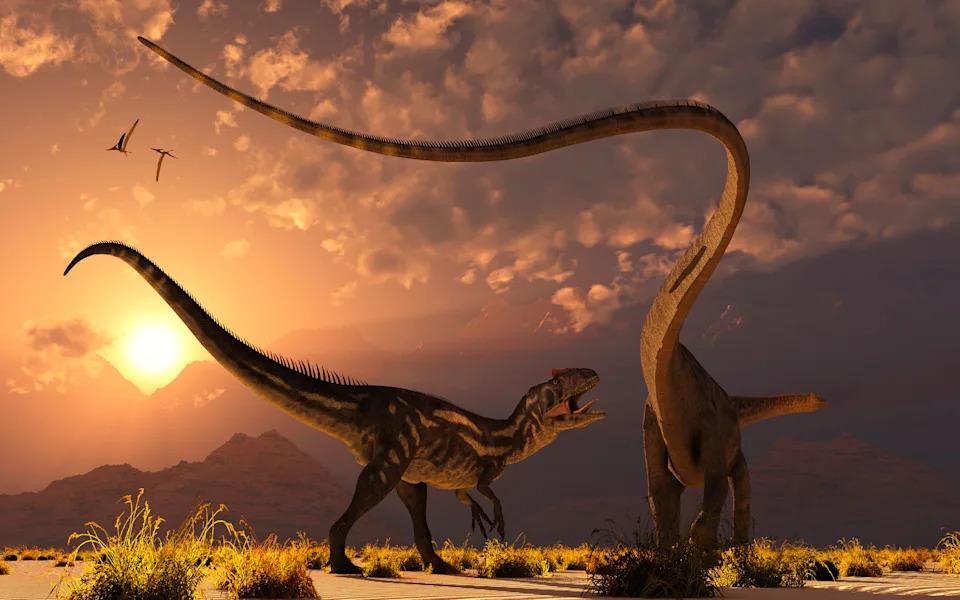
Diplodocus had whip-like tails, which they more commonly used to fight with each other, rather than fend off predators. Source: Getty
This becomes particularly problematic when resources are scarce, leading to infighting between groups of the same species.
Sauropods that roamed North America during the late Jurassic period, when the footprints were made, had several tactics to resolve conflict.
“Diplodicus had a whip-like tail, similar to our goannas, and they’ll just move that around and strike really quickly,” Romilio said.
“With all of the sauropods, they have a spiked thumb-claw on their front legs, and they’d move very quickly and try and slice each other like male roosters do with their spurs.
“I’m sure that is a tactic because all through sauropod evolution, they had this spike while the rest of their fingers reduced in size, and so clearly some sort of ritualised fighting occurred when the need arose.”
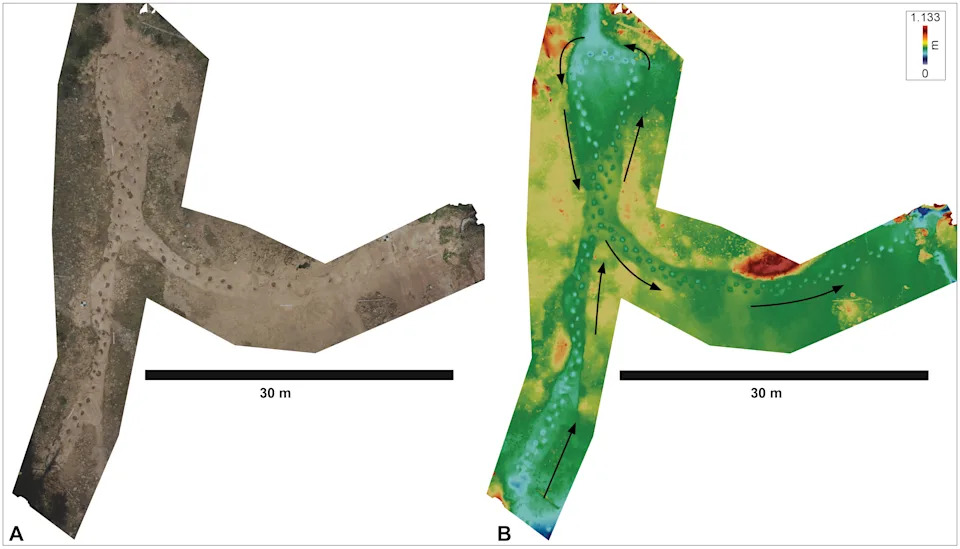
Analysis of the footprints shows the pathway the dinosaur took. Source: Geomatics
The research was supported by the US Forest Service, and was co-authored by the Dr Paul Murphey from San Diego Natural History Museum. It was published in the journal Geomatics.
Love Australia’s weird and wonderful environment? 🐊🦘😳 Get our new newsletter showcasing the week’s best stories.
