
Key Takeaways
There’s little scientific evidence linking sleep position to mental health, despite online claims suggesting otherwise.Chronic stress raises cortisol levels, disrupting sleep and worsening conditions like anxiety and depression.Establishing a calming bedtime routine can help reduce stress and improve sleep quality.
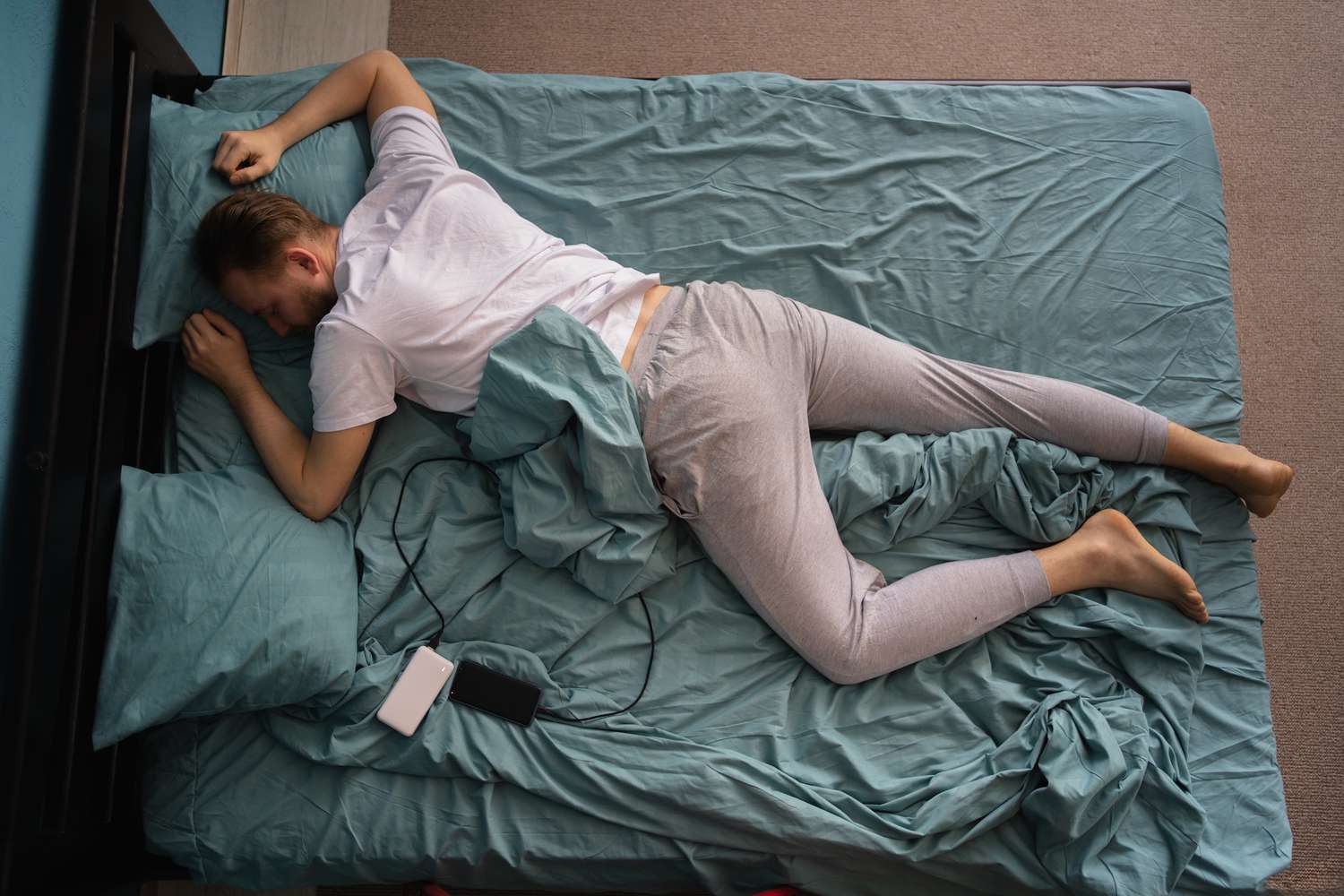
Some TikTok creators claim that certain sleep positions, like the “mountain climber” or “flamingo,” reveal high stress or emotional tension.
While this sounds compelling, there’s little scientific support for that idea.
Does Your Sleep Position Mean Anything?
Bruce Tammelin, MD, medical director of the Providence St. Joseph Hospital Sleep Disorders Center, told Verywell that sleep position research is limited, noting the most-cited paper dates back to the 1970s.
Current research instead focuses on sleep quality and its link to physical and mental health. One study found that sleeping on your side may help the brain clear waste, possibly lowering the risk of Alzheimer’s disease.
Still, experts say the strongest connection lies between stress and sleep: each can worsen the other, regardless of how you sleep.
How Does Stress Affect Your Sleep?
When you are under stress, your body responds by activating the hypothalamic-pituitary-adrenal (HPA) axis, which releases cortisol, a critical hormone in managing your body’s reaction to stress.
In addition to controlling our sleep-wake cycle, cortisol helps us regulate our metabolism and reduce inflammation. Prolonged, elevated cortisol levels or chronic stress can disrupt these processes, leading to inflammation, chronic pain, depression, and even the progression of Alzheimer’s and Parkinson’s disease.
Cortisol levels are meant to slowly decline throughout the day. When elevated cortisol levels persist into the evening, this hormonal imbalance interferes with the production of melatonin, a hormone that helps your body sleep properly. With time, these high cortisol levels can lead to sleep disorders like insomnia and exacerbate anxiety and depression.
This creates an unhealthy cycle in which stress leads to poor sleep, amplifying stress and making it even harder to sleep.
“If you don’t get highly efficient and unfragmented sleep, you can either have anxiety or depression,” Tammelin said. However, patients who receive treatment for their sleep problems often see significant improvements in their mental health, too.
Studies have found that many sleep disorders, including sleep apnea, restless leg syndrome, insomnia, narcolepsy, daytime sleepiness, and nightmares, are more common in people experiencing mental health difficulties.
Neurodivergent people, particularly those with ADHD, often face even greater challenges in getting quality sleep due to low melatonin levels at night, sensory issues, or a more active nervous system.
How to Reduce Stress Before Bed
Certain nighttime behaviors, like teeth grinding and covering your ears while sleeping may indicate nervous system activation, but they’re not necessarily a reflection of your daytime stress levels, Kyoungbin K. Im, MD, a board-certified psychiatrist specializing in sleep medicine and associate professor at UC Irvine, told Verywell.
They may actually be activations or reactions to physical stress at that moment. However, some sleep disturbances, such as sleepwalking, night terrors, and other movement-related disorders, are commonly seen in people under a lot of stress, said Im.
If stress interferes with your sleep, establishing a bedtime routine and incorporating relaxation techniques before bed can help signal your body that it’s time to unwind.
Here are some ways you can help your body get the rest it needs:
Keep work and daytime activities out of the bedroomAvoid anything stimulating within three hours of bedtimePractice progressive muscle relaxation before bed
With these simple modifications, you can create a more restful sleep environment and allow your body and space to rest and recover.
Verywell Health uses only high-quality sources, including peer-reviewed studies, to support the facts within our articles. Read our editorial process to learn more about how we fact-check and keep our content accurate, reliable, and trustworthy.
Levendowski DJ, Gamaldo C, St Louis EK, et al. Head position during sleep: potential implications for patients with neurodegenerative disease. J Alzheimers Dis. 2019;67(2):631-638. doi:10.3233/JAD-180697
Knezevic E, Nenic K, Milanovic V, Knezevic NN. The role of cortisol in chronic stress, neurodegenerative diseases, and psychological disorders. Cells. 2023;12(23):2726. doi:10.3390/cells12232726
National Heart, Lung, and Blood Institute. How sleep works: your sleep/wake cycle.
Scott AJ, Webb TL, Martyn-St James M, Rowse G, Weich S. Improving sleep quality leads to better mental health: a meta-analysis of randomised controlled trials. Sleep Med Rev. 2021;60:101556. doi:10.1016/j.smrv.2021.101556
de Souza ALDM, Giacheti CM, Do Couto MCH, et al. Sleep disturbance in children with attention-deficit hyperactivity disorder: relationship with melatonin and behavior. Neurol Res. 2024;46(9):803-811. doi:10.1080/01616412.2024.2359261

Thanks for your feedback!
What is your feedback?
Helpful
Report an Error
Other