
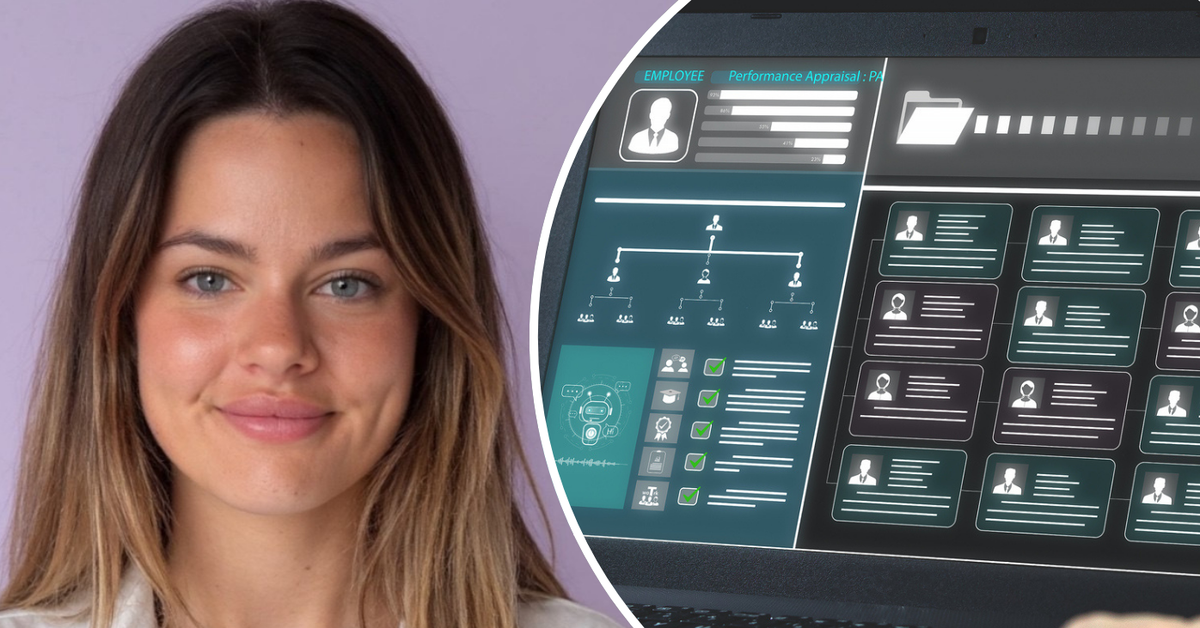
It’s no secret that artificial intelligence has entirely transformed the workforce, and that there’s plenty more change to come as technology advances.
As it stands, the recruitment industry has been fundamentally changed with the introduction of AI, so much so that one role in particular has been “pretty much cut” from the workforce.
Bianca Hill is the Head of People and Culture at Decidr AI, and tells nine.com.au that the introduction of new technologies has particularly shifted the resourcing side of recruitment.
“The ability to screen multiple applications using AI, looking for keywords, years of experience, and things like that, has meant it’s pretty much cut out a more junior kind of sourcing role,” she explains.
“The end-to-end recruitment process can now be run by one person, so for businesses, it’s had a huge productivity impact.”
 Bianca Hill has shared how AI has fundamentally changed the recruitment industry. (Supplied)
Hill says that the main function of AI in the recruitment process is to filter keywords on a resume, adding that businesses have been running keyword searches on CVs “forever”. AI has simply introduced a more accurate system.
“What I’ve found recruiting for Decidr is that AI’s shortlisting of the applications is actually more accurate than what I’ve seen in the past,” she says.
“I would say that at the end of the day, most recruiters are in exactly the same position, and they will scan a lot of the applications to make sure that it is being filtered in the right way.”
For applicants, Hill explains that the best thing you can do in the world of AI recruitment is to make sure you’re personalising your resume and including the keywords listed in the job description.
 The main function of AI in recruitement is to filter the first round of resumes looking for keywords. (Getty)
With so many applicants now using AI to generate a resume and cover letter, Hill explains that the amount of applications she’s seeing that are basically identical to one another “is insane”.
And while AI may be a great tool to highlight the right keywords and get you past that initial screening process, Hill reminds applicants that, at the end of the day, your resume does end up in the hands of a recruitment team who have the final say on the hiring process.
“Spending time on your CV and including things like a cover letter or a portfolio is really important,” she insists.
“CVs are so much more generic now, so anything you can do to make yours stand out and add in really clear examples of where you have demonstrated leadership and critical thinking is vital.”
But it’s not just the application process that’s been affected; Hill explains that the way teams now view applicants has changed with the introduction of AI.
 AI can help you get through the initial stages, but your resume needs to be personalised. (Getty)
Where securing a role used to be about the skills you had, Hill explains that with knowledge now so quickly and easily accessible, recruiters care more about soft skills and how applicants are able to apply their knowledge.
“It used to be listing things like, ‘I have my chartered accountant practitioner and all of these skills.” Now, I actually want to know what you’ve done with that and what it looks like within the organisation, because that’s going to make a big difference to me,” she says.
“[It’s about] the results that you’ve been able to deliver and also how you’ve gotten there.”
Produced in partnership with Career One.