
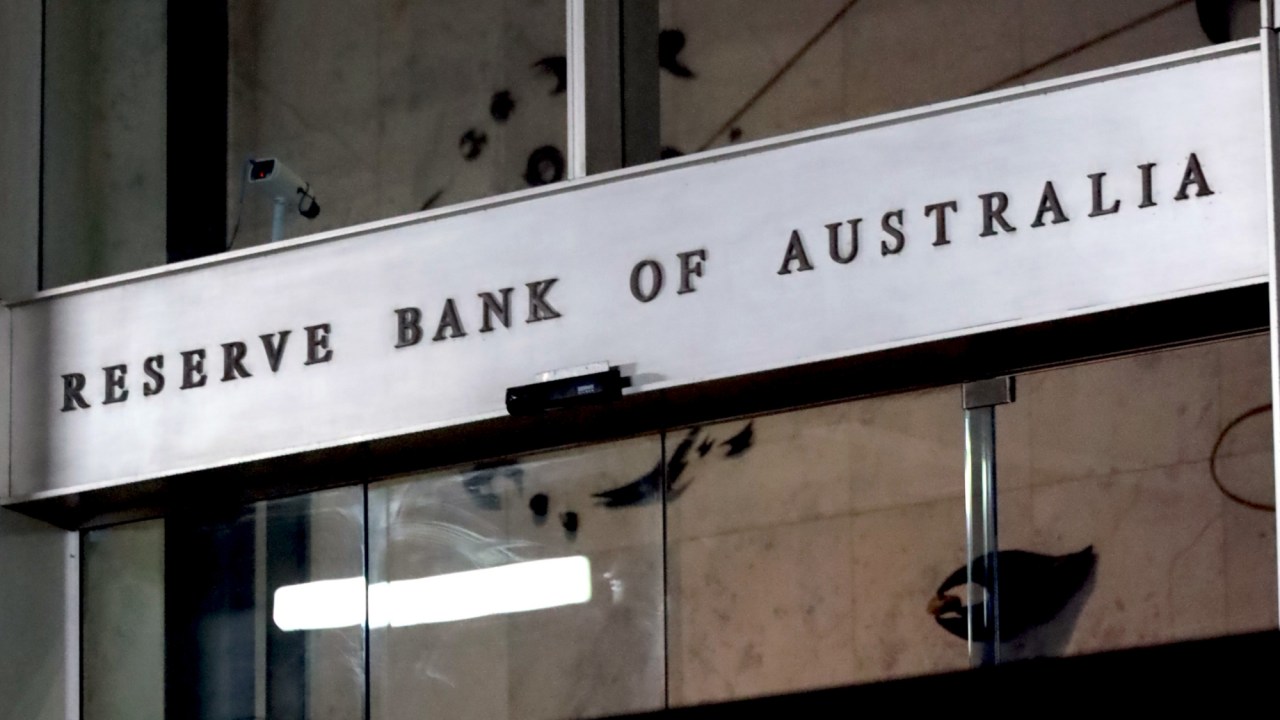
The Reserve Bank of Australia has “to get rates up” to stamp out the resurgence of inflation, a leading economist has declared, after prices soared over the past year.
Inflation lifted 3.8 per cent in the 12 months to October, exceeding expectations and effectively killing hopes for any future rate cuts.
The October rise follows inflation jumping to 3.6 per cent in September.
EQ Economics’ managing director Warren Hogan said the cyclical nature of inflation meant the RBA was now forced to tackle the price rises.
“The key point is that we’re now seeing inflation look like it’s rising,” he told Business Now.
“After the quarterly numbers, inflation had stopped falling at about three per cent, but this really tells us that it looks like it’s rising.
“We know the economy’s starting to pick up, so inflation’s very cyclical and it’s probably going only in one direction, which is going to bring the RBA back into play to get on top of it.
“They have to get rates up to get inflation down.”
The RBA has cut rates three times since the beginning of the year after inflation fell back into the central bank’s two-three per cent target band.
However, a spike in the second half of this year has put hopes of further easing on the back burner and sparked fears of more hikes.
Mr Hogan said the RBA was unlikely to move the cash rate this year, but predicted it could move in the early months of 2026.
“I don’t think they’re gonna hike rates in December,” he said.
“It’s just too hard for them. It’s too much noise (and) too much backlash in the community.
“But if they’re in a position where they might have to in February, they’ve got to start laying the groundwork for that (and) start letting people know that this could be coming.”
This month marks the first time the Australian Bureau of Statistics has delivered a full monthly consumer price index, allowing the Reserve Bank of Australia to have more immediate inflation data to inform its rate calls.
The largest contributors to inflation’s rise were housing, up 5.9 per cent, while food and non-alcoholic beverages and recreation and culture both rose 3.2 per cent.
Electricity costs spiked 37.1 per cent in the 12 months to October, as various state government rebates were used up by households and the impact of the Commonwealth Energy Bill Relief Fund rebates rollout subsided.
However, on a monthly basis electricity prices fell 10.2 per cent in October.
Trimmed mean inflation – the middle 70 per cent of price changes core to the RBA’s rate call – rose to 3.3 per cent from 3.2 per cent in the month prior.
This was well outside the RBA’s two-three per cent target band.
Despite the large rise over the past 12 months, inflation was unchanged on a monthly basis in October.