
Choo said global audiences tend to – but should not – underestimate Beijing’s climate ambitions.
“China’s been quiet, but it’s getting deal-making done. China is concerned about (climate) partially because of their own domestic environment – they want to clean up industries, decarbonise and electrify for their own sake,” he added.
“And what China is doing then has knock-on effects for other countries.”
WHY IS IT SO HARD TO PHASE OUT FOSSIL FUELS?
Analysts say the structural challenges behind fossil fuel dependence remain immense.
“Things aren’t black and white in the journey to green,” said Johnstone.
“Right now, a lot of states are bankrolled on fossil fuels, so it’s unsurprising that any roadmap to their cessation can be seen as a challenge.”
Chin agreed, noting that countries are reluctant to commit to expedited fossil fuel phase-outs as clean energy transitions remain costly, and especially as the world’s biggest emitters like the US and China have resisted doing so themselves.
“Unfortunately, many economies are following the Americans. Many countries find that if we drill more … oil prices will be stabilised. (Both) poor countries and the world’s biggest economies benefit from stabilised oil prices,” he said.
“So, countries like China and India, who are major consumers of oil – they also jump on board. Because (otherwise), it will affect the growth rates.”
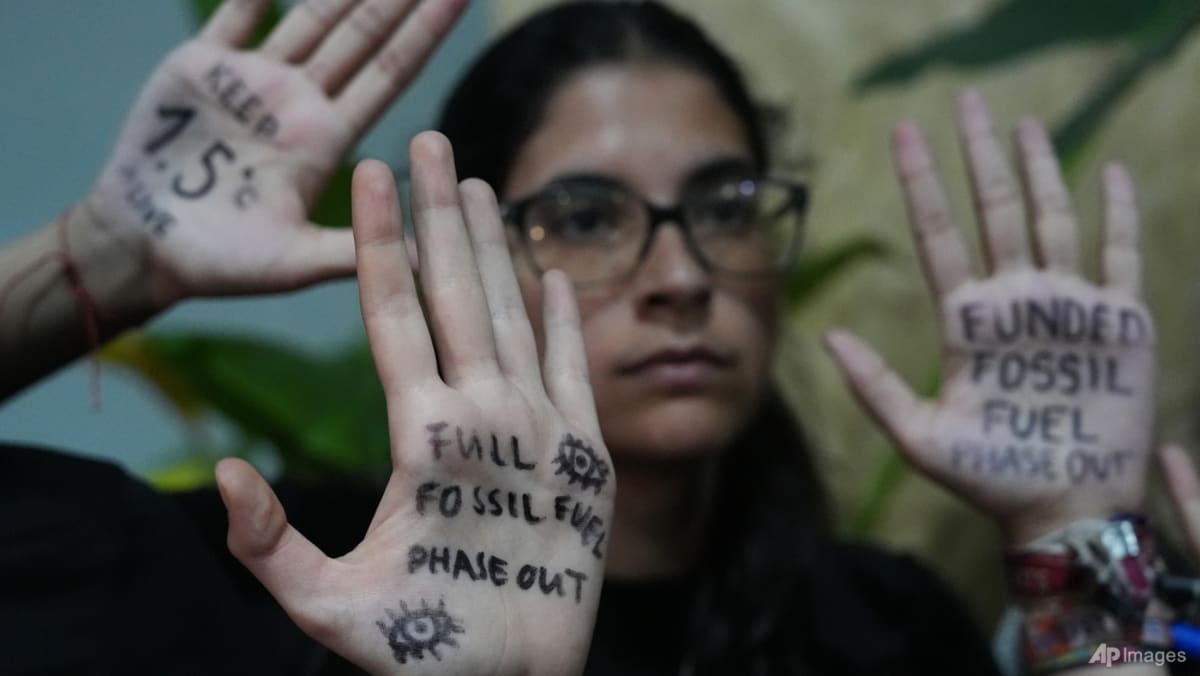
The stalemate over fossil fuels has ultimately prompted a separate international conference scheduled for next April in Colombia, co-hosted by the Netherlands.
Johnstone said: “This represents a strong signal that if the UN system can’t deliver, other countries are going to step in. I hope we can see further pressure building from the sidelines.”
Choo summed up the challenge that continues to plague climate negotiations: “It’s difficult to talk about climate when we’re worried about our own incomes, housing, medical costs – and (that’s the) same at a national level.
“But it matters. The effects of climate change will make our lives worse. Even if we don’t live to see it, our children will see it. That’s the reality.”