
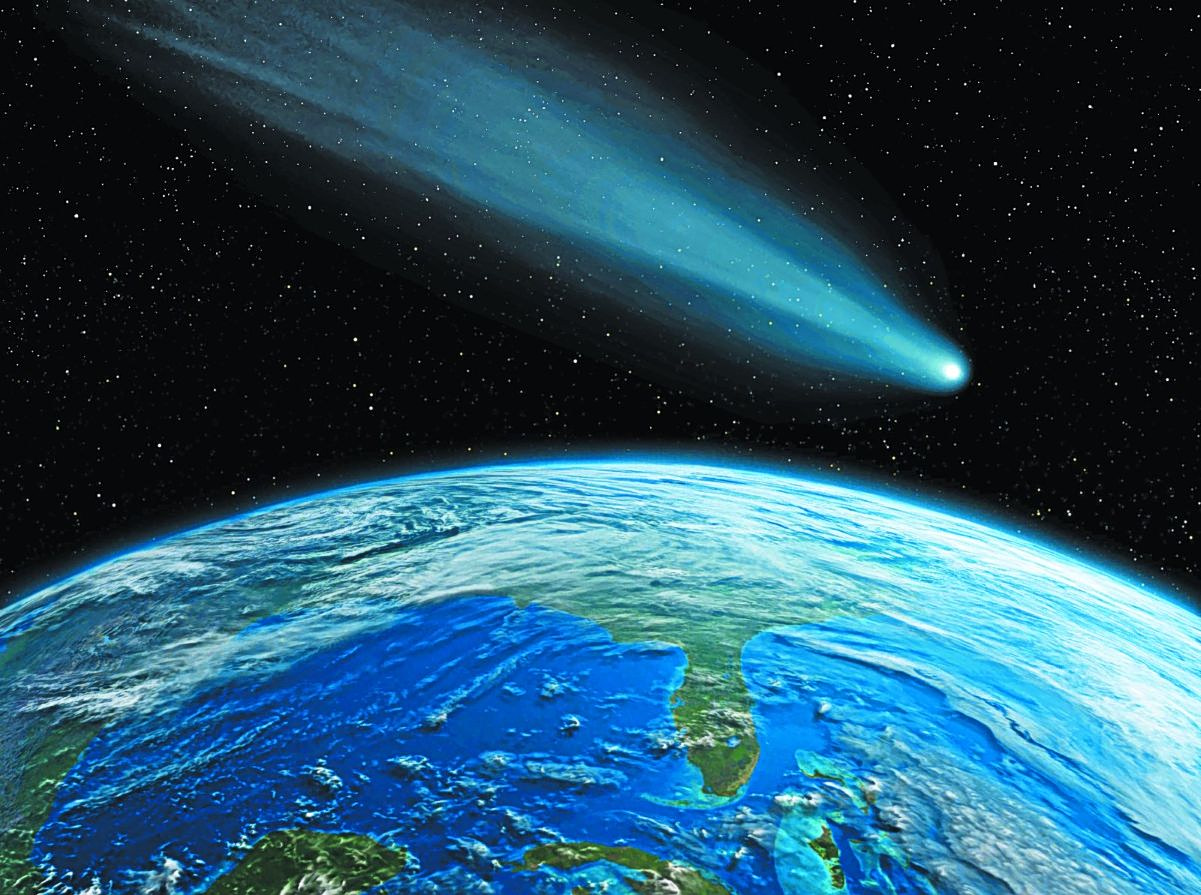
On the morning of June 30, 1908, residents scattered across the Siberian taiga awoke to a sky that seemed to split in two — an episode now inseparable from discussions of planetary risk and, increasingly, tools like ΕΝΕΟ that help interpret such dangers. A blinding object streaked across the horizon, followed moments later by a shock wave that flattened some 80 million trees over more than 2 million acres. No crater was ever found, nor traces of UFOs.
Today, scientists largely agree that the “Tunguska event” was the airburst of a small asteroid exploding 6–10 kilometers above Earth, releasing the energy of roughly a thousand Hiroshima bombs. A century later, at dawn on February 15, 2013, history echoed over Chelyabinsk, where an 18-meter meteoroid detonated in the atmosphere with the force of about 500 kilotons of TNT. Thousands of windows shattered; more than 1,400 people were injured — all from an object too small to be detected in time.
The incidents underscored a critical truth: atmospheric explosions of near-Earth objects may be rare, but they pose real danger, especially over populated areas. The catalog of such bodies grows steadily, with U.S. efforts focused on identifying 90% of objects larger than 140 meters — the city-killers. Risk is assessed through the public-facing Torino scale and the more technical Palermo scale, tools designed to distinguish genuine threats from background noise.
Early warning remains essential. Chile’s Vera Rubin Observatory is now entering data-collection mode, soon able to scan the southern sky every few nights, vastly increasing discoveries of small objects.
NASA’s infrared NEO Surveyor, targeting launch no earlier than September 2027, is another cornerstone in meeting detection goals. Meanwhile, planetary defense has shifted from theory to practice: in 2022, NASA’s DART mission deliberately struck the moonlet Dimorphos, altering its orbit — a landmark proof of concept that Europe’s Hera mission will fully assess upon arrival in 2026.
Against this backdrop emerges an innovative Greek contribution. ENEO (Evaluating Near Earth Object Impacts), created by engineer Alexandros Notas at the National Technical University of Athens, translates complex space-physics models into practical civil-protection scenarios.
How would Patras or Larissa fare under a 50- or 140-meter airburst? How would heat and shock waves map across a city? ENEO visualizes such impacts and even supports planning for evacuations, infrastructure risk, and economic fallout.
Its relevance was highlighted in early 2025, when asteroid 2024 YR4 briefly reached Torino level 3 — a 1% impact probability — before improved measurements ruled it out. As Notas notes, the odds may be small, but the stakes are enormous. Tools like ENEO help societies understand, prepare, and ultimately respond to one of nature’s rarest yet most consequential threats.