

As fire raced up seven high-rise towers in Hong Kong’s Tai Po district, resident Ng was in a state of disbelief.
Her husband called her to say the buildings were on fire, but since the fire alarm had not gone off, she was unsure.
For curiosity’s sake, she decided to go to the ground floor and look for herself.
She witnessed an inferno as fire quickly spread from one building to another.
“I came down and didn’t bring anything, just wearing this outfit,” she told the ABC.
“I was so stupid I didn’t think to bring my cat down, now my cat has been trapped there for two days.”
“It spread so fast. There was no saving it.”
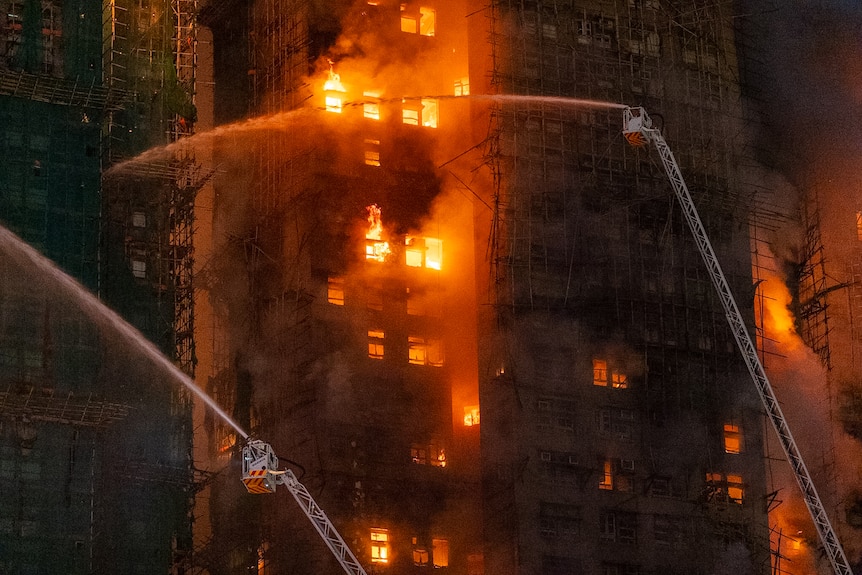
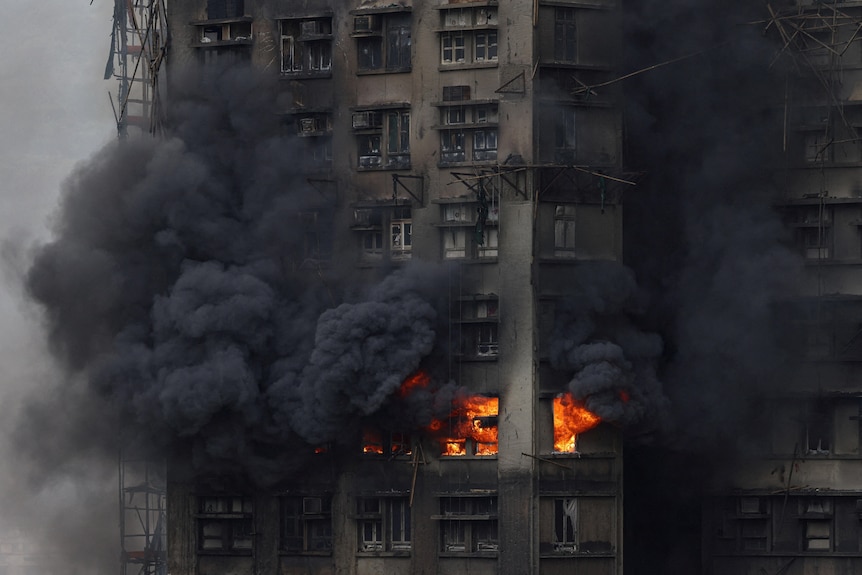
Flames rushed up the sides of the buildings allegedly helped by poor buildings materials, bamboo scaffolding and green sheeting. (AP: Chan Long Hei)
The death toll continues to rise, with at least 83 people killed and more than 250 others still missing.
Some 900 people who made it out alive are staying in nearby evacuation shelters.
At least one resident reported hearing a loud noise about 2:45pm on Wednesday, Hong Kong time, before watching fire erupt in a nearby block.
In a matter of hours, it spread across six other blocks in the complex, engulfing the properties in deadly flames and plumes of smoke.
Authorities have still not revealed the source of the fire, but have confirmed that non-compliant building materials were used during renovations, including highly combustible polystyrene used to cover windows.
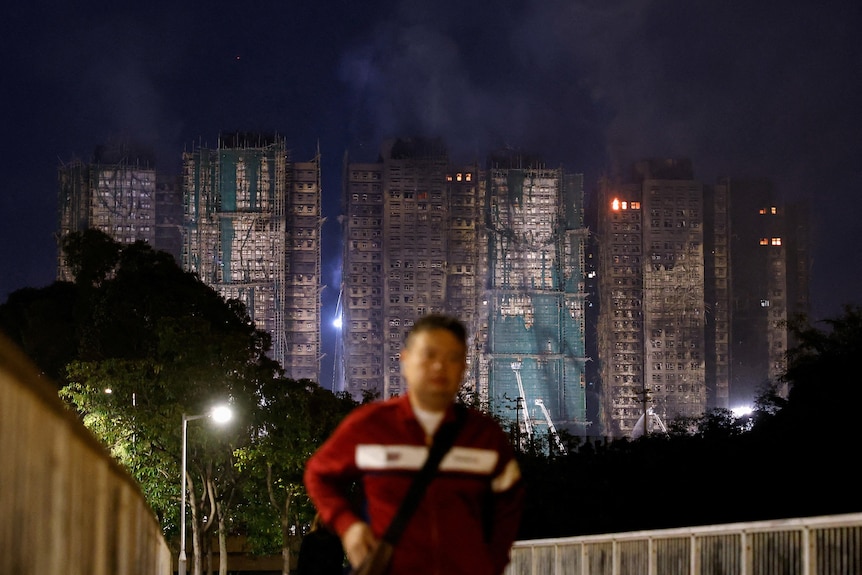
The fire had been brought under control but not fully extinguished on Thursday night. (Reuters: Maxim Shemetov)
Three people — two company directors and a contractor — have been arrested on suspicion of manslaughter.
Ng, who only wanted to provide her surname, had lived in the building for 42 years.
She fears many of the other elderly residents could not get out.
“Because people have lived in this estate for so long, many have gotten sick,” she said.
“I was really lucky.”
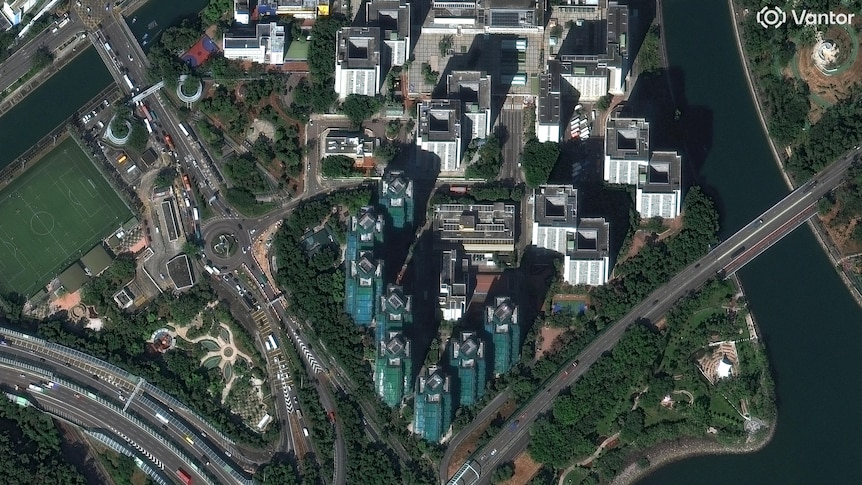
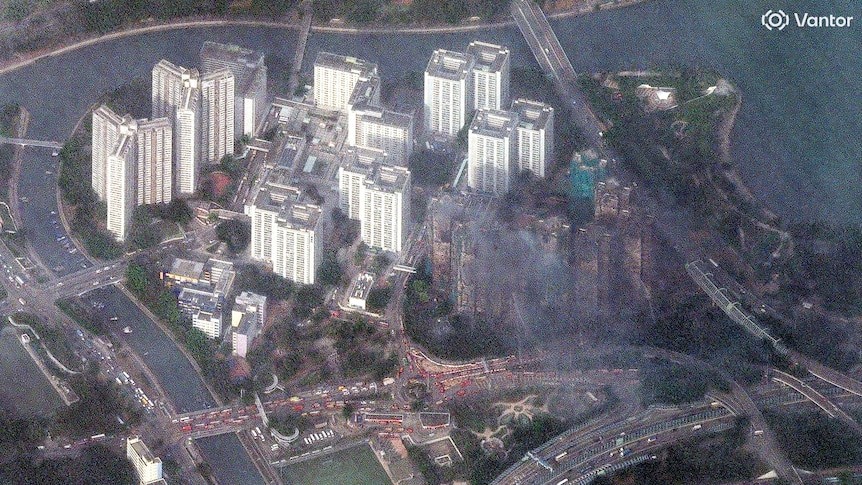
Hong Kong’s fire department said extreme heat and falling debris made initial rescue efforts difficult.
It said the blaze was likely to be extinguished in the early hours of Friday morning, more than 24 hours after it started.
Questions over a lack of fire alarms
The sheer scale of the devastation has left people reeling.
Authorities have conducted the painstaking task of going room to room, hoping to find survivors, but in many cases finding bodies instead.
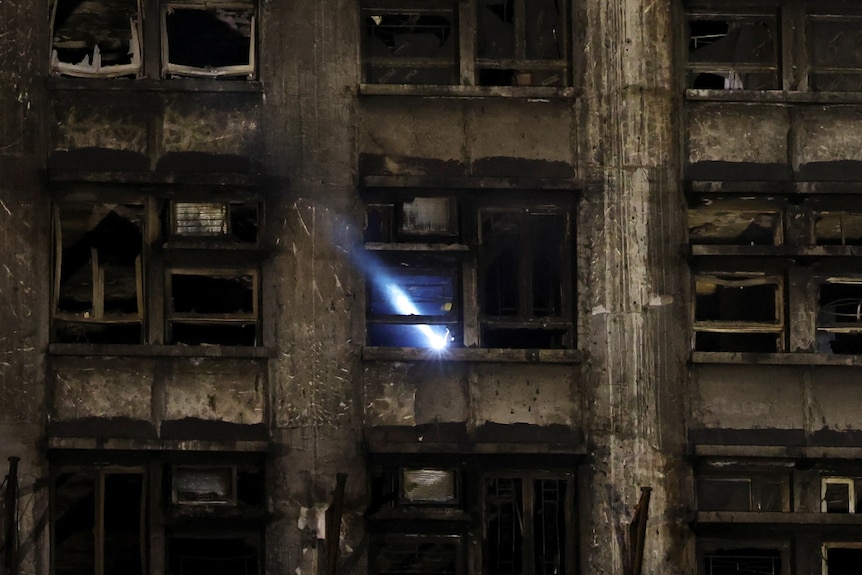
Firefighters were unable to access the buildings in the immediate aftermath of the fire because of extreme heat. (Reuters: Amr Alfiky)
Multiple residents complained to the media that the fire alarms failed to warn them.
“People are sad, shocked and also I’d say quite mad and angry about this situation,” witness Kin told the ABC.
“Friends of family live in this building; we couldn’t reach them.”
“It’s horrible”.
Loading…
Some people have begun the grim task of identifying their loved ones.
A community hall has been set up as a viewing point for photos of the deceased. A makeshift sign on a nearby wall read simply: “Photo-viewing.”
Dozens passed through the station on Thursday, desperately seeking answers.
The smell of smoke was thick at the site of the disaster.
(Reuters: Tyrone Siu)
The mood was sombre as people waited to be led in, with onlookers kept away by police and media access limited.
Paramedics and social workers stood ready inside to help.
“I cannot find my family members in the photos … If they have more photos, I may come again to take a look,” said a woman surnamed Cheung, whose sister and brother-in-law are missing.
“I cannot describe my feelings. There were children …” an emotional Cheung said after leafing through the pages of photos.
Hong Kongers support those in need
While there has been an outpouring of grief, there has also been an effort to lift community spirits.
Hong Kongers from across the city gathered, bringing donations of food, water, and clothing.
The Hong Kong Red Cross has also been providing mental health support to those affected.
“A lot of them are in a state of shock,” Dr Eliza Cheung from the Hong Kong Red Cross said.
“Of course, they are finding it very hard to accept the reality, but we want them to feel they are not alone. We are here when they need us.”

Eliza Cheung was helping those in need for the Hong Kong Red Cross. (ABC News: Tim Swanston)
The Wang Fuk Court towers are nestled in Hong Kong’s densely-populated Tai Po neighbourhood and consist of eight buildings with a total of 2,000 apartments.
It’s estimated to have housed up to 4,800 residents, including many elderly people.
Here’s what we know about the Hong Kong fire
The blaze has put a spotlight on the traditional materials used in the building’s scaffolding, which consisted of bamboo lattices and green netting that authorities have been attempting to phase out for safety reasons.
In October, bamboo scaffolding caught fire at the Chinachem Tower in the Central business district, leaving windows burnt out and external walls badly seared.
The blaze in the blocks of flats is the deadliest in Hong Kong in more than 70 years.
A warehouse fire in 1948 killed 176 people in the city.
ABC/wires