
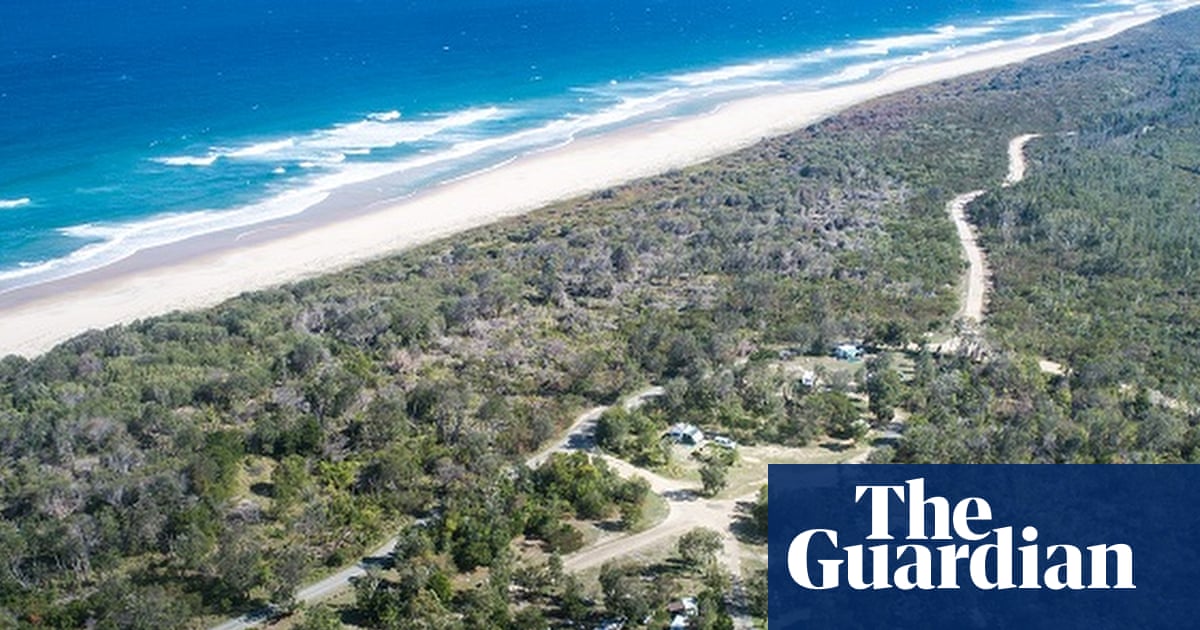
A shark that attacked two people on a remote New South Wales beach – killing a woman and wounding her partner – is unlikely to pose an ongoing threat, experts say.
Police are reviewing GoPro footage from the scene, which may shed more light on how the attack unfolded.
A Swiss couple were swimming at Kylies beach in the Crowdy Bay national park at dawn on Thursday when a 3-metre bull shark attacked the woman and then her partner when he tried to save her.
Emergency services were called at about 6.30am.
The woman, 25, died at the scene, while the man, 26, was airlifted to John Hunter hospital where he was in a stable condition, the hospital confirmed on Friday.
Surf Life Saving NSW said Kylies and nearby North Haven and Crowdy Bay beaches reopened at 12.30pm on Friday.
The beaches were reopened “following increased jet ski and drone surveillance since the incident … which has not identified any concerning marine life in the vicinity”, a spokesperson said.
“Ahead of the weekend, and noting the forecast hot temperatures that will attract large crowds to the beaches, drones will continue to provide shark surveillance to the area, particularly at Camden Haven and Crowdy Head, with nippers set to go ahead as scheduled on Sunday.”
Sign up: AU Breaking News email
NSW Ambulance Insp Kirran Mowbray told the Nine Network on Friday that “the shark has attacked the female first, and her partner has done everything he could to get them both into shore and yell out for assistance to a bystander who was there”.
Mowbray said the bystander used her swimmers as a tourniquet, tying them around the man’s leg.
“She’s essentially saved his life and bought him time before [paramedics] can get there,” he said.
Dr Brianna Le Busque, an environmental science and psychology researcher from the University of South Australia, said she was “shocked” to hear about the double attack and worried it would spark comparisons to the movie Jaws.
“The really important part is to wait until we know more,” she said.
“Until then, it’s a really horrific freak incident, but there’s no indication that this shark will keep biting humans.
“The parallels with Jaws are so interesting, this idea that instantly we must ‘get that particular shark’, and we know that’s not an effective strategy. It’s likely this shark felt particularly threatened, something happened, that’s why it lashed out twice.”
Scientists have disputed whether there is such a thing as a “problem shark”.
Rob Harcourt, emeritus professor of marine ecology at Macquarie University, said on Thursday that a double attack was “quite unusual” but could happen while sharks were hunting prey and trying to deter competitors.
The Swiss consul general confirmed in a statement that one Swiss national died and another was injured.
“We are in contact with the local authorities and are supporting the relatives within the framework of consular protection,” they said.
The Surf Life Saving NSW chief executive, Steven Pearce, told 2GB radio that the “really, really terrible” incident happened in an area so remote that there were no life guard services.
skip past newsletter promotion
Sign up to Breaking News Australia
Get the most important news as it breaks
Privacy Notice: Newsletters may contain information about charities, online ads, and content funded by outside parties. If you do not have an account, we will create a guest account for you on theguardian.com to send you this newsletter. You can complete full registration at any time. For more information about how we use your data see our Privacy Policy. We use Google reCaptcha to protect our website and the Google Privacy Policy and Terms of Service apply.
after newsletter promotion
The MidCoast council mayor, Claire Pontin, “expressed her sadness at the loss of life and extended her condolences to the families involved”.
The Department of Primary Industries deployed five “smart” drumlines at Kylies beach after the attack.
The drumlines send alerts when sharks or other marine animals take a baited hook. The shark is then tagged, relocated 1km offshore and tracked.
The department said it “extends sincere condolences to the family and friends and first responders at this tragic time” and said no sharks have been caught on the drumlines at Crowdy Bay or at Port Macquarie to the north or Forster to the south since the incident, and that there had been no drone shark sightings.
“Based on forensic analysis, DPIRD shark scientists have determined that a large bull shark over three metres in length was likely to have been involved,” the department said on Friday.
NSW uses other technology including shark nets, helicopters and “listening stations” to monitor sharks and prevent attacks, and beachgoers were advised to follow the NSW SharkSmart app.
Meanwhile, other NSW beaches were closed on Friday after numerous bull shark sightings, along with bait ball sightings, where schools of fish group together to form a defensive, tight mass to deter predators.
“Please continue to be alert if swimming or surfing with the heightened shark activity, especially in light of the tragic fatal incident nearby earlier today at Kylies Beach,” Port Macquarie Hastings ALS Lifeguards said in a social media post.
In September, Mercury Psillakis was fatally mauled by a 3.5m great white at Long Reef beach in Sydney.
At the time, experts said there had been an increase in shark bites because more people were using the water for more of the year, along with other factors including climate change, habitat depletion, weather anomalies and distribution of prey.
But the number of deaths has not increased thanks to faster emergency responses, tourniquet kits at surf lifesaving clubs and better first aid training.
According to NSW’s SharkSmart advice, swimmers should take extra care at dawn and dusk, when bull and tiger sharks are more active, swim between the flags at patrolled beaches and be aware of water conditions and any safety signs or alarms.