
What does it tell you about the state of metallurgical coal markets when one of the country’s most bullish miners pulls back on an approved 60 year extension?
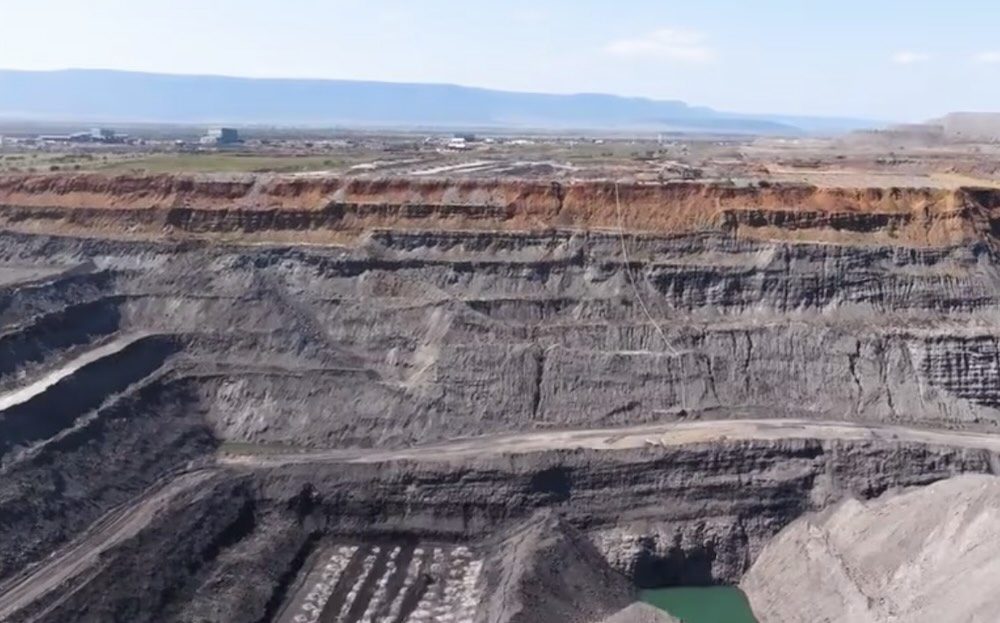
After increasing their coal production by 60% in the last financial year, Whitehaven Coal has quietly withdrawn their EPBC application for their Blackwater North coal mine extension project. After already achieving approval from the state government, the extension project would have approved an additional 220 million tonnes of coal mining at the Queensland complex with plans to continue mining through 2085.
When Whitehaven acquired the Blackwater mine from BHP in 2023, it explicitly stated in ASX disclosures that the mine’s potential life could extend for more than 50 years “dependent on prevailing local and macroeconomic conditions”.
While there has been no official statement from the company as to why this latest extension proposal has been revoked, it appears that the broader price volatility and demand uncertainty may have made this bullish miner a bit shy.
In its September quarterly production report, Whitehaven noted Indian demand for metallurgical coal is being eroded by a surge of low-cost Chinese steel imports. Prices remain well below the highs that justified the aggressive expansion plans that sounded great only two years ago.
While Whitehaven continues to express confidence that the lack of new mines coming into the system will support a long-term price boost, in this case, the rhetoric doesn’t match the action, as the near-term outlook may be too soft to bear.
For Whitehaven’s shareholders, it is hard to say if retreat is driving the seven percent fall in the share price since November 10, but it will have a real impact on domestic and global emissions.
Last year, metallurgical coal production from the Blackwater mine generated 57 kilograms of CO2-equivalent (CO2e) for every tonne of ore extracted. That accounts for emissions from fugitive methane and diesel fuel before any of the coal is burned to make steel. Once that happens, each tonne releases an additional 2.3 tonnes of CO2. Multiply that by 220 million tonnes and the total climate impact is equivalent to Australia’s annual national emissions or decades of output from a coal plant like Eraring.
In the wake of UN climate negotiations where Climate Minister Bowen reinforced the government’s stance on the need to transition away from fossil fuels, this could be seen as a significant win for the climate. South Korea joining the Powering Past Coal Alliance at COP30 adds an inevitability to the accelerating global energy system transformation.
But this is not the end of the story. In its 2023 acquisition of the mine, Whitehaven inherited a massive proposal for a new greenfield mine that could operate until 2119 if successful. The far larger Blackwater South project has been effectively dormant since Whitehaven took over, and the company has yet to submit detailed plans to the Queensland government.
This may reflect broader market caution, but it also leaves open the possibility of a re-scoped, consolidated, or repackaged expansion. Whitehaven has until September next year to signal its full intent and may be waiting for coal markets to settle.
This initial withdrawal should have given the Commonwealth a moment of pause. However, without clearer planning frameworks and stronger climate tests, we risk seeing a hundred-year coal mine application in Queensland next year, locking in generations of carbon liabilities at odds with the nation’s net-zero trajectory.
Australia has an opportunity to pivot toward zero emissions industries of the future including critical minerals, green iron and steel, aluminium, and clean manufacturing rather than locking in the next generation of coal mega-projects. Whitehaven’s initial withdrawal signals that coal’s economic and regulatory environment is becoming more uncertain and the government should have taken that more seriously.
Our recent analysis of Whitehaven’s Scope 1 emissions highlights the importance of a rigorous climate test and the EPBC review process.
Even without including Scope 3 emissions from exported coal combustion, projected Safeguard Mechanism liabilities could reach up to $A342 million through 2030, a small fraction of the estimated $4.7 billion social cost of methane and CO2 released during production alone.
The scale of this gap underscores the need to carefully limit new coal projects and ensure that approvals under the EPBC Act properly account for long-term climate and social impacts.
With China’s Ministry of Commerce increasingly focussed on expanding the import and export of green and low-carbon related products and technologies at a time China is nearing two years post its national emissions peak, the need for transition is increasingly clear, as is the climate science underpinning the need.
Whitehaven’s pause is a rare opportunity for policymakers to ensure that future coal approvals align with our climate reality, before another generation of emissions is locked in. That opportunity will now fall on the states.
Christopher Wright is Principal Analyst at decarbonisation group, CarbonBridge
Matt Pollard is an analyst at clean energy consultancy Climate Energy Finance (CEF).
