
“I quickly found out that a lot of semiconductors come from Ukraine, and all the precious metals, etcetera. We had shipping costs going ballistic.”
Just as the world’s supply chains can fall apart with one weak link, the Metro Tunnel’s new technology must also seamlessly connect.
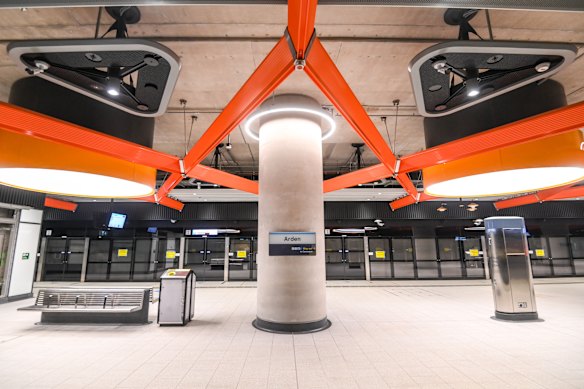
The Metro Tunnel stations, such as at Arden station, have platform screen doors – the first in Victoria.Credit: Justin McManus
Engineers used a lab to test signalling and other features as they were being designed, but Cantan said that at the start of the project, they didn’t truly appreciate how hard the back of the job would be.
She said the tunnel’s new rail signalling system had to interface with the trains, platforms, tunnel ventilation and building systems such as power, air-conditioning, escalators and lifts.
One benefit of this collaboration is the inclusion of helpful new features. A graphic that will appear above platform doors in the tunnel will show people how crowded the carriage behind that door will be when the next train arrives at the platform.
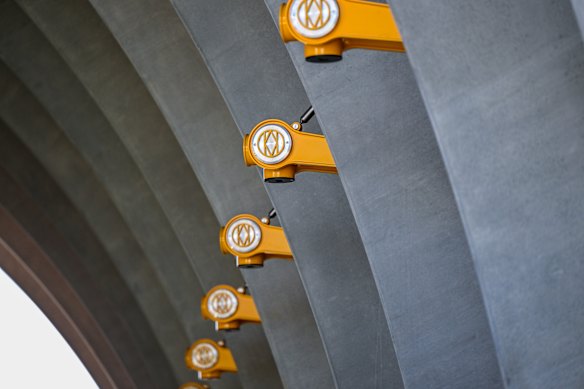
Some of the architecture at Arden station in North Melbourne.Credit: Joe Armao
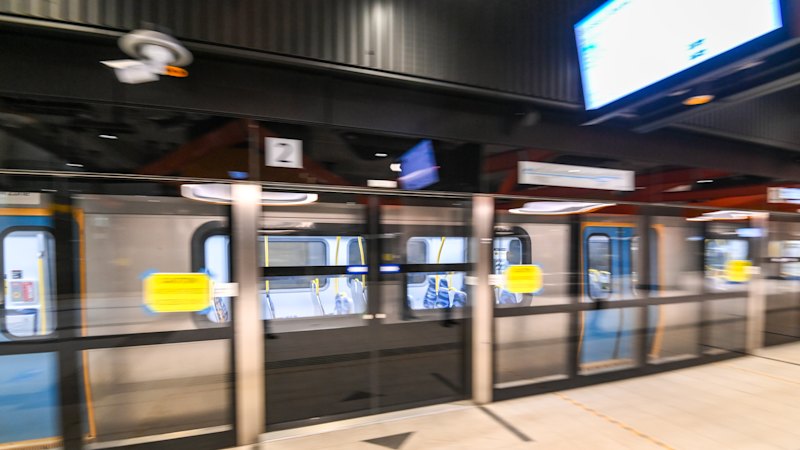
The platform doors were one of more technical challenges faced at that stage of the project. The train carriage must perfectly align with these doors because they are a safety feature, and they must talk to the fire, communications and signalling systems.
Evan Tattersall, who was chief executive in charge of the Metro Tunnel until 2022, said he learnt about the draining nature of this work at a recent party he attended.
A Melbourne train driver exposed to hours of testing informed Tattersall the doors were “far too complex” and the project “should never bloody had them”.
Come Sunday, they will be a permanent feature of Melbourne’s rail network.
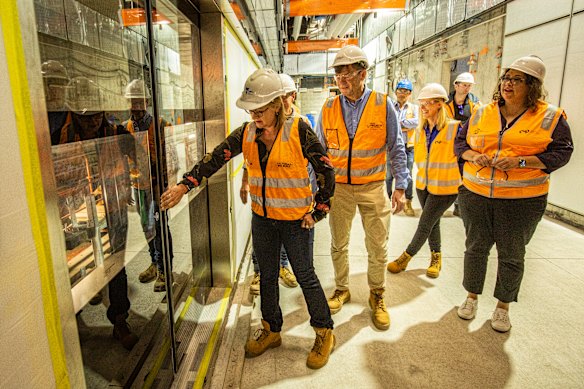
Jacinta Allan, then the acting premier and now the premier, inspects the new platform train doors at Parkville station in 2023.Credit: Scott McNaughton
The United Firefighters Union has alleged that Fire Rescue Victoria radios have been failing to connect to antenna systems used by emergency services when tested underground.
However, Premier Jacinta Allan and the Office of National Rail Safety Regulator have strongly rejected these claims, and the regulator has made the safety approvals needed for services to run from Sunday.
The challenge of plugging a new high-tech line into a century-old existing railway network was one of the most time-consuming elements for the Metro Tunnel project.
Under the signalling system used across most of Melbourne, railway lines are broken into smaller sections of track, known as signal blocks. To prevent collisions, trains are not permitted on the same block, and signallers spend much of the day operating the red and green lights that allow this safe distance to be maintained.
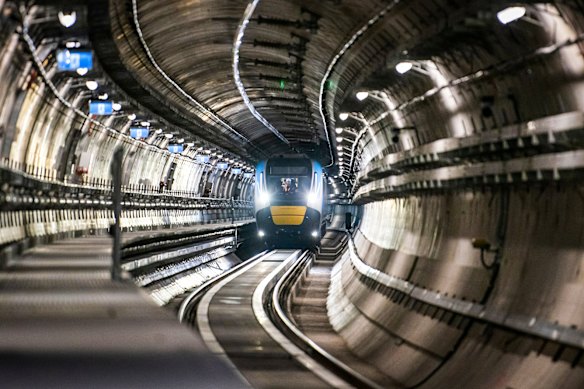
A test train runs through the Metro Tunnel in September.
But inside the Metro Tunnel and along a large section of the Cranbourne, Pakenham and Sunbury lines that will use it, high-capacity signalling will be in place.
Known as communications-based train control, this technology allows trains to speak to each other and run much closer together, permitting peak-hour timetables where services are a minute or two apart.
Integrating this technology into an older system was one of the key reasons London’s latest addition to its train network, the Elizabeth line – also known as Crossrail – was four years late and £4 billion ($8.1 billion) over budget.
Tattersall said the Metro Tunnel team visited the Elizabeth line when technology problems were emerging and continued to stay in touch as the team in London passed on lessons learnt.
He said the Crossrail team realised they did not consciously make the shift from a construction to an IT project, as people of different skills were needed for each phase.
This evolution became a key responsibility for current project director Ben Ryan, who stepped into the role just as the transition was ramping up.
Ryan said experts from Crossrail had visited Melbourne every six months over the past few years to give advice and test for weaknesses.
Crossrail staff admitted they had taken too long to realise they were running behind, Ryan said, by focusing on construction and not concentrating on how they would turn on all the new technology and have it work in sync.
Ryan said perfecting these complicated systems, which underpin how the whole Metro Tunnel operates, was the task that took the most effort.
“The high-capacity signalling, and particularly the fire systems in the tunnel, they’re the things that you can’t open if they don’t work,” he said.
“They require an enormous amount of testing. Hundreds and hundreds of exercises.
“We’ve had what we call mass volunteer exercises, where we simulated a scenario [and] we’ve got to evacuate people out of the tunnel and had emergency services in to support all of that.”
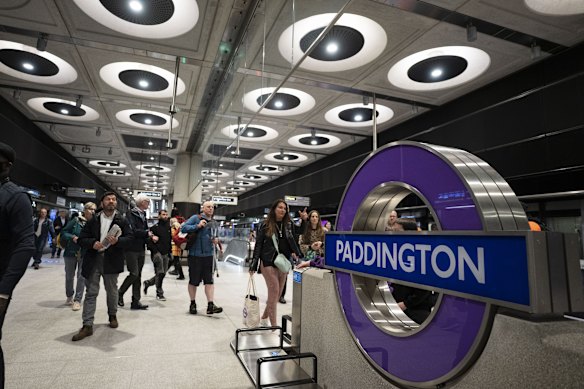
Travellers on a train platform at Paddington station on the opening day of the Elizabeth Line in London in 2022.Credit: Bloomberg
Thousands of hours of testing contributed towards getting the Metro Tunnel ready for services on Sunday. In June, this amounted to more 165,000 kilometres travelled through the tunnels.
Ryan said the other big lesson from Crossrail was that “if you build it, they will come”.
“For all the criticism about being late and over budget … they said to us, they’re at their 30-year patronage forecast 3½ years in,” he said.
“It’ll be very interesting to see the take-up here. I suspect it’ll be overwhelming.”
Start the day with a summary of the day’s most important and interesting stories, analysis and insights. Sign up for our Morning Edition newsletter.