
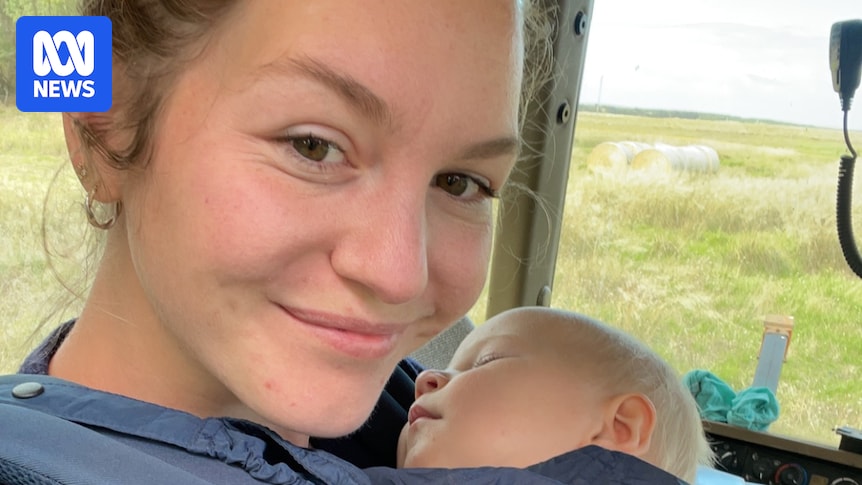
In the months after giving birth to her second baby, Ali Gossage felt an all-consuming anger that came out of nowhere.
She did not know it at the time, but was suffering a condition many mothers go through, but few talk about.
“I developed postpartum rage. It was something that I’d never experienced before and never heard of before,” she said.
“I would blackout [with] rage, throw things, and it would literally be over the most minute, tiny thing.
“My son would ask me for a drink, and I would just absolutely go off the rocker.”
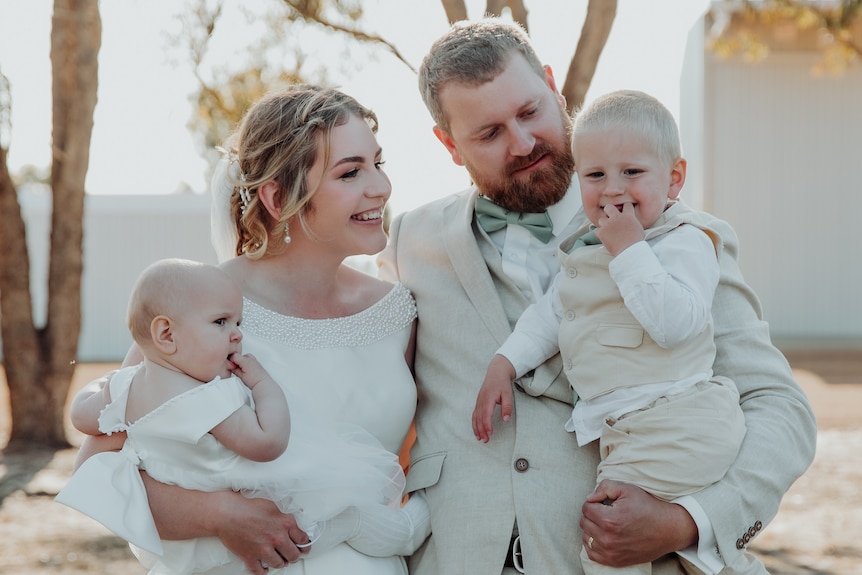
Ali Gossage says she was nervous to talk to her husband about how she was feeling after having their second baby. (Supplied: Ali Gossage)
Mrs Gossage said she had no idea what was happening to her as she had not experienced any mental health struggles after having her first baby the year before.
The now 28-year-old said she did not feel comfortable talking to anyone about how she was feeling because she did not want people to think she could not handle being a mother.
“I was really hesitant to speak out about it because I didn’t know what I was going to be met with on the other side,” she said.
“How do you talk to someone [about how] … you just don’t know what you’re going to do in that moment? You’re just not the person you really are, when you snap.
“It was really terrifying.”
If you need someone to talk to, call:Stigma remains
Gidget Foundation clinical psychologist Katie Peterson said, unfortunately, a lot of new mothers struggled with their mental health, and those suffering postpartum rage often felt like they could not talk about the reality of their situation.
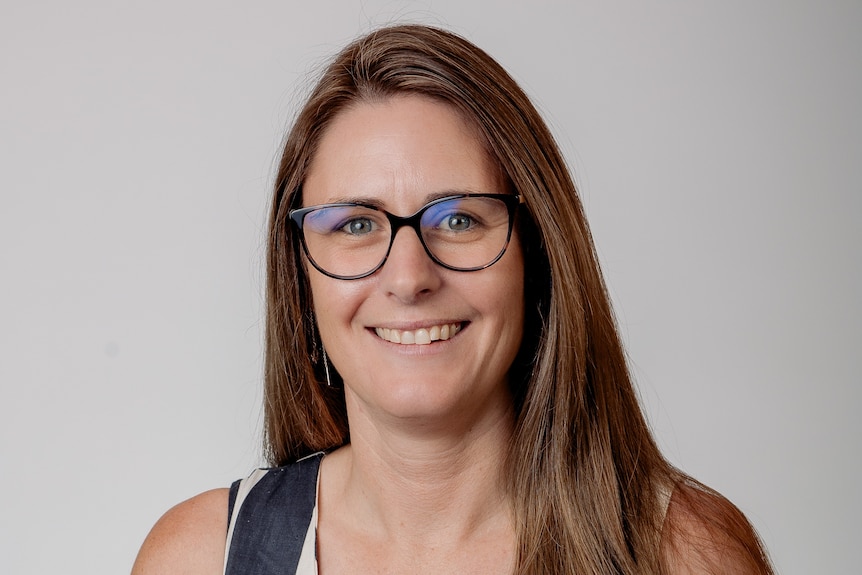
Clinical psychologist Katie Peterson says being able to hear people’s stories and feeling validated is important. (Supplied: Katie Peterson)
“Often they feel like they’re failing as a mum, or it might not be the experience they’d hoped for in becoming a new parent,” she said.
“So reaching out for support or knowing where to get support can be really hard.”
Mrs Gossage said opening up about postpartum rage was still heavily stigmatised, despite the condition’s prevalence.
“Everyone just talks about how great motherhood is and ‘this is all I’ve ever wanted’ and ‘I love my babies’ and everything is hunky dory,” she said.
“I have three older sisters and two of them have kids, and when I was going through it, I asked them, ‘Was it hard for you? Did you experience anything like the isolation, the identity shift of becoming a mother?'”
“And they were like, ‘Oh yeah, we did, but no-one spoke about it, so we just got on with it.'”
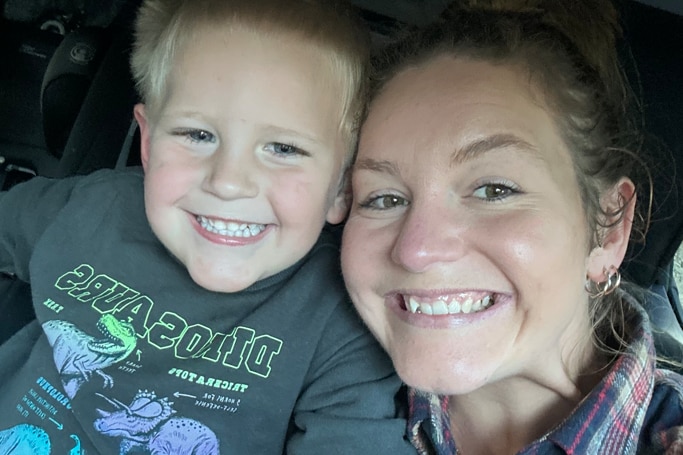
Ali Gossage and her firstborn son, Harrison. (Supplied: Ali Gossage)
Open conversations crucial
Ms Peterson said telehealth appointments and speaking to healthcare professionals were always an option for struggling parents.
But having open, honest conversations was crucial too.
“Peer support is becoming a lot more common and is a really important part of breaking down the stigma around accessing mental health,” she said.
“We know that isolation and loneliness with these types of challenges is one of the things that makes them worse, so being able to hear people’s stories and feel validated is really important.”
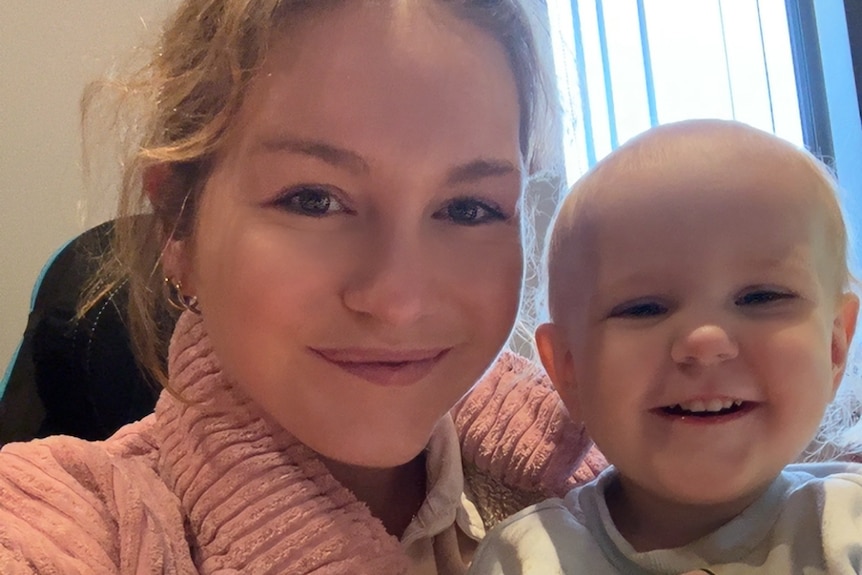
Ali Gossage hopes to use her story to show other mums they are not alone. (Supplied: Ali Gossage)
For Mrs Gossage, sharing her story with an online mothers’ support group called Motherland and eventually getting regular counselling through the Gidget Foundation had turned her life around.
Now the young mother wanted to show other mothers that they did not have to struggle through the traumas of postpartum mental health alone.
“I know that it’s scary and [you are] vulnerable and you do feel like a failure when you ask for help,” Mrs Gossage said.
“But it’s so common, and you just need to, because it really does take a village to raise a child.”