
Kelly Higginson, president and CEO of Restaurants Canada, joins BNN Bloomberg to discuss the barriers in Canada’s food sector.
Food inflation continues to outpace broader consumer prices, adding strain for households and restaurants across the country. Industry voices say a key part of the solution lies in modernizing the rules that prevent food products from moving easily between provinces.
BNN Bloomberg spoke with Kelly Higginson, president and CEO of Restaurants Canada, who says longstanding regulatory duplication and the exclusion of food from internal trade agreements are driving costs higher. She argues that mutual recognition of standards and harmonized rules would improve affordability and give small operators more room to grow.
Key TakeawaysFood and alcohol remain excluded from Canada’s latest mutual recognition agreement on the sale of goods.Regulatory duplication across 13 provincial and territorial systems adds cost and complexity for restaurant operators.Industry research shows 75 per cent of Canadians are eating out less due to rising living expenses.Mutual recognition of inspections and harmonized national standards are viewed as the fastest way to reduce barriers.Removing GST from all food is being proposed as an immediate affordability measure for consumers.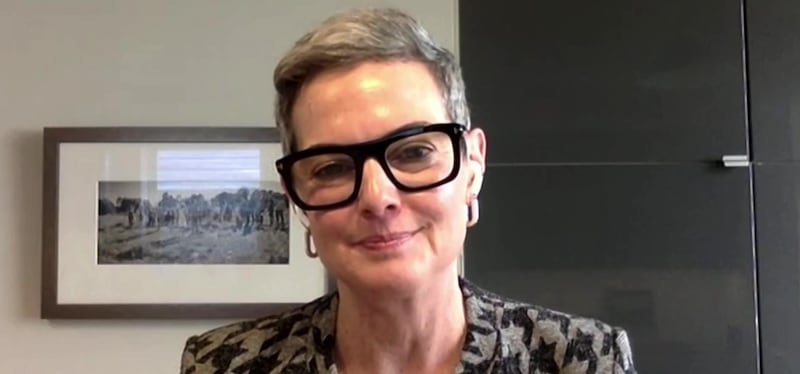 Kelly Higginson, president and CEO of Restaurants Canada Kelly Higginson, president and CEO of Restaurants Canada
Read the full transcript below:
ROGER: Despite the rising cost of food, a Canadian food service industry representative says provincial and federal governments need to focus on liberalizing the movement of food products between provinces. Let’s get more on it from Kelly Higginson, president and CEO of Restaurants Canada. Kelly, thank you very much for joining us.
KELLY: Thanks for having me.
ROGER: What is your big concern with what’s unfolding right now?
KELLY: Well, look, we really do applaud the provincial and federal governments for the progress that we’ve made on internal trade. There has been significant movement, but the unfortunate part of that is that food and alcohol products have been excluded in the most recent mutual recognition agreement on the sale of goods. So this causes more delays in allowing for free access and moving food and alcohol freely across the country.
ROGER: Why do you think that is? What’s stopping that?
KELLY: Well, I mean, this is a heavily regulated area — 13 economies instead of one. So it’s going to be difficult to come to that mutual recognition. And there’s a variety of reasons. For sure, we’ve got obviously a little bit of protectionism in here as well, which, respectfully, we all understand. But in a time when we need to look at the rising cost of food, we’ve got food inflation outpacing regular inflation for the last nine months. But I think all Canadians would agree this has been going on for a number of years now.
We’ve got provinces with a number of different rules and labelling requirements, redundancy in provincial packaging agreements and regulations. And all of these duplications across borders really do add costs and make it much more complex for small operators to scale up their businesses.
ROGER: Is there one thing that could be done fairly quickly to eliminate one of those concerns — something that would make a difference almost immediately?
KELLY: The most efficient way to manage this, we believe, is by way of mutual recognition, which we’ve seen happen between some provinces already. So if food inspection in Nova Scotia has taken place, then Ontario is recognizing that and we can shift products between those two provinces.
That is one way that we see this being the most efficient. And, you know, I think the reality is we need to see more work done for one economy, as opposed to 13. And I’ll use the example of Australia, which really grappled with this a number of years ago. While we are looking for that mutual recognition between provinces, something interesting they did was creating a uniform standard across all of Australia — the model food provisions.
So recognizing that from a federal perspective, if food inspection, regulation around labelling and all of those things are agreed upon federally, then it can just open up all of our borders. So either way, there’s work to be done. And again, I recognize there are 13 different agreements at this point that have to be sifted through, but this will make a significant difference not only in cost, but also in the opportunity for us to access Canadian goods in a time when we need to see that. And we need to be able to scale up some of these businesses across the country.
ROGER: And for restaurants across the country, rising inflation has been devastating. What do you think the government could do to help with that from a broader perspective?
KELLY: Well, I mean, to your point, it has been devastating, and we get hit on both sides of this. If Canadians have more household debt and inflation is pinching more and more into their pocketbook, they have a lot less discretionary spending. We’ve got 75 per cent of Canadians eating out less and saying they’re going to have to cut back even further into 2026 due to the rising cost of living. That’s really impacting day-to-day life.
So we’ve put forward a number of options to the government on affordability. We do call on the government to make this a much bigger priority. We haven’t seen anything done that’s really going to impact the day-to-day life for Canadians in a way they can feel. So along with opening up interprovincial trade barriers with food and alcohol, we’re also calling for the government to remove all GST from all food. It is really poor public policy, in a time of such high food inflation, to be taxing food.
ROGER: And what kind of response have you had so far to that?
KELLY: Well, I mean, we recognize it’s been a busy time for the government, but we have had numerous conversations and those will be continuing. In the next couple of weeks, we’ll be speaking with a few ministers’ offices and hope to continue these conversations.
ROGER: Now, restaurants deal with all levels of government and that can be a challenge. What about from a municipal level? Do you have to go to every individual municipality? Is there a way to ask them for help on things?
KELLY: Well, certainly, as far as some of the regulations around labelling and packaging, we have been working with different levels of government to try to remove that patchwork. Again, it adds more cost. It’s taxing to our operators and it’s taxing to suppliers. So we do put together proposals and have discussions with some of the larger municipalities in the hopes that this will be something everybody can get on board with.
ROGER: Okay, we have to end it there. But Kelly, thank you very much for joining us.
KELLY: Thank you.
ROGER: Kelly Higginson is president and CEO of Restaurants Canada.
—
This BNN Bloomberg summary and transcript of the Nov. 28, 2025 interview with Kelly Higginson are published with the assistance of AI. Original research, interview questions and added context was created by BNN Bloomberg journalists. An editor also reviewed this material before it was published to ensure its accuracy and adherence with BNN Bloomberg editorial policies and standards.