
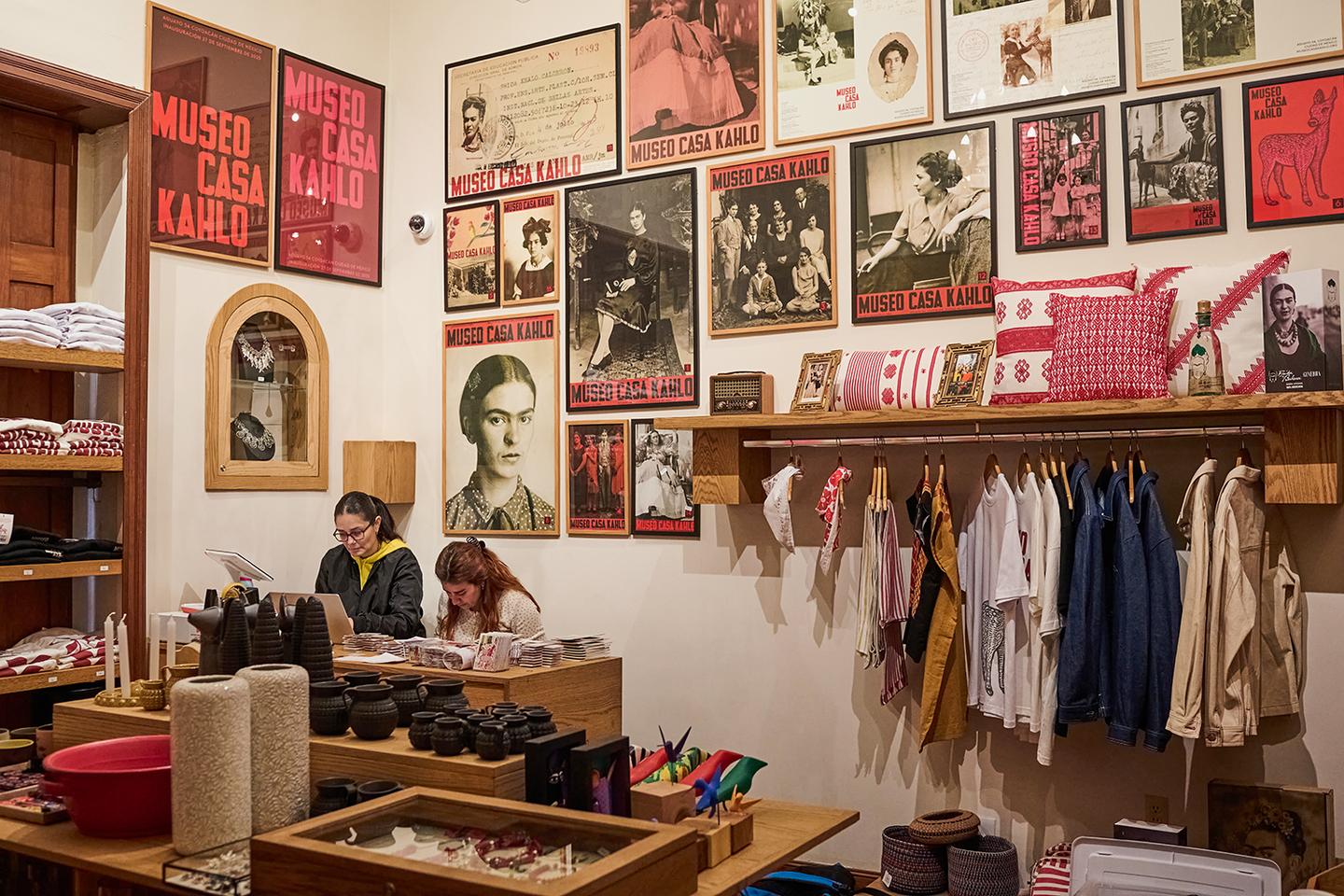
On a typical street in the Coyoacán district in Mexico City, this past September, journalists waited anxiously to get in to one of the neighborhood’s iconic colorful houses. The press was there to preview a new museum dedicated to Frida Kahlo (1907-1954), located in a building called the Casa Roja (“red house”). Opened to the public several days later, the Museo Casa Kahlo is located two blocks from the Casa Azul, the iconic “blue house” where the artist was born and died, and where she lived with her husband, painter Diego Rivera (1886-1957).
Frida Kahlo’s great-niece and great-grandniece, owners of the Casa Roja, acted as guides for the press preview. In the capital, they are known as “the Maras.” Mara Romeo, 72, is Kahlo’s great-niece and Mara de Anda, 46, Romeo’s daughter. “Here, you will discover the Kahlo family home, its roots and its heart, a heart as red as the house,” the elder of the two, Romeo, promised. Right at the entrance, a sign reads: “This house was the home of the Kahlo family for four generations.” De Anda displayed photographs of Kahlo’s parents and her three sisters and explained: “The Kahlos gathered in the living room and the kitchen, the most emblematic place for Mexican families.”
During the museum’s renovation, a previously unknown mural by the artist appeared in the kitchen: El mesón de los gorriones (“The Table of the Scroungers”), dated 1949. “The restoration took us nine months, including the very delicate task of removing the paint that covered it,” said de Anda. Next, visitors descended to the cellar down a narrow staircase. “This was the secret place where Frida came to recharge, away from the problems with her husband,” said Romeo. “Just as you go to your parents’ house when things are tough, she came here to cry or paint. It was her refuge,” the guide suggested. At the end of the visit, Romeo reminded everyone that the key word for articles should be “family.”
You have 78.07% of this article left to read. The rest is for subscribers only.