
On a bustling Sydney shopping strip this week, Wendy was browsing but not yet buying — and not for any lack of plans to spoil her grandson this Christmas.
“I haven’t started shopping because it’s not true Black Friday yet,” she told The Business from Pitt Street Mall, in the heart of the CBD.
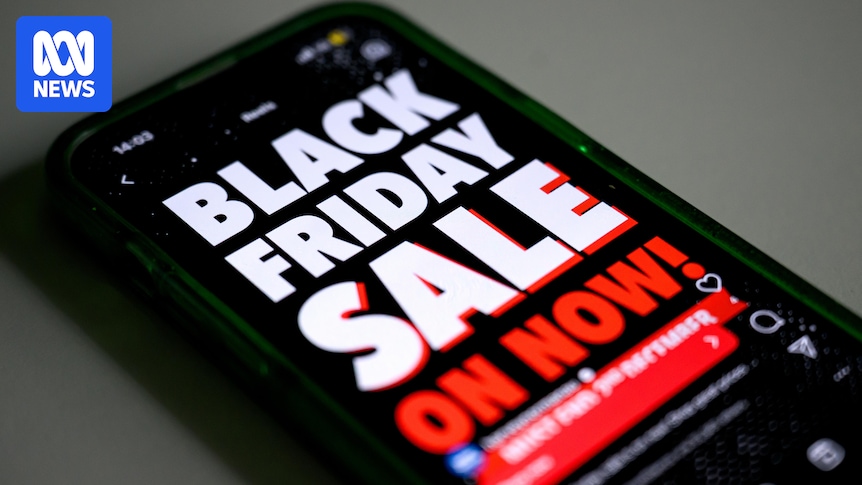
Email inboxes, social media algorithms and shop windows have been overrun with promotions for weeks already, but Black Friday and Cyber Monday actually fall this weekend.
Wendy said she preferred to shop during discount periods and has been holding out hope of scoring better deals, Friday, November 28.

Shopper Wendy is happy to buy into Black Friday sales — when she finds genuine bargains. (ABC News: David Taylor)
But the Sydney grandmother will not be setting herself a budget.
“If I did, I’d just blow it … I just believe in abundance.”More credit cards, more outstanding debt
With millions of Australians tipped to spend a record $6.8 billion over the coming weekend, many will be purchasing items on credit.
Data from consumer analytics firm Equifax has shown that, outside the housing market, consumer credit demand rose 18 per cent in the three months to September, compared to the same period last year.
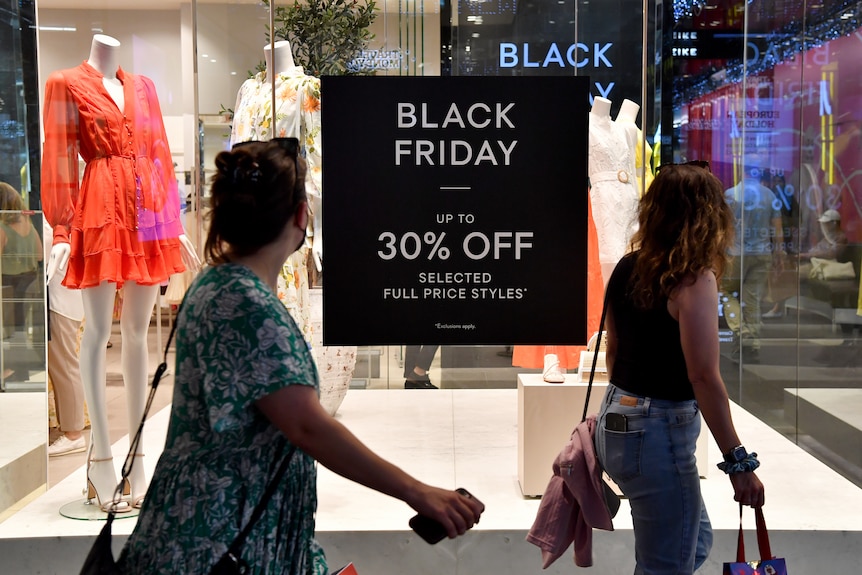
Australians are not only taking on more credit but missing repayments when they’re due. (AAP: Bianca De Marchi)
Equifax reported credit card applications were up 13.3 per cent over the year to the September quarter, while personal loans grew 11.6 per cent.
Not only have Australians been taking on more credit, they have also been leaving more of that debt outstanding — for example, not paying off a full credit card balance by the end of the month.
Dodgy sales tactics to watch for
The value of personal credit and charge-card balances accruing interest shot up a four-year high of to $18.4 billion in September, according to the Bureau of Statistics.
That was its highest level since July 2021, when it was $18.9 billion.
‘It’s really hard for people to say no’
Consumer advocate Deb Shroot warned Australians can feel social pressure to spend more in the months leading up to Christmas.
“There is a lot of social pressure out there and the expectations that the social norms have on people to provide certain things for their family,” said Ms Shroot, a counsellor with Financial Counselling Australia.
“There are a lot of things tempting people as well — the Black Friday sale ads are all over the place, so it’s really, really hard for people to say no.”
Hundreds of thousands of Australians choose the big credit providers.

Deb Shroot says “social norms” have developed around Black Friday sales. (ABC News: Callum Flinn)
Data from the Reserve Bank shows 881,800 credit and card-charge cash advances from “larger” Australian card issuers in November last year. That increased 4 per cent to 916,600 by February.
But Ms Shroot says Australians are increasingly turning to buy now, pay later (BNPL) services, a form of credit usually entered into at the point of sale.
Financial hardship resources:
Generally, shoppers buy a product, take it home and pay it off in regular instalments, for example, fortnightly payments over eight weeks.
Instead of paying interest, there are usually different fees for late repayments.
The National Debt Helpline, an independent service providing financial counselling to indebted Australians, has seen an increase in callers struggling with BNPL issues.
“This year, so far, over 7 per cent more buy now, pay later issues have come through than in previous years and we still have another six weeks of reporting to go,” she said.
As the US reacts to ‘burrito now, pay later’, Australia regulates BNPL
As for traditional credit cards, data from money.com.au shows Australians put an average of $1,200 a month in discretionary spending on their credit cards — that’s $14,400 a year.
The financial comparison site’s spokesperson Sean Callery cautioned that not all retailers discount during this trading period, which might catch out some shoppers who may assume everything is discounted.
“Ultimately, retailers want to make more sales earlier in the year if they can,” he said.
“You can get bargains but it ultimately comes down to what dollar amount you’re spending as opposed to what you would be spending otherwise.”

Sean Callery says a pitfall of pre-Christmas sales is people spending more than they planned to, even if they are finding bargains. (ABC News: John Gunn)
Pre-Christmas spending spree could end in debt hangover
Calls to National Debt Helpline spiked 10 per cent from January to March — as people entered the new year facing the bills from the festive season.
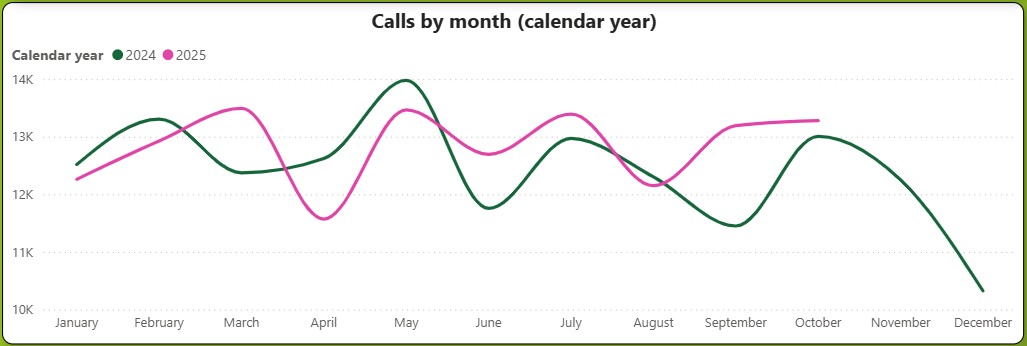
Calls to the National Debt Helpline surged early in the new year and are tracking well ahead of last year’s pre-Christmas numbers. (Supplied: Financial Counselling Australia)
Oxford Economics head of macro consulting Emily Dabbs told The Business that surprise expenses can catch some households off guard over the Christmas period.
“What you end up seeing are those households that either overspend or, you know, maybe have some surprises over the Christmas period and can’t get on top of that,” she told The Business.
“The other bills start coming in and those interest payments [on credit cards or mortgages] are now becoming a little bit unmanageable.”
While many continue to struggle with cost-of-living pressures, Ms Dabbs said some Australians were now in better financial positions than recent years.
“All the ingredients are there for a pretty strong spending spree over the sort of Black Friday-Christmas period,” she said.

Wages growth for some workers this year is boosting their spending confidence, for better or worse, says Emily Dabbs. (ABC News: Thorsten Joses)
She said many workers had seen real wage growth over the past 12 months, as the wage price index exceeded the consumer price index.
“[Some shoppers] are feeling extremely optimistic about the outlook,” she said.
“They’ve also had a few rate cuts over the last year that are supporting [their] finances … so they’re in a good position.”
This, Ms Dabbs said, could keep the Reserve Bank on the interest rates sidelines for the foreseeable future.
“We’re not expecting the RBA to feel so much pressure that they’re likely to hike anytime soon, but we also don’t expect that they’re likely to ease,” she said.
“So we’ll probably see them sitting on the sidelines for a little while.”
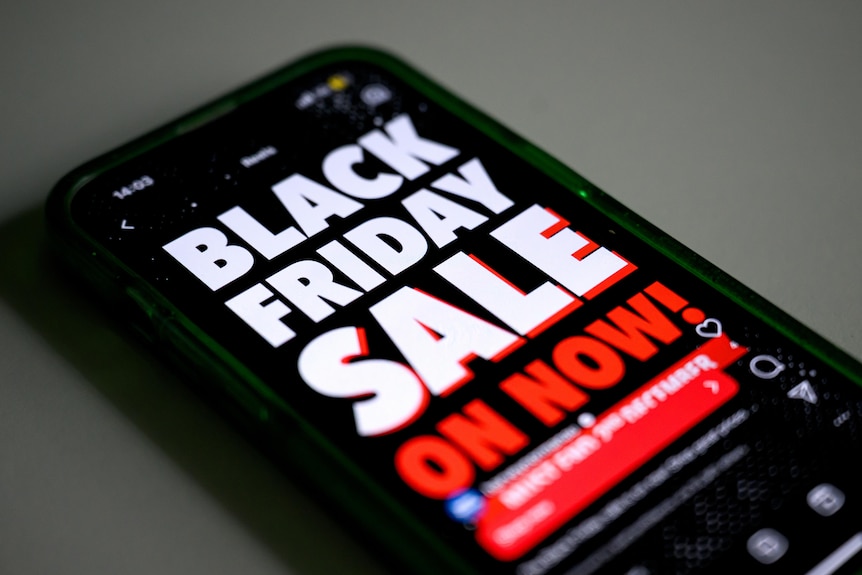
Shoppers are expected to spend big in the run-up to Christmas. (AAP: Bianca De Marchi)
The latest ABS Consumer Price Index data published Wednesday shows core inflation, at 3.3 per cent, is still outside the RBA’s target band of 2-3 per cent.
When are the Black Friday sales in Australia?
Black Friday falls Friday 28 November, while Cyber Monday falls on Monday December 1 this year.
The American-imported sales event coincides with the Friday after Thanksgiving, which falls on the fourth Thursday of November, US time.
Of course, many local and international retailers have already been running discounts for weeks, so promotions may be less concentrated to the actual so-called BFCM weekend.
As the shopping event has gained popularity in Australia, November has become the major pre-Christmas spending spree for local consumers.
Due to the time difference, Black Friday in the US will run into Saturday, Australian time, while Cyber Monday spills over into our Tuesday.