
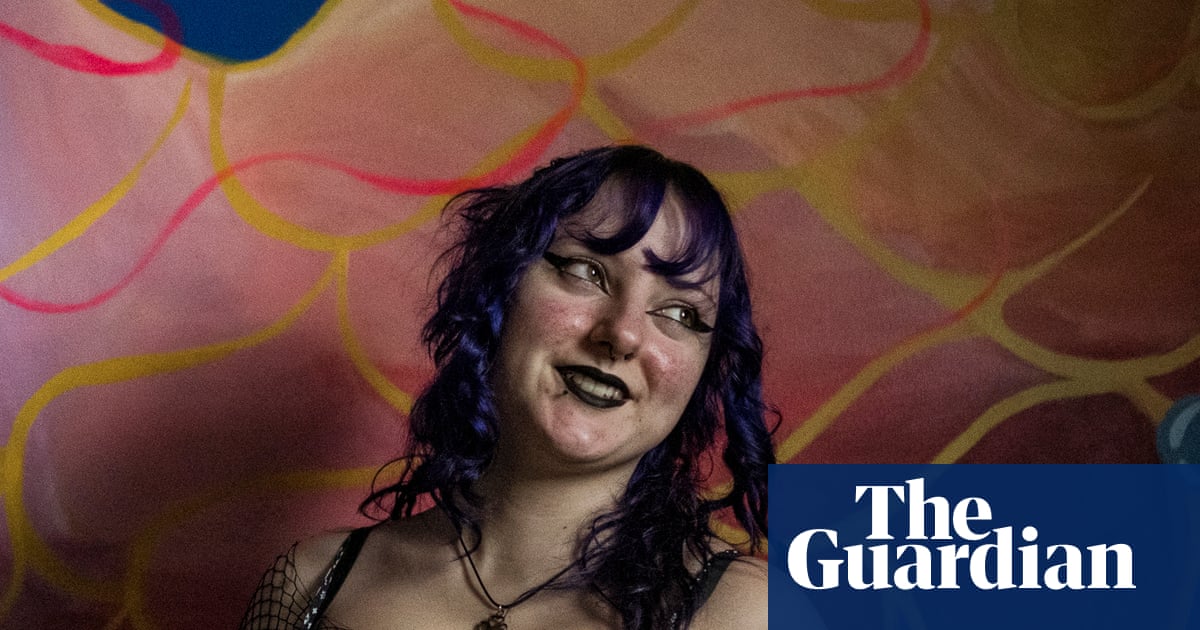
By year 8 of high school, Britnie Magnani had racked up more than 50 suspensions.
The emotions from her turbulent home life would sometimes spill out at school and she would verbally lash out. At other times, she says, she was suspended after hanging around with the “wrong crowd”.
“There were also times where it was just a cry for help, and it just led to suspension,” she says. She was later permitted to attend her public school for only three hours a day.
As a last resort, she was referred to an alternative state school in Melbourne’s north – the Pavilion school – that caters to students disengaged or excluded from mainstream education.
Its cohort includes students who have contact with the youth justice system and children in out-of-home care.
Under Pavilion’s flexible learning model, students are offered face-to-face contact hours, ranging from two-and-a-half to five hours, depending on students’ needs. There are vocational pathways, individualised learning options and a Koori program for First Nations students.
Each class is made up of students of different ages and abilities, and is allocated three staff: a teacher, a teaching assistant and a wellbeing worker.
Magnani says attending the Pavillion school put her on ‘a path where I realised I’m more than I thought I could be’. Photograph: Christopher Hopkins/The Guardian
As the Victorian government talks tough about youth crime, human rights and legal experts are reiterating calls for investment in early intervention outside the justice system.
The government may have taken heed, at least partly. Last week, amid talk of increased sentences for youth offenders, it announced a plan to employ social workers at 20 public schools in a bid to prevent at-risk students from dropping out.
The government said its plan – which the teacher’s union said was paying “lip service” to a larger issue – was designed to address the link between chronic absence from school and violent youth offending.
The care and vulnerability care they show you means there is vulnerability you’re allowed to haveBritnie Magnani
It pointed to data from Victoria’s Council on Bail, Rehabilitation and Accountability that suggested 70% of the state’s worst youth offenders were chronically absent from school before they began offending.
‘They see you as a person and an equal’
Magnani says she began to consistently attend school after enrolling at Pavilion’s Epping campus. She graduated last year, and is now studying a diploma in community services.
“It was the caring nature, them understanding you and not just seeing you as a kid,” she says of the school. “They see you as a person and an equal.
“The care and vulnerability care they show you means there is vulnerability you’re allowed to have.”
Along with the school’s individualised learning approach, Magnani also credits one of its wellbeing workers with helping her turn her life around.
“I could explore my feelings, and I found what I wanted to do, I found the person I’m going to be,” she says.
‘I found the person I’m going to be,’ says Magnani. Photograph: Christopher Hopkins/The Guardian
When she struggled to access meals at her foster care placement during her years at Pavilion, Magnani says she could confide in the school’s wellbeing worker.
“They’d be the voice that I needed,” she says.
In her final years at Pavilion, the wellbeing worker recognised Magnani’s passion for a positive experience she had with a child protection worker and suggested she commence a vocational certificate in community services. She hopes to work in a frontline role with children in the out-of-home-care system.
“I just want to be someone who can help,” she says. “If you’re just a good person, you can help someone’s life a lot better. So I wanted to do that.”
It really changed my mindset that people were out there to help me and not to get meTayah Carroll, 19
One of Magnani’s former classmates, 19-year-old Tayah Carroll, enrolled at Pavilion four years ago, when she was battling alcohol addiction and attempting to wean off prescription pills.
There were frequent run-ins with police. Her attendance at her previous school was sparse – about once a week – and she would often turn up drunk.
“I felt like I was so far behind that I was just never going to catch up. So there was no point,” she says.
For Carroll, the support at Pavilion extended beyond the classroom. When struggling with withdrawal symptoms, the wellbeing worker would accompany her on excursions to help distract her.
“It really changed my mindset that people were out there to help me and not to get me. It just made me feel very important,” she says.
skip past newsletter promotion
Sign up to Breaking News Australia
Get the most important news as it breaks
Privacy Notice: Newsletters may contain information about charities, online ads, and content funded by outside parties. If you do not have an account, we will create a guest account for you on theguardian.com to send you this newsletter. You can complete full registration at any time. For more information about how we use your data see our Privacy Policy. We use Google reCaptcha to protect our website and the Google Privacy Policy and Terms of Service apply.
after newsletter promotion
Thinking and learning differently
Victoria’s outgoing children’s commissioner, Meena Singh, says there should be more flexible learning options.
“Especially since Covid, we’re seeing … that there are lots of children and young people who are not getting their educational needs and their health and wellbeing needs met through mainstream education services,” she says.
“We need to really think differently about how children and young people learn and the impact of trauma on their learning.”
Victoria’s outgoing children’s commissioner, Meena Singh: ‘We often look for the shiny fix when it comes to issues like youth justice.’ Photograph: Diego Fedele/AAP
Singh says trauma-informed education needs to be at the centre of all schools, but many are using suspensions and “exclusions to deal with behaviours, rather than trying to understand where the behaviours are coming from”.
“We often look for the shiny fix when it comes to issues like youth justice,” she says.
“[But] it is absolutely the basics that have to be put into every single child’s life in order for them to thrive: a safe stable home, access to health and wellbeing services when they are needed, and being able to engage in school.
“Hearing the stories of children and young people who have become engaged in the legal system, we know that disengagement from education has featured in their backgrounds.”
‘It’s everything I could have wished for’
Despite the effect Pavilion has had on students like Magnani, there are concerns about how it can maintain staffing levels.
Funding for Charles La Trobe College – which runs Pavilion’s two campuses in Melbourne’s north – is based on total enrolment numbers.
Paul Bridgeford is the chair of charity Link Centre Foundation, who also sits on Pavilion’s subcommittee. He says four staff positions at the school are set to be lost from next year.
He is campaigning, alongside a group of parents, for Pavilion to become a stand-alone school.
‘I just want to be someone who can help,’ says Magnani, who is studying a diploma of community services. Photograph: Christopher Hopkins/The Guardian
Victoria’s education department did not respond to a question about the reduced staff positions. But a spokesperson said flexible learning options play an “important role in our system” in serving the needs of students who require flexibility in their education”.
“The Pavilion School plays an effective role in supporting more than 200 students who need additional support to re-engage in full-time schooling,” the spokesperson said in a statement.
Magnani agrees.
Thinking back to her earlier schooling and the series of suspensions she underwent, Magnani pauses as she considers how she envisioned her future would play out.
“I didn’t really have a future for myself, because my mental health was so horrible back then,” she says. “I didn’t care what the future looked like.”
As she prepares to become a community service worker in the coming years, she is certain Pavilion helped change her life.
“It put me in a path where I realised I’m more than I thought I could be, and I can help people, and I can be great,” she says.
“It’s everything I could have wished for.”