
“Being able to add in full [multiple] species, it really gives us an understanding of the health of our waterways,” she said.
Platypuses, rakali, freshwater turtles, lungfish, frogs, endangered Mary River cod and invisible microorganisms are among the species being monitored at about 250 sites stretching from Noosa to Logan.
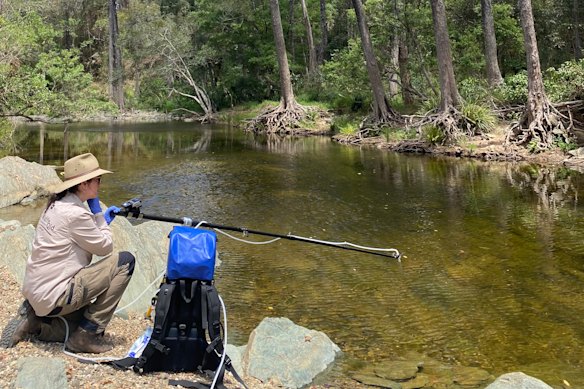
Brunt uses an eDNA backpack sampler.Credit: Tamielle Brunt
Brunt said eDNA changed the way she studied aquatic animals, which she said could be cryptic and tricky to track down.
“Just because you don’t see them doesn’t mean they are not there, so we are picking up the DNA that they leave in the water,” she said.
“It’s quite incredible to be able to go out and sample quite extensively, when traditional methods are quite laborious, like trapping platypuses overnight.”
The project is run by Resilient Rivers South-East Queensland, a body funded by the SEQ Council of Mayors, along with the state and federal governments.
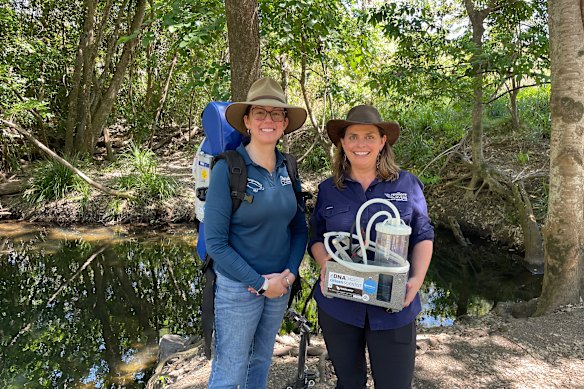
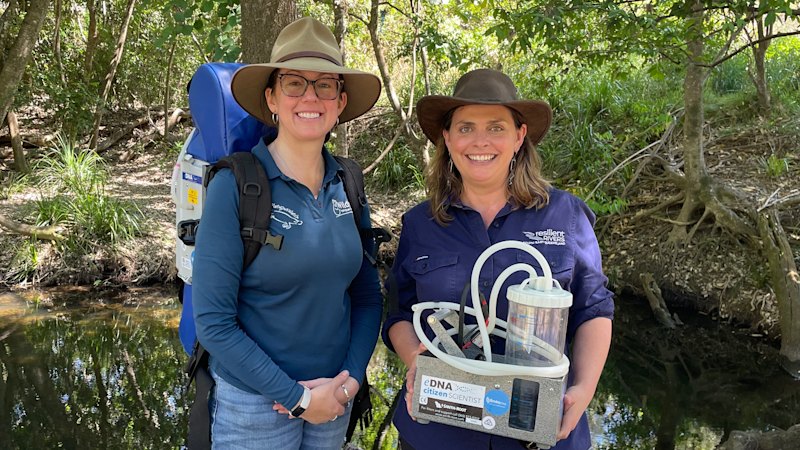
Wildlife Queensland’s Dr Tamielle Brunt and Resilient Rivers SEQ director Joanna Burton.Credit: SEQ Council of Mayors
Brunt said the project, which is aimed at cleaning up the region’s waterways, would paint a picture of where priority species live and help identify where money should be spent on conservation and revitalisation.
But she said the results would only provide a baseline for further studies, adding eDNA results could be used as a metric for success of restoration projects down the road.
“Even 250 sites across the south-east Queensland region really isn’t that much when you’re trying to really delve in,” Brunt said.
“This is such a powerful monitoring tool, it just makes sense for Resilient Rivers to be potentially harnessing that for broader waterway health.
“I’m so excited to just get all this data and sift through it.”
Get alerts on significant breaking news as happens. Sign up for our Breaking News Alert.