
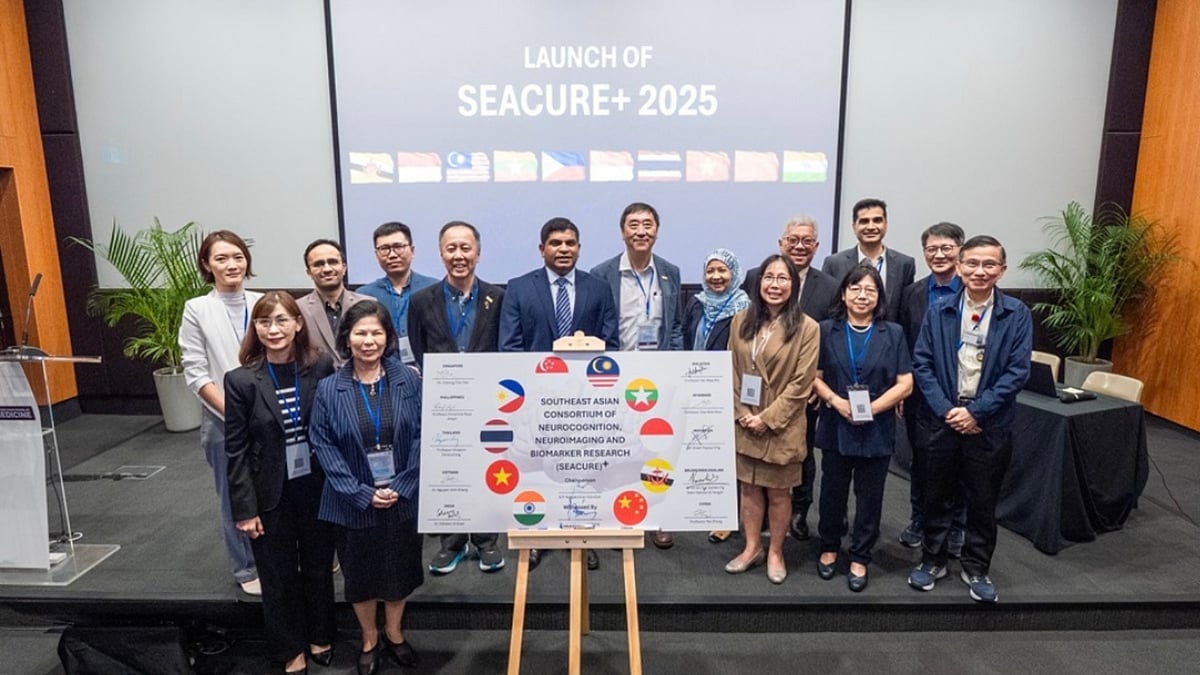
Southeast Asia has launched its first regional consortium to tackle dementia, called SEACURE+ — the Southeast Asian Consortium on Neurocognition, Neuroimaging and Biomarker Research Plus.
The initiative is led by Nanyang Technological University (NTU Singapore) and brings together 24 clinicians from across Southeast Asia and beyond. The consortium aims to pool data and resources from the region’s population of approximately 700 million people to develop region-specific approaches to the prevention, diagnosis, and management of dementia.
The consortium originally began in 2023 with a working group that included Singapore, Malaysia, Thailand, Vietnam, the Philippines, and Indonesia. With the official launch, membership has expanded to include Brunei and Myanmar, while China and India have joined as honorary members.
This expanded network enables comparative studies between Southeast Asian populations and populations in China and India, providing insights into how environmental, cultural, and epigenetic factors influence dementia risk and progression.
Research in Asian populations shows that dementia may differ from Western patterns, with vascular mechanisms such as narrowing of brain blood vessels and blood–brain barrier dysfunction playing a significant role in cognitive decline.
Initial data within SEACURE+ also show a rise in cases of mild cognitive impairment, an early stage of dementia, indicating that clinics are increasingly detecting cognitive decline at earlier stages. This trend highlights the potential for early intervention to slow progression to full dementia.
SEACURE+ plans to coordinate regional strategies including validating cognitive tests tailored to local populations, developing digital diagnostic tools, adopting blood-based biomarker testing, and integrating cognitive screening into national health programs for older adults.
With its broad geographic representation and extensive membership, the consortium aims to generate data that will inform more personalized and regionally relevant prevention, diagnosis, and treatment strategies, moving beyond models developed for Western populations.
Given the rapid ageing of Southeast Asian populations and rising dementia risk, this coordinated effort provides a critical pathway for healthcare systems to manage and reduce the growing burden of cognitive decline.