
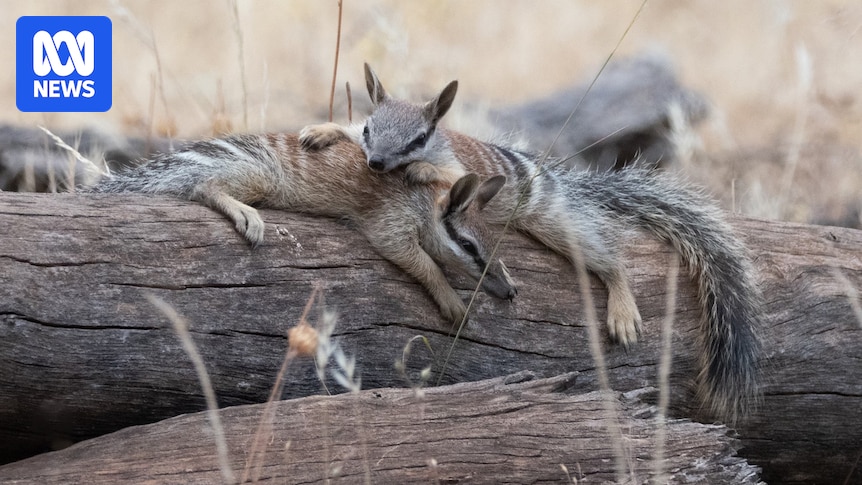
After 20 years photographing the endangered marsupials of Dryandra Woodland in Western Australia’s South West, Lyn Alcock has earned the moniker “the Numbat whisperer”.
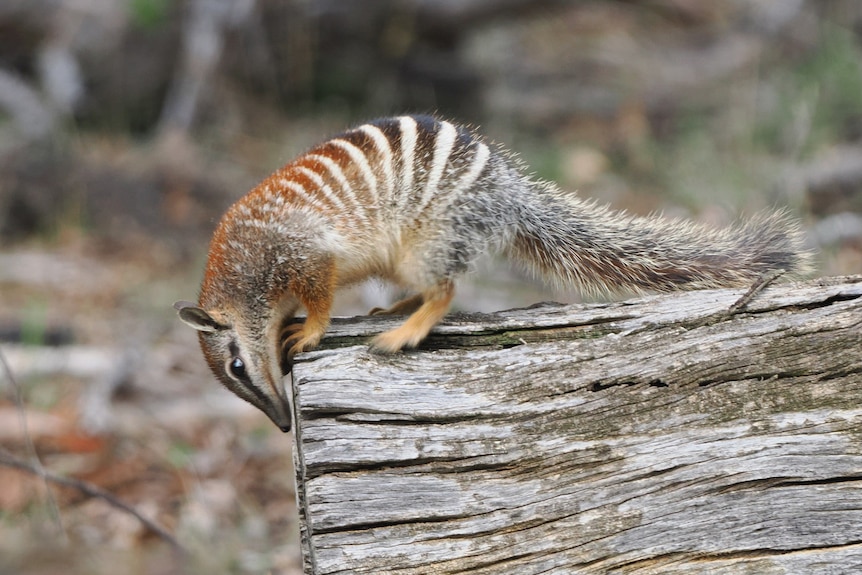
Numbats have a distinctive striped pattern across their backs. (Supplied: Lyn Alcock)
“I started spending almost every day out there, and other people started calling me the Numbat whisperer … I thought, well, that sounds like a good name, so I grabbed hold of it,” Ms Alcock said.
Early each morning, Ms Alcock drives from her home in Narrogin to the woodland, where she spends up to eight hours a day cruising the tracks with eyes peeled for the shy but playful insectivores.
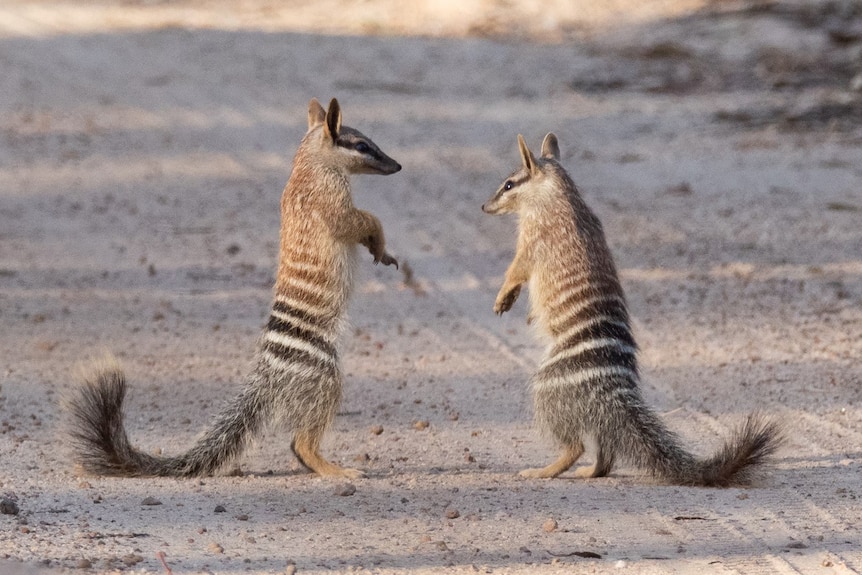
Ms Alcock captures almost all her numbat photographs without leaving her car to avoid spooking the shy animals. (Supplied: Lyn Alcock)
“After 3,000 sightings, when I see one, my heart still jumps and I still just love to see them because you never know what they’re going to do or what behaviour they’re going to exhibit,” she said.
“They are such beautiful, special creatures.”
The keen photographer records everything she sees, sometimes observing things that have not been recorded before, like numbats living up to eight metres high in trees.
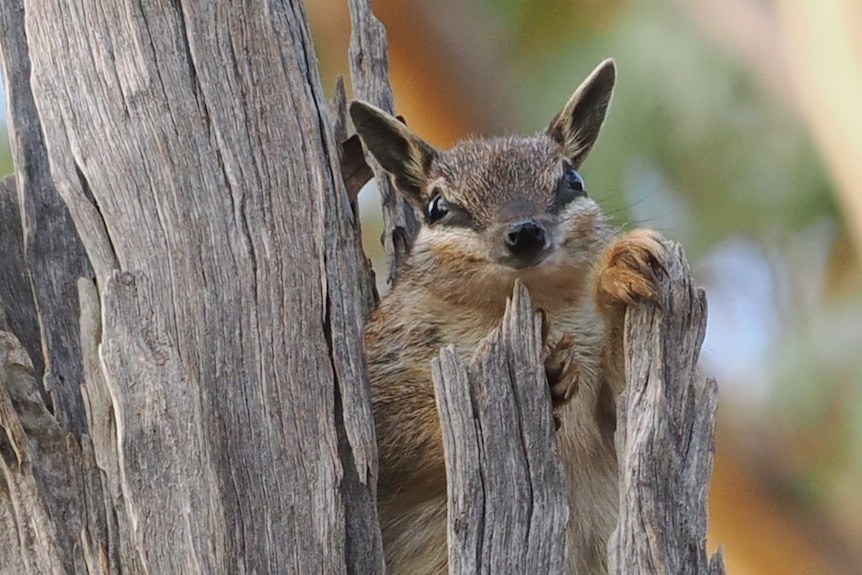
Ms Alcock has observed more numbats living in trees in recent years. (Supplied: Lyn Alcock)
“That’s the highest numbats had been recorded going up a tree before,” she said.
Watching the adults interact with their pups, or joeys, is also a highlight.
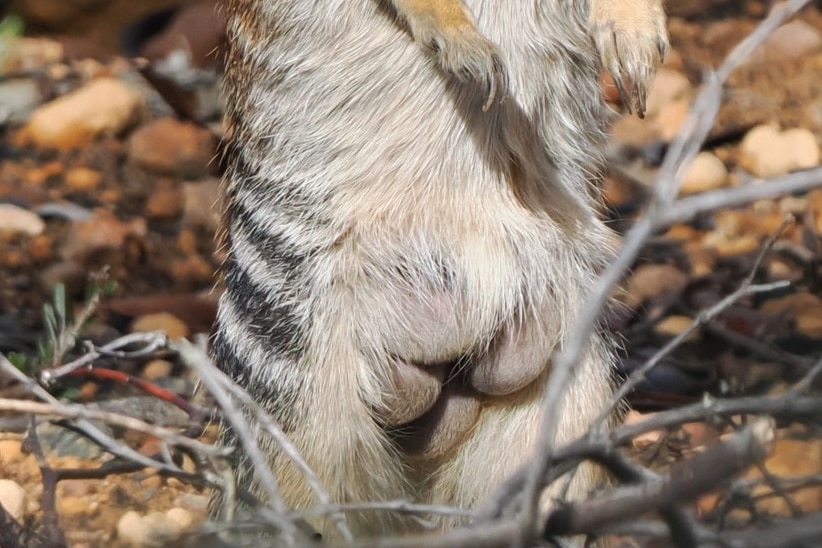
Numbat mothers transport their young by having the babies cling to teats on the mama’s belly. (Supplied: Lyn Alcock)
“Just recently, I got photos of a male numbat … trying to go in the hole that was up the tree, and for some reason, there were obviously the female and bubs in the tree, and they wouldn’t let him in,” she said.
“And so he went up, he tried to get in, he fell down; he went up again and fell down again.”
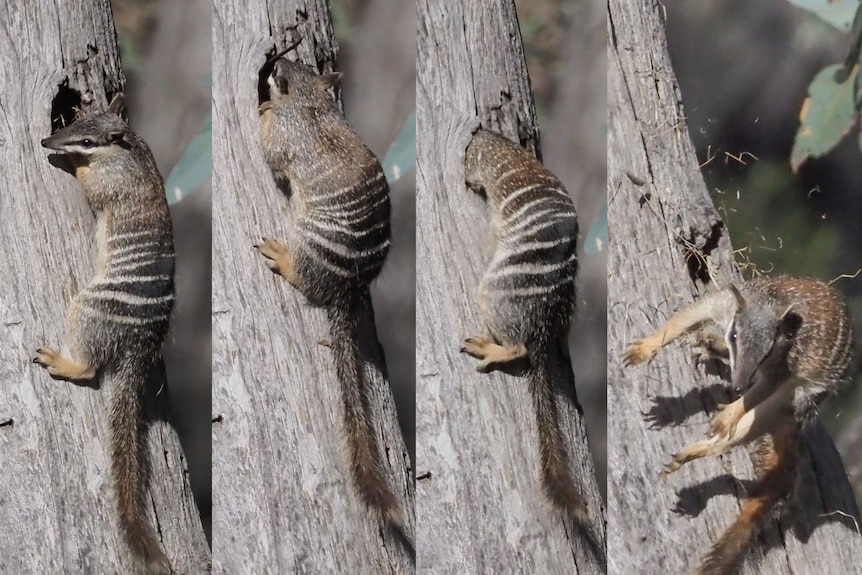
Ms Alcock says she has seen numbats trying to muscle in on a tree hollow, even when it is already occupied! (Supplied: Lyn Alcock)
But it is not just the males that get booted out of home — a few days later, she saw a female go up the same tree with a mouthful of grass.
“Four times she went up once again to try and put the grass in the hole, and obviously, whoever was inside the hole wouldn’t let her in,” she said.
“Those sorts of photos are very special to get.”
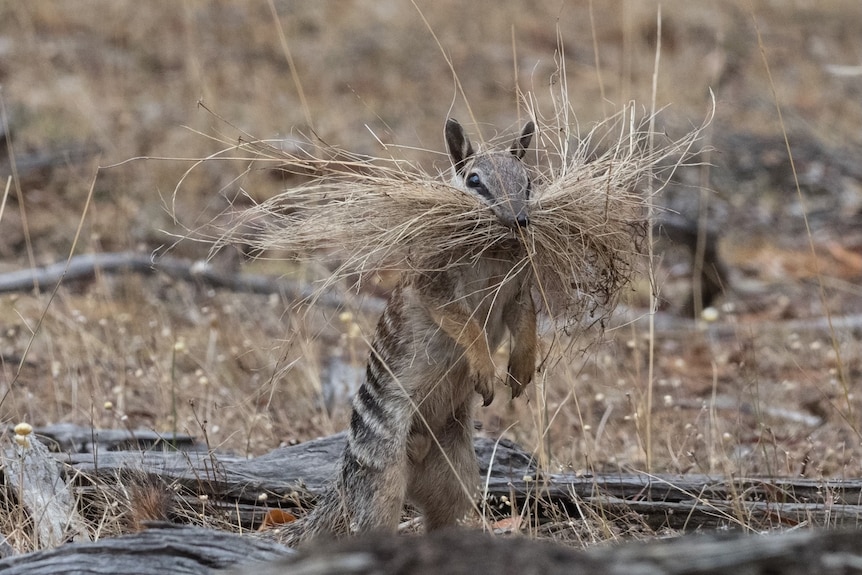
Numbats use grass and other soft plant materials to line their burrows. (Supplied: Lyn Alcock)
Good news for numbat numbers
There are only two places in the world with wild numbat populations — Dryandra Woodland near Narrogin, and Perup Nature Reserve, close to Manjimup.
Both sites are in Western Australia, earning the numbat the title of WA’s animal emblem.
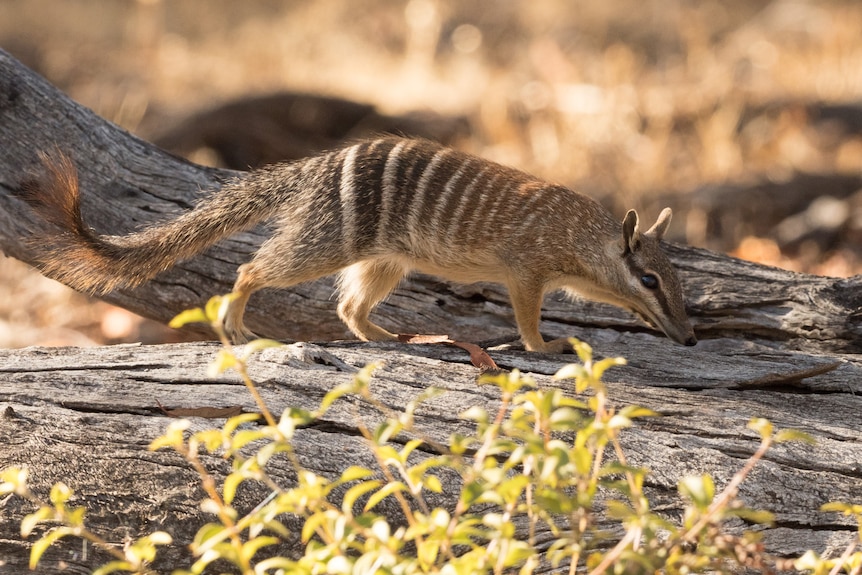
Experts say the increase in numbats is partly due to ramped-up feral cat control. (Supplied: Lyn Alcock)
Once thought to be fewer than 1,000 in number, they are slowly making a comeback.
Department of Biodiversity, Conservation and Attractions researcher Tony Friend said an annual survey has been returning promising numbers, recording 32 numbat sightings this year, up from just three or four in previous years.
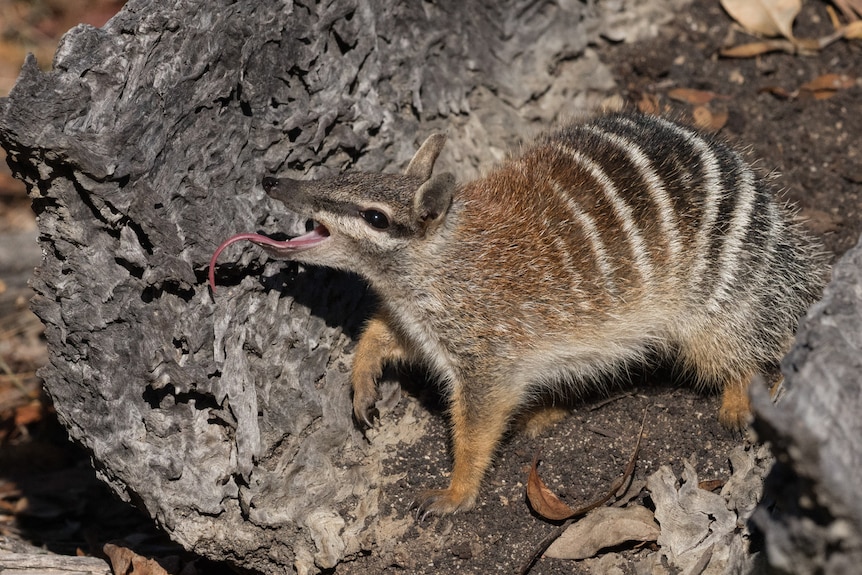
A numbat’s long tongue allows it to snuffle up many thousands of termites each day. (Supplied: Lyn Alcock)
“[This] indicates the population is fairly stable and at a fairly high level, historically,” he said.
“This is markedly better and it’s clearly due to the increased feral cat control that’s been going on around the woodland.”
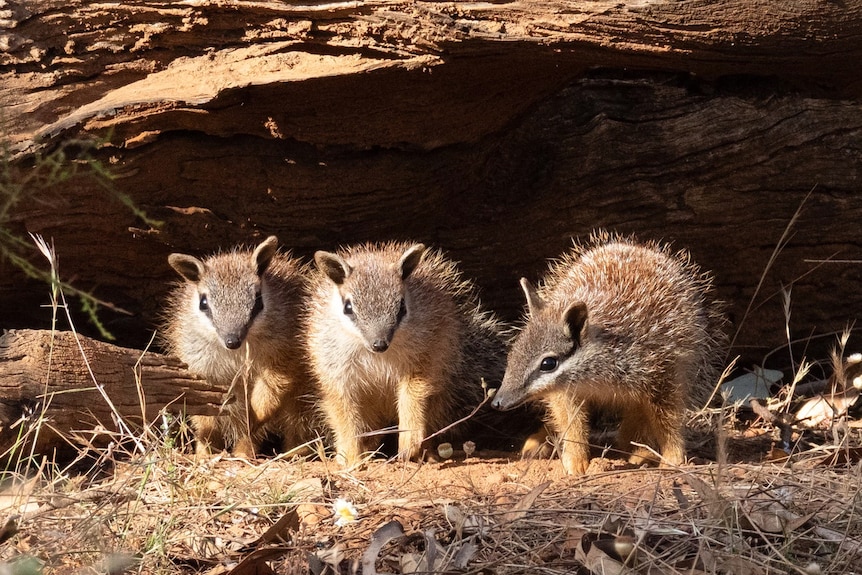
Even when multiple numbats are spotted together, it is recorded as just one sighting in official surveys. (Supplied: Lyn Alcock)
Ms Alcock has also witnessed the reduction in feral cats, which used to be “all over the place”.
“I think it’s probably 18 months ago since I’ve actually seen a cat in Dryandra,” she said.
‘They are amazing creatures’
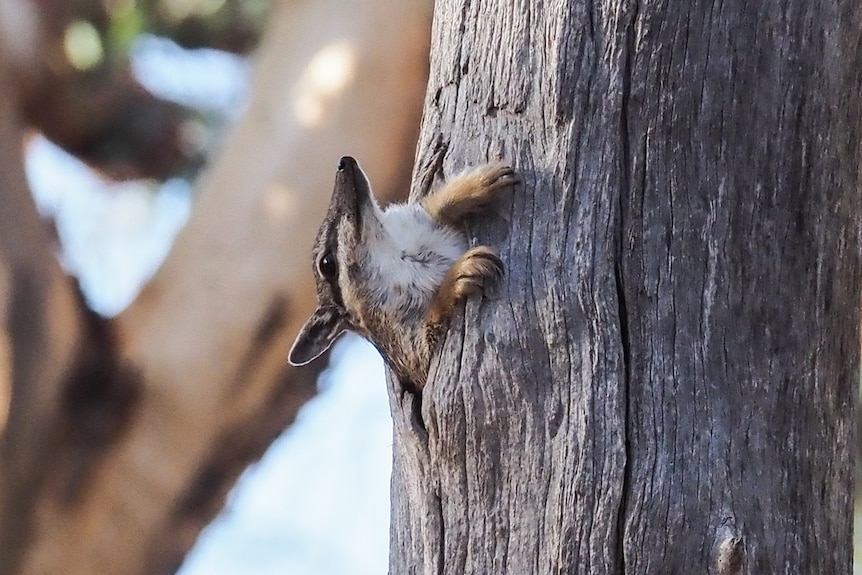
Ms Alcock’s photos capture the weird and wonderful behaviour displayed by the Dryandra numbats. (Supplied: Lyn Alcock)
The photographer had a few words of advice for hopeful numbat spotters, which has become a popular pastime at Dryandra, particularly on weekends.
“You drive slowly … between 5 and 15 kilometres an hour … walking pace, basically,” she said.
“Drive around any or all of the tracks, just looking for numbats either directly on the tracks or on the sides.
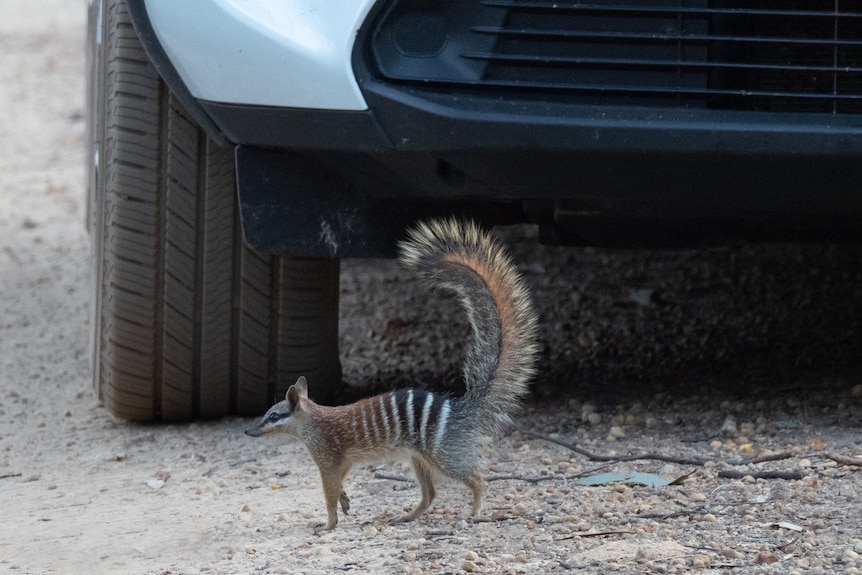
Numbats can be spotted along established trails and roads throughout the Dryandra Woodland. (Supplied: Lyn Alcock)
“When you see them, try and get your photos from the car. If you get out, don’t slam the door — they’ll run like mad — but otherwise, just be very quiet, very calm around them.”
The DBCA recommends photographers maintain a distance of at least 20 metres from the numbats, stick to existing trails and roads, and immediately abandon pursuit if their subject shows signs of stress.
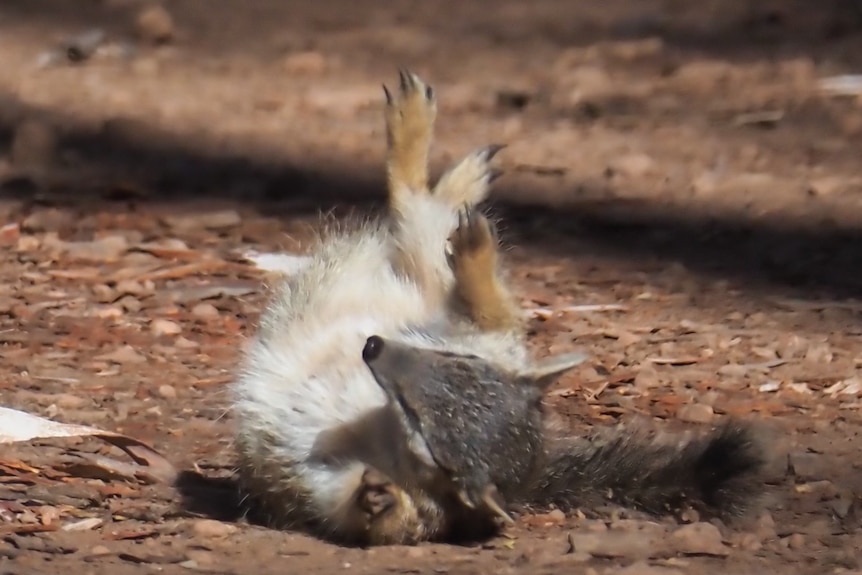
Ms Alcock says she is very careful not to threaten or approach the animals while photographing them. (Supplied: Lyn Alcock)