
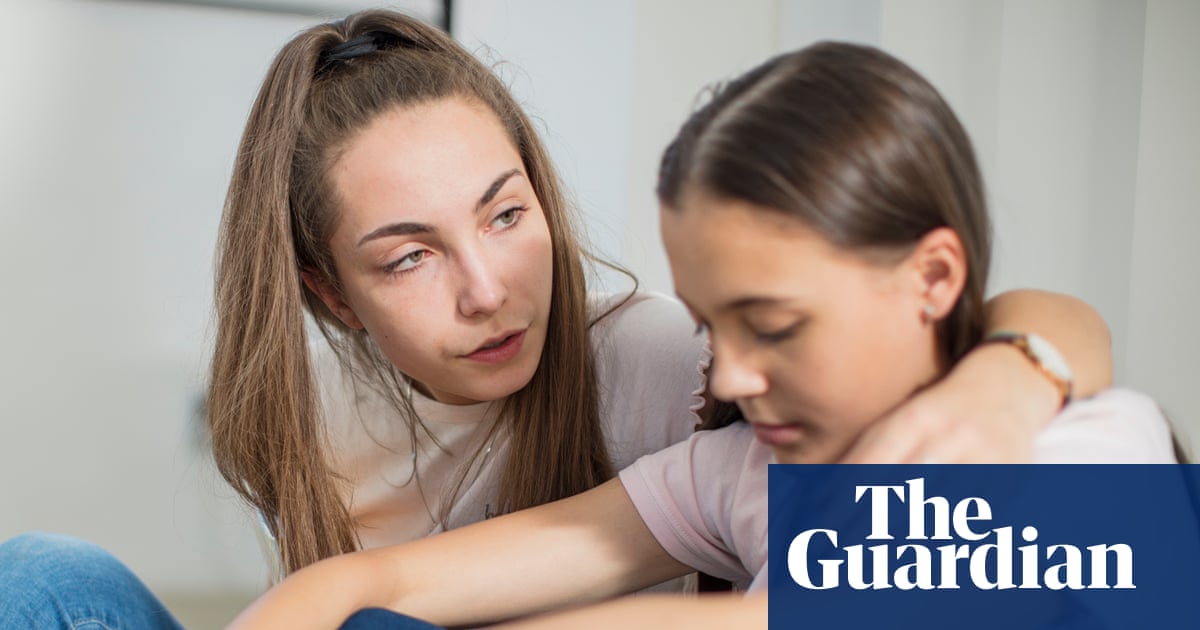
Young Australians aged 16 to 25 are attempting to kill themselves, self-harming and experiencing suicidal thoughts in greater numbers and at earlier ages than previous generations, a landmark study has found.
It comes as Kids Helpline data provided exclusively to Guardian Australia shows the proportion of young children experiencing suicidality is increasing at “alarming” rates and being expressed by children as young as six.
Research led by Dr Katrina Witt from the University of Melbourne and youth mental health hub Orygen analysed data from the Australian Bureau of Statistics’ National Study of Mental Health and Wellbeing, 2020-2022.
The 14,753 respondents were grouped into generation Z (16-25 years), millennials (26-41 years), generation X (42-57 years), and baby boomers (58-76 years).
“Generation Z had the highest hazards for youth suicidal ideation, planning, self-harm, and suicide attempts, with the youngest age of onset,” found the study, published in the Australian and New Zealand Journal of Psychiatry on Monday.
Risk factors for these behaviours differed between generations.
For gen Z, witnessing parental violence and being exposed to suicide among peers, family or online were particularly strong predictors of self-harm and suicide attempts.
“While policies aimed at reducing harmful online content could help mitigate exposure to self-harm and suicide-related behaviours, they should form part of a broader, multi-faceted prevention strategy,” the study found.
In older generations, childhood sexual abuse, substance use disorders and long periods of untreated mental illness were more strongly linked to suicidal behaviour.
Witt told Guardian Australia there was “no single cause” driving suicidality among young people. The association with mental ill health and suicide was less strong than for previous generations, making it important to consider policy responses outside of traditional health settings, she said.
“Generation Z has grown up in a period marked by rapid social change, and there’s constant digital connectivity,” she said. “They’re experiencing economic insecurity, climate anxiety, and of course the disruptive effects of Covid-19 on their social and emotional development.”
Sign up: AU Breaking News email
Nieves Murray, the CEO of Suicide Prevention Australia, said the research highlights what many families, schools and frontline services have already observed: “Gen Z is facing pressures that are both different from, and in many cases more acute than, previous generations.”
Across all ages, 17.3% of respondents reported ever having suicidal thoughts, 7.7% had made a suicide plan, 9.2% had self-harmed and 5.1% had attempted suicide. Among generation Z, the proportions were higher: 20.2% reported suicidal thoughts, 9.2% had made a plan, 20.4% had self-harmed and 6% had attempted suicide.
Younger and younger children seeking help
Tracy Adams is the CEO of Yourtown, which manages Kids Helpline, a free and confidential counselling service for five- to 25-year-olds. She said the study led by Witts reflects Kids Helpline data, which shows 11% of 10-year-olds who contacted the service in 2025 reported concerns related to suicide, compared with 4% in 2012.
In 2012, 3% of 11-year-olds discussed suicidality with Kids Helpline, rising to 15% by 2025.
“Every year, we’re seeing younger children reaching out in crisis,” Adams said. “In 2024, the youngest child to receive support concerning a suicide attempt was just six years old.”
Adam said the average age of young people needing crisis support for suicide attempts has dropped from 24 in 2012 to just 16 in 2025.
“This downward shift is alarming. It tells us that suicide-related distress is reaching children far earlier than ever before,” she said.
“These are not just numbers. These are children trying to survive overwhelming pain.”
Witt said early intervention was critical.
“We need programs in schools and communities that reach young people where they live and learn, before the onset of suicidal thinking develops,” Witt said.
“We need resources to help recognise and respond to distress, and to support parents and reduce conflict within the home. And we need safe online and offline spaces, by investing in the environments where young people connect, develop their identity and can access safe support.”