
The Queensland summer has officially arrived, bringing its signature wild weather along with it.
So, what can you do if your yard fills with stormwater?
Hundreds of residents have contacted Brisbane City Council so far this year to report the problem, but remedying it can be slightly more complicated.
According to experts, good engineering and neighbourly cooperation are the best options for keeping your property safe.
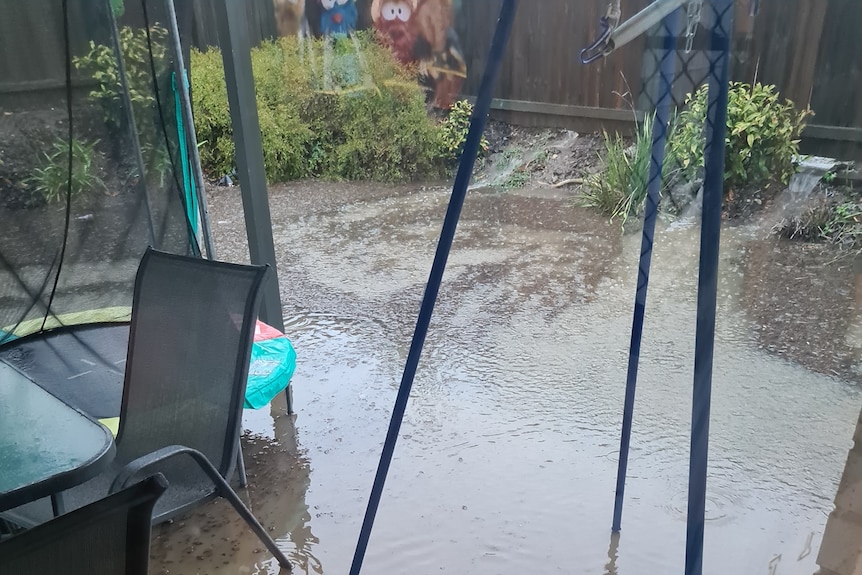
Water inundating a backyard in Brisbane during an October 2020 storm. (Supplied: Kerry Jackson)
A big year for storms
Stormwater runoff is water that isn’t absorbed by the earth and flows across the land until it reaches storm drain systems.
This year has seen Brisbane’s highest storm activity since 2013, including dozens of severe thunderstorms and an uncommon south-east Queensland tropical cyclone.
Brisbane City Council has been contacted about 700 times about stormwater runoff since January.
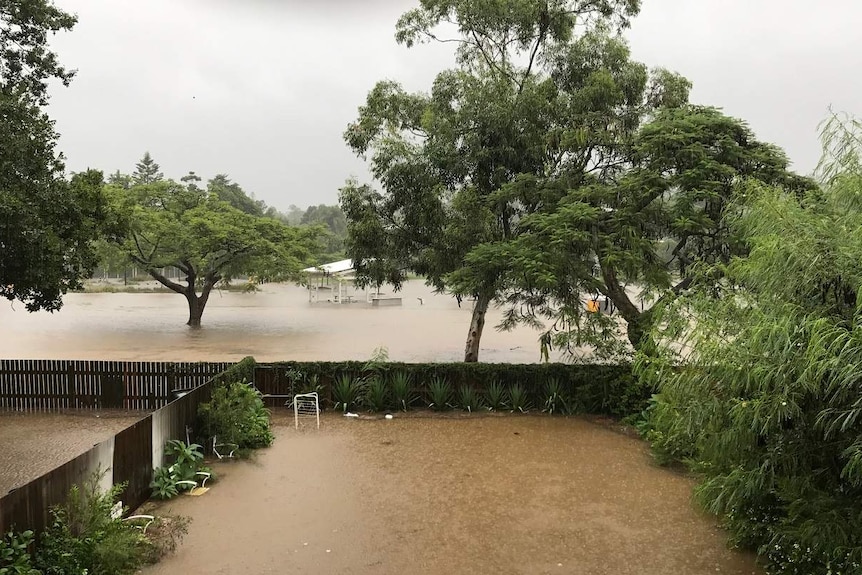
The council is only responsible for stormwater runoff coming from streets or council property. (Supplied: Leigh Bird)
2020 and 2021 were also relatively wet years, with 1,379 and 1,228 reports made respectively.
But a spokesperson said the council isn’t responsible for dealing with runoff water moving from property to property.
“Stormwater runoff between private properties falls outside council’s responsibility and we encourage residents to seek independent professional advice to resolve the issue,” the spokesperson said.
How to deal with runoff
While the council won’t help if they aren’t directly responsible, there are actions residents can take to improve their property’s capacity to handle stormwater.
Making sure new builds or renovations adhere to council regulations can help to address the problem before it arises, according to Stormwater Queensland secretary David Simpson.
“The council have requirements for stormwater runoff from new developments, so it’s in development codes that are available on the Brisbane City Council website,” he said.
“The main thing is it prescribes floor levels … the floor level has to be a certain height above the ground or above the 50-year Average Recurrence Interval (ARI) overland flow.”
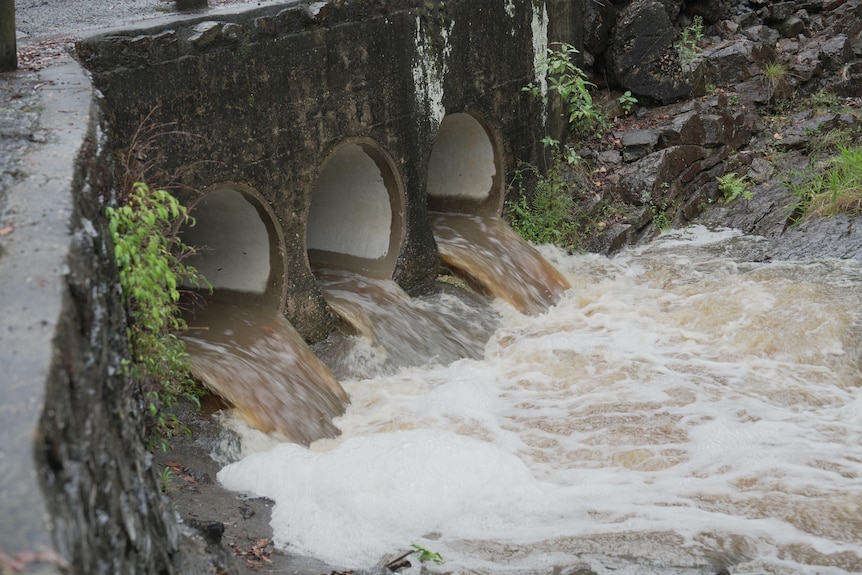
A year of heavy storms and a tropical cyclone has seen huge amounts of water dumped on Brisbane. (ABC News: Crystalyn Brown )
Mr Simpson said speaking to and working with your neighbours to address flows from their property can help avoid legal stoushes.
“If it’s just coming from a neighbour’s property, it’s your responsibility to either divert the flow around your house … or make a provision to collect that water and runoff and run it to a legal point of discharge,” he said.
“But certainly, if there is a problem caused by new development, then council might well get involved,” he said.
Are you pouring hundreds of dollars a year down the drain?
If you are responsible for the runoff on your property, there are a few things you can do to stop flood damage.
“The main thing [people] would be concerned about is if the stormwater is flowing onto one of their floors, for example,” Mr Simpson said.
“If it’s coming in a doorway and flooding a floor, then you can take action to divert that stormwater on your own property.”
Building channels for the water, retaining walls and mounds to divert the flow, and installing drainage systems are all options for ensuring runoff doesn’t cause bigger problems.
Making the most of it
Stormwater Queensland believes the current regulatory framework for rainwater tanks is wasting an opportunity to make the most of stormwater.
Rainwater tanks are not mandatory for new builds, unless they’re in council areas that have gone through an “opt-in” process.
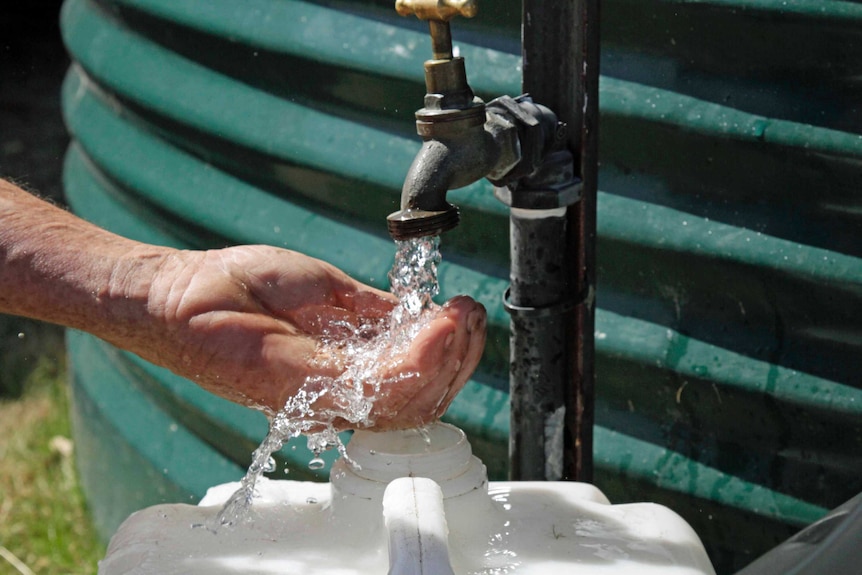
Harvested stormwater runoff can be used for a variety of household purposes. (ABC News: Felicity Ogilvie)
Stormwater harvesting, where the runoff is collected for other purposes, is sometimes used on an industrial scale, but can also be applied to personal properties.
“If you put in a rainwater tank, that can collect runoff from your roof,” Mr Simpson said.
“You can harvest [it] and use as irrigation on the garden later on, or washing clothes for example, or flushing toilets.”
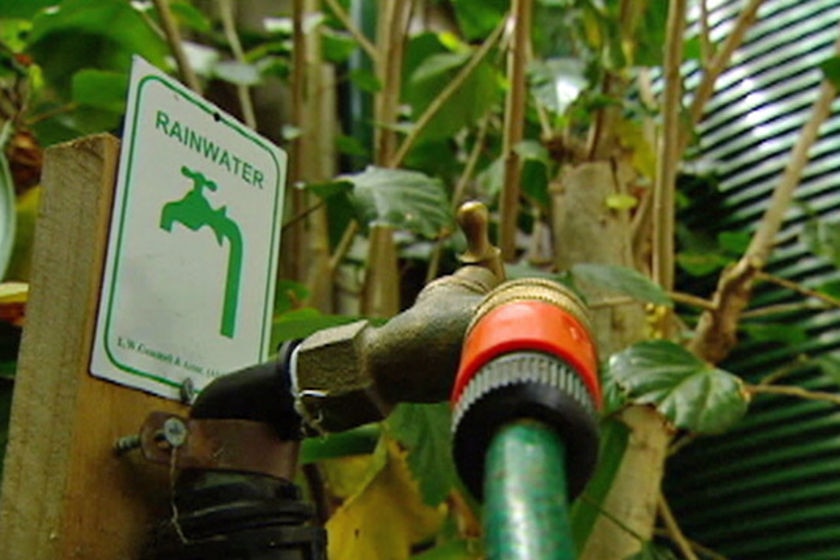
SWQ wants to see rainwater tanks required on new builds. (ABC TV)
Stormwater Queensland is calling for a return to pre-2013 rainwater tank standards in the Queensland Development Code, which required “supplementary” water sources be included in new developments with class-one or commercial buildings.
The Department of Housing and Public Works said these had been “amended following changes to state policy” in 2013.
“The amendments were aimed at reducing regulatory costs while balancing water efficiency goals with broader sustainability measures,” a department spokesperson said.
Local councils — often in flood or drought-prone areas — can require supplementary water sources through planning or development conditions, although this does not apply to Brisbane.
People can call their local council to make a complaint if stormwater runs off a street or other council land onto private property.
Regulations for managing stormwater runoff in new builds and renovations can be found on the Brisbane City Council website.